Aesthetic Injectable Industry Analysis Reveals Strong Growth Momentum at 7.46% CAGR During 2026–2033
Aesthetic injectables are specialized medical and cosmetic formulations administered beneath the skin to restore facial volume, reduce the appearance of wrinkles, and enhance facial contours.
 raajblog
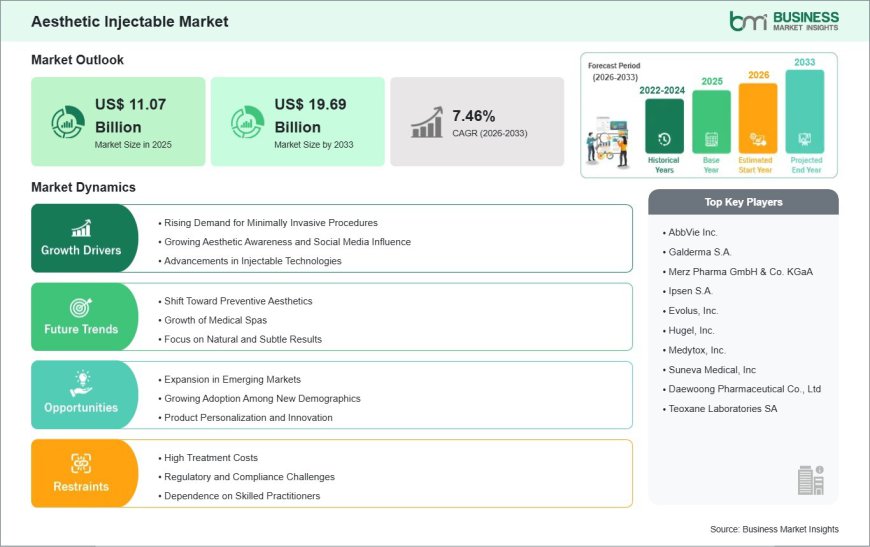
The Aesthetic Injectable Industry is experiencing steady growth worldwide, supported by the increasing consumer preference for minimally invasive cosmetic procedures, the rising influence of digital media, and a growing focus on preventive anti-aging treatments.
According to Business Market Insights, the global Aesthetic Injectable Market size is expected to reach US$ 19.69 Billion by 2033 from US$ 11.07 Billion in 2025, registering a CAGR of 7.46% from 2026 to 2033.
What Are Aesthetic Injectables?
Aesthetic injectables are specialized medical and cosmetic formulations administered beneath the skin to restore facial volume, reduce the appearance of wrinkles, and enhance facial contours. These procedures are engineered to deliver targeted, minimally invasive rejuvenation and are heavily deployed across medical spas, dermatology clinics, and cosmetic surgery centers. They feature highly purified active ingredients, advanced polymer chains, and natural enzymes designed to interact safely with human tissue while producing subtle, natural-looking aesthetic improvements.
Common aesthetic injectables include botulinum toxins, hyaluronic acid fillers, bio-stimulatory collagen enhancers, and specialized fat-dissolving compounds. Modern formulations increasingly feature advanced cross-linking technologies and added anesthetics (like lidocaine) to support more comfortable and longer-lasting treatments. The clinical application of these advanced injectables ensures that patients can safely address signs of aging or alter their facial geometry without the need for extensive surgical intervention or prolonged recovery periods.
Industry Drivers
A major driver of the Aesthetic Injectable Industry is the surge in consumer demand for non-invasive cosmetic procedures. Younger generations, particularly Millennials and Gen Z, are increasingly utilizing aesthetic treatments as preventive measures rather than waiting to reverse deep wrinkles. This prejuvenation trend has significantly lowered the average age of market entry, directly translating into robust, recurring clinical appointments and sustained product demand for leading manufacturers.
The growing influence of social media and digital transparency is another important growth factor. Platforms like Instagram and TikTok have normalized cosmetic enhancements, allowing practitioners to showcase before-and-after results and demystify the treatment process. This cultural shift has effectively removed traditional stigmas associated with cosmetic work, transforming aesthetic injectables into mainstream grooming choices for a much wider demographic, including a rapidly expanding male consumer base.
Technological advancement is further boosting demand. The development of advanced bio-stimulatory fillers, which encourage the body to naturally produce its own collagen, offers longer-lasting and more natural-looking results compared to traditional volumizers. The expansion of highly specialized medical spa networks is also creating new opportunities, increasing consumer accessibility to safe, high-quality aesthetic treatments outside of traditional hospital settings.
Industry Segmentation
By Product Type
By Application
By End User
The botulinum toxin segment dominated the industry due to its proven clinical effectiveness and extremely high consumer retention rates. Facial line correction remained the leading application segment because of universal demand for wrinkle reduction. The 31–45 age group accounted for the largest consumer demographic, supported by higher disposable incomes and a strong focus on preventive aging treatments.
Regional Insights
Top Players in the Aesthetic Injectable Industry
The industry is highly competitive, with leading pharmaceutical and aesthetic companies focusing on product innovation, practitioner training, and portfolio expansion to strengthen their global positions.
These companies continue to invest in clinical trials, novel peptide formulations, AI-driven consultation software, and extensive global practitioner education programs to improve safety and address changing consumer preferences.
Technological Innovations
Technological innovation is transforming the Aesthetic Injectable Industry. The development of advanced, ultra-purified neuromodulators allows practitioners to deliver highly targeted treatments with a faster onset of action and reduced risk of immunoresistance over time. Researchers are continually refining the chemical cross-linking of dermal fillers, enabling products to better integrate with natural tissue and move seamlessly with facial expressions.
Manufacturers are also developing sophisticated 3D facial mapping and AI-assisted consultation platforms. These tools allow clinicians to accurately assess facial anatomy, simulate potential outcomes for the patient prior to injection, and track results objectively over time. This technology removes much of the guesswork, standardizing outcomes and greatly increasing patient trust.
The growing adoption of combination therapies—such as pairing injectables with energy-based devices (lasers or ultrasound)—is another major trend. By addressing volume loss and skin laxity simultaneously, clinics can provide comprehensive rejuvenation results that bridge the gap between simple injectables and traditional cosmetic surgery.
Future Industry Outlook
The future outlook for the Aesthetic Injectable Industry remains highly positive. Rising aesthetic awareness, the expanding influence of social media, continuous technological innovation, and a growing male demographic are expected to support steady demand through 2033. The ongoing development of longer-lasting, highly customized injectable solutions will further cement these procedures as routine personal care.
As practitioner training, smart diagnostic tools, and bio-stimulatory formulations continue to advance, aesthetic injectables will become even safer, more predictable, and universally accessible. Companies that focus on practitioner support, consumer education, and cutting-edge formulation science are likely to capture the strongest growth opportunities in the coming years.
Frequently Asked Questions (FAQs)
What is the projected size of the Aesthetic Injectable Market by 2033?
The market is projected to reach US$ 19.69 Billion by 2033, rising from US$ 11.07 Billion in 2025.
What factors are driving industry growth?
Key drivers include the rise of preventive prejuvenation treatments, the normalizing effect of social media, technological advancements in fillers, and expanding medical spa networks.
Which product segment dominates the industry?
Botulinum toxin currently holds the largest market share due to its established safety profile, widespread recognition, and high frequency of recurring treatments.
Which region leads the industry?
North America dominates the industry due to a highly developed aesthetic infrastructure, substantial consumer spending power, and broad cultural acceptance.
Browse More Reports:
https://www.businessmarketinsights.com/reports/enteral-feeding-devices-market
https://www.businessmarketinsights.com/reports/v2x-communication-system-market
https://www.businessmarketinsights.com/reports/smart-kitchen-appliance-market
About Us
Business Market Insights is a market research platform that provides subscription service for industry and company reports. Our research team has extensive professional expertise in domains such as Electronics & Semiconductor; Aerospace & Defense; Automotive & Transportation; Energy & Power; Healthcare; Manufacturing & Construction; Food & Beverages; Chemicals & Materials; and Technology, Media, & Telecommunications.
Contact Us
If you have any questions about this report or would like further information, please contact us:
Contact person: Ankit Mathur
Email: sales@businessmarketinsights.com
Phone: +16467917070