Best AI Tools Directory 2025 and Free AI Tools List for Automation, Productivity, and Business Success
Explore the best AI tools directory for 2025 and a complete free AI tools list. Compare AI software, AI agents, automation tools, productivity platforms, and business solutions to find the right technology for your needs
 Ankita01
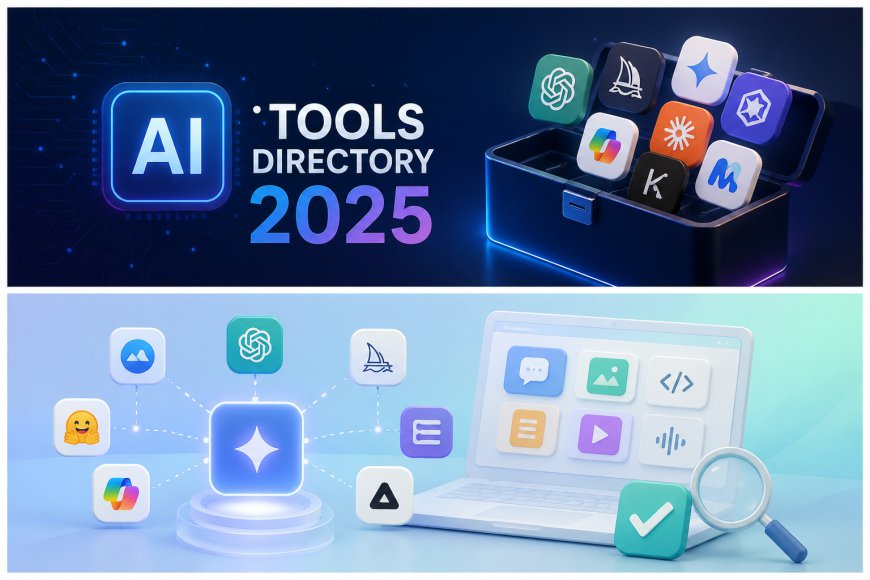
Artificial intelligence software has become an essential part of modern business operations. Organizations of all sizes now use AI to automate repetitive tasks, improve customer experiences, accelerate content production, and support data-driven decision-making. As the AI software market expands, finding the right solution can be difficult without a structured resource. A reliable best AI tools directory for 2025 helps users compare platforms across different categories and understand which tools align with specific business goals. At the same time, a detailed free AI tools list enables startups, freelancers, students, and enterprises to evaluate artificial intelligence technologies before investing in premium subscriptions. Careful software selection can improve efficiency, reduce costs, and create long-term competitive advantages.
Why AI Tool Directories Are More Important Than Ever
The number of AI-powered applications continues to grow each year. New platforms are introduced regularly, offering features for automation, content creation, analytics, customer service, design, and software development. Without a centralized directory, evaluating these solutions can require significant time and effort.
A well-maintained AI directory typically provides:
-
Software categories and use cases
-
Feature comparisons
-
Pricing information
-
Integration details
-
User reviews and ratings
-
Business suitability recommendations
This information allows decision-makers to compare tools objectively. Rather than relying on marketing claims, businesses can review practical information and select software based on measurable operational requirements.
What Is the Most Used AI Tool in 2025?
While exact rankings vary by industry and geography, conversational AI platforms remain among the most widely adopted technologies worldwide.
Their popularity stems from versatility. These systems can assist with:
-
Writing and editing
-
Research and analysis
-
Programming support
-
Business communication
-
Customer service
-
Workflow management
Organizations appreciate conversational AI because implementation is relatively straightforward compared to many enterprise technologies. Employees can begin using these systems quickly, making them valuable productivity tools across departments.
Which Is the Best AI Agent in 2025?
AI agents differ from traditional AI assistants because they can perform tasks autonomously, manage workflows, and interact with multiple software systems.
Advanced AI agents often provide:
-
Autonomous task execution
-
Multi-step workflow management
-
Context awareness
-
Memory retention
-
Application integrations
-
Automated reporting
The best AI agent depends on the intended business purpose. Marketing teams may require campaign automation capabilities, while operational teams may focus on process optimization and workflow coordination. Evaluating specific business needs is essential when comparing AI agent platforms.
Which AI Has the Highest IQ?
Benchmark rankings frequently appear in technology discussions. However, AI systems do not possess intelligence in the same way humans do, making IQ comparisons somewhat misleading.
Different AI models perform better in different areas. One platform may excel at programming while another demonstrates stronger language capabilities. As a result, there is no universally accepted answer regarding which AI has the highest IQ.
Businesses should focus on practical outcomes such as reliability, efficiency, and accuracy rather than theoretical intelligence comparisons.
Which AI Tool Is Fully Free?
It is particularly relevant for students, entrepreneurs, and small organizations with limited budgets. Many AI platforms offer free access to core functionality, allowing users to explore capabilities without immediate financial commitments.
Free AI tools commonly support:
-
Text generation
-
Content editing
-
Research assistance
-
Image creation
-
Productivity management
-
Basic automation
Although free plans can provide significant value, users should examine usage limitations carefully. Some platforms restrict daily requests, while others limit access to advanced features or integrations. Understanding these constraints helps organizations determine whether a free solution can support long-term operational needs.
Which AI Tools Are Best for Beginners?
It's artificial intelligence that becomes more accessible to non-technical audiences.
Beginner-friendly platforms typically include:
-
Intuitive interfaces
-
Guided onboarding
-
Simple setup procedures
-
Natural language interactions
-
Educational resources
-
Built-in templates
New users often achieve the best results by starting with general-purpose AI assistants before exploring specialized software for marketing, automation, coding, or analytics. This progression helps build confidence while providing practical experience with AI technologies.
AI KAPTAN often highlights ease of adoption as a critical factor because user acceptance plays a major role in successful AI implementation.
Key Features to Look for in AI Software
Selecting the right AI platform requires evaluating more than feature lists. Businesses should focus on capabilities that directly support operational objectives.
Organizations should also consider how software will fit into existing workflows. Even powerful tools may fail to deliver value if implementation is overly complex or adoption rates remain low.
Building a Strong Free AI Tools List
Creating a valuable free AI tools list involves identifying software across multiple categories rather than concentrating on a single business function.
A balanced list should include:
-
AI writing assistants
-
Graphic design platforms
-
Coding tools
-
Automation software
-
Data analysis solutions
-
Customer support applications
Testing multiple free tools allows users to compare interfaces, performance, and functionality firsthand. This approach reduces purchasing risk and provides practical insights into how different platforms perform in real-world scenarios.
How Businesses Benefit from AI Adoption
Organizations implementing artificial intelligence often experience improvements in productivity, operational efficiency, and decision-making speed. AI can automate routine processes, reduce manual workloads, and provide insights that support strategic planning.
Conclusion
Artificial intelligence continues to play a growing role in modern business environments, offering solutions for automation, productivity, communication, and analytics. A dependable best AI tools directory for 2025 simplifies software research by organizing platforms according to functionality and business use cases. Meanwhile, a comprehensive free AI tools list allows organizations and individuals to evaluate AI capabilities before making financial commitments. Whether comparing AI agents, assessing beginner-friendly platforms, or researching advanced business solutions, users should prioritize usability, scalability, security, and practical performance. Careful evaluation and testing can help maximize the benefits of artificial intelligence while minimizing implementation risks and unnecessary software expenses.