Bahrain Healthcare Campuses - Upgrade to High-Speed Turnstile Gates
 TekYousuf26
Bahrain's hospitals, clinics, and medical universities are under constant pressure to balance open patient access with tight security. Turnstile Speed Gates are becoming the standard solution for healthcare campuses across the Kingdom, giving facility managers a fast, hygienic, and fully auditable way to manage staff, patient, and visitor movement without slowing down daily hospital operations.
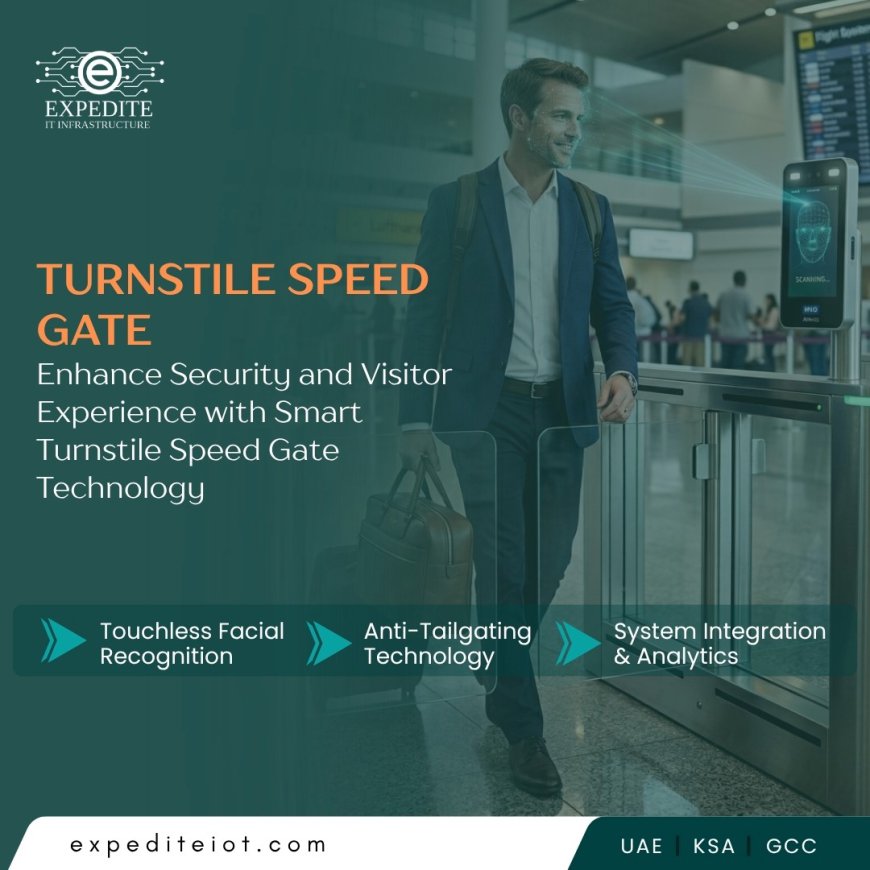
As Bahrain's healthcare sector expands alongside broader GCC investment in smart infrastructure, hospital administrators are replacing outdated manual checkpoints with automated Turnstile Access Control systems. These systems reduce unauthorized entry, protect sensitive wards such as ICU, maternity, and pharmacy stores, and create a real-time record of every person entering or leaving the facility — a requirement that is increasingly tied to healthcare compliance and patient safety audits across the region.
Why Bahrain's Healthcare Campuses Need Advanced Turnstile Access Control
Hospital campuses are unique environments. Unlike a corporate office, a medical facility must manage several distinct flows of movement at once — emergency admissions, outpatient visitors, clinical staff, delivery personnel, and after-hours maintenance teams — while still meeting strict infection-control and data-privacy standards. A generic security gate cannot handle this complexity.
Purpose-built entry management systems solve this by combining physical barriers with biometric authentication, RFID staff cards, and centralized monitoring software. For a Bahrain healthcare campus, this means administrators can restrict access to restricted zones like operating theatres and pharmacy stores while keeping general outpatient areas welcoming and easy to navigate. This is where Expedite IoT's smart turnstile system solutions bring proven GCC deployment experience to the Bahraini market.
Types of Turnstile Solutions Suited to Bahrain's Medical Facilities
Every hospital campus has different footfall patterns, budget constraints, and architectural layouts. Choosing the right hardware category is the first step toward a reliable pedestrian security gate deployment.
Tripod Turnstile Gates
Compact and cost-effective, Tripod Turnstile Gates are well suited to staff entrances, back-of-house corridors, and administrative buildings within a hospital campus. Their rotating arm mechanism offers a clear visual deterrent against tailgating and integrates easily with existing RFID or biometric readers already used for staff time and attendance.
Swing Barrier Turnstile Gates
Swing Barrier Turnstile Gates are the preferred choice for main hospital lobbies and outpatient entrances where accessibility matters. Their wide, obstruction-free lanes accommodate wheelchairs, stretchers, and visitors carrying luggage or medical equipment, making them ideal for high-traffic public zones that must remain both secure and inclusive.
Full Height Turnstile Gates
Full Height Turnstile Gates provide maximum perimeter protection for unmanned or after-hours entry points, such as pharmacy loading bays, data server rooms, or research laboratories inside a medical campus. Their floor-to-ceiling barrier design makes unauthorized climb-over virtually impossible, adding a strong physical layer to a facility's overall security barriers strategy.
Flap Barrier Turnstile Gates
Flap Barrier Turnstile Gates combine a sleek, low-profile design with fast throughput, making them ideal for staff corridors and visitor management desks where aesthetics matter as much as function. Many Bahraini healthcare operators favour flap barriers for front-of-house deployments because they complement modern hospital interior design while still enforcing strict entry management system rules.
Intelligent Facial Recognition Turnstiles for Contactless Healthcare Access
Infection control is a top priority for any healthcare campus, which is why hospitals across Bahrain and the wider Gulf are moving toward touchless verification. Intelligent Facial Recognition Turnstiles allow staff and pre-registered visitors to pass through checkpoints without touching a card reader or keypad, reducing surface contact in clinical environments while still logging every entry against a secure, centralized database.
Combined with AI-driven analytics, facial recognition turnstiles can flag blacklisted individuals, alert security teams to tailgating attempts, and generate detailed traffic analysis reports that hospital administrators can use for both compliance reporting and operational planning.
Key Benefits of Turnstile Speed Gates Bahrain for Hospitals and Clinics
Deploying Turnstile Speed Gates Bahrain-wide is not just a security upgrade — it is an operational one. Facility managers in Manama and across the Kingdom are reporting measurable improvements once automated gates replace manual guard checkpoints. Typical benefits include:
- Faster, contactless movement of staff and patients during peak outpatient hours
- Restricted access to sensitive wards, pharmacy stores, and data rooms
- Centralized visitor management and real-time occupancy tracking
- Reduced reliance on manual security guards at every checkpoint
- Audit-ready entry logs to support healthcare compliance requirements
Why Healthcare Facilities Across the GCC Trust Expedite IoT
Expedite IoT has deployed pedestrian access control and smart security infrastructure across Saudi Arabia, Qatar, Oman, and the UAE, giving the team direct, hands-on experience with the regulatory and operational demands of Gulf healthcare environments. Our engineers work closely with facility management teams from initial site survey through installation and after-sales support, ensuring every deployment meets local safety codes and integrates with existing hospital IT infrastructure.
For Bahraini healthcare operators evaluating an advanced turnstile security technology partner, this regional track record means fewer integration surprises, faster commissioning, and a support team already familiar with GCC healthcare compliance standards.
Conclusion
Healthcare campuses in Bahrain are under growing pressure to secure sensitive areas without disrupting the flow of patients, staff, and visitors. Whether a facility needs compact tripod gates for staff corridors, wide swing barriers for accessible public lobbies, full height turnstiles for unmanned perimeters, or touchless facial recognition for infection-conscious entry points, the right combination of automated gates delivers measurable gains in both security and efficiency. As GCC healthcare providers continue to modernize their infrastructure, investing in a proven smart turnstile system is becoming a standard part of hospital security planning — and a partner with genuine regional deployment experience makes that transition considerably smoother.
FAQs
1. What are Turnstile Speed Gates and how do they work in a hospital setting?
They are automated pedestrian gates that verify identity — via RFID card, biometric scan, or facial recognition — before allowing entry, controlling movement into restricted hospital zones while keeping general access areas moving quickly.
2. Which turnstile type is best for a hospital's main entrance?
Swing barrier gates are generally preferred for main entrances because their wide lanes accommodate wheelchairs, stretchers, and visitors, while still enforcing controlled, single-file entry.
3. Are facial recognition turnstiles hygienic for healthcare environments?
Yes. Facial recognition systems are contactless by design, which reduces shared-surface contact at entry points compared to keypad or card-swipe readers — a meaningful advantage in clinical settings.
4. Can turnstile access control integrate with a hospital's existing security systems?
Modern turnstile platforms are designed to integrate with existing CCTV, visitor management, and staff time-attendance software, allowing hospitals to centralize monitoring without replacing their entire security infrastructure.
5. How long does it take to install turnstile speed gates at a healthcare facility in Bahrain?
Installation timelines vary based on the number of entry points and integration requirements, but a typical single-lane deployment can usually be completed within a few days once the site survey and hardware are confirmed.
Intelligent Facial Recognition Turnstiles