How Video Analytics is Revolutionizing Fire and Smoke Detection in Bahrain
 TekYousuf26
Video Analytics is redefining fire and smoke detection across Bahrain's industrial, commercial, and government sectors. As the Kingdom accelerates its Vision 2030-aligned digital infrastructure agenda, facilities management teams and safety officers are turning to intelligent camera-based detection to protect lives, assets, and operations far more effectively than traditional heat or ionisation sensors alone. For organisations evaluating proven video analytics systems across the GCC, Bahrain represents both a rapidly maturing market and a high-stakes safety environment where minutes — and seconds — determine outcomes.
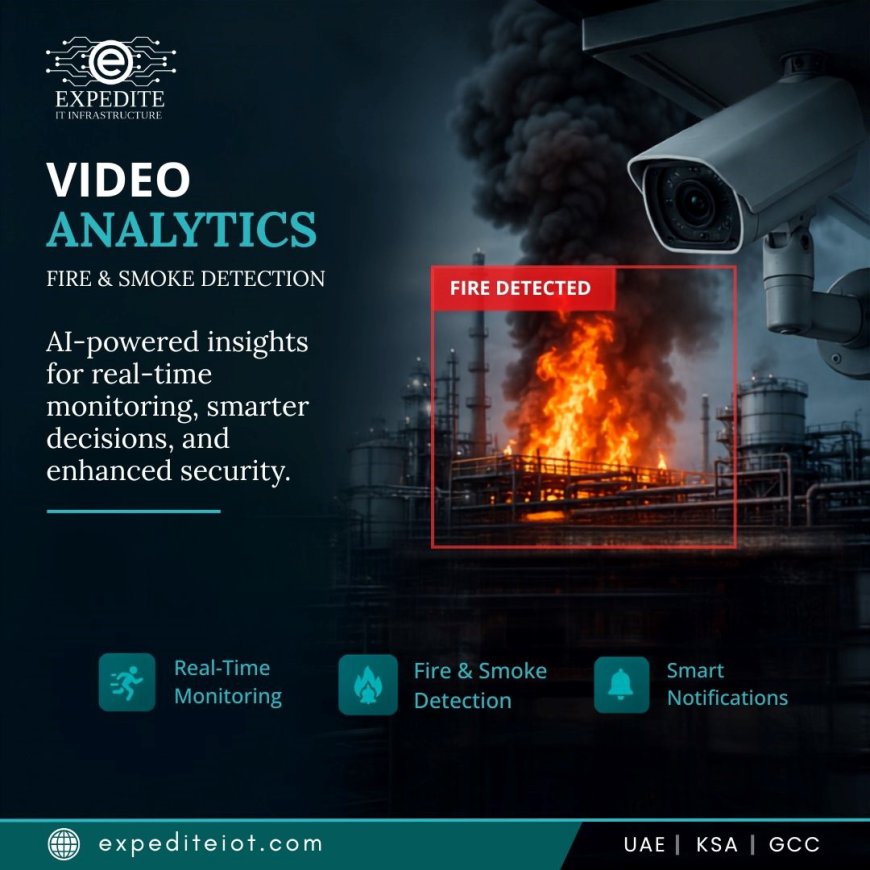
This article examines how advanced AI-Powered Video Analytics is transforming fire and smoke detection in Bahrain, the core technologies driving adoption, compliance considerations, and what to look for when selecting a platform for your facility.
Why Bahrain Needs Advanced Fire and Smoke Detection Technology
Bahrain's built environment presents a unique combination of risk factors that conventional detection systems were never designed to address. Petrochemical refineries on Sitra Island, high-rise mixed-use towers in the Bahrain Financial Harbour, warehousing logistics hubs near Khalifa Bin Salman Port, and sprawling data centre campuses all share a common challenge: large open spaces, high ceilings, and complex airflow patterns that cause smoke to disperse before reaching traditional point detectors.
The Bahrain Civil Defence Directorate, operating under the Ministry of Interior, mandates that commercial and industrial facilities maintain life-safety systems aligned with NFPA 72 (National Fire Alarm and Signalling Code) and the International Fire Code (IFC). Yet even code-compliant installations based on heat or photoelectric sensors carry inherent detection latency of several minutes in high-bay or open-plan environments. Camera-based Video Analytics Solutions detect the visual signature of combustion — flame flicker, smoke plume propagation, and thermal anomaly — within seconds of ignition, providing a decisive early-warning advantage that no point sensor can match.
How AI-Powered Video Analytics Detects Fire and Smoke
Modern AI-Powered Video Analytics platforms deploy deep convolutional neural networks (CNNs) and transformer-based vision models trained on millions of annotated fire and smoke events across diverse environments. The result is a system capable of distinguishing genuine combustion from visual false positives — such as steam, dust clouds, vehicle exhaust, or reflective glare — that routinely trigger nuisance alarms in conventional systems.
Multi-Spectral Camera Integration
Leading platforms in Bahrain integrate feeds from visible-light IP cameras, thermal infrared cameras, and multispectral sensors into a unified Video Analytics Software engine. Thermal cameras detect the radiated heat signature of concealed smouldering fires invisible to the human eye or optical sensor, while visible-light cameras capture early smoke plume formation. Sensor fusion of both data streams produces detection confidence scores that virtually eliminate false alarms while reducing time-to-detection to under 30 seconds from ignition — a benchmark supported by NFPA research on early-suppression fast-response (ESFR) system performance.
Real-Time Hazard Detection and Alarm Correlation
Real-Time Hazard Detection engines process camera streams at up to 25 frames per second, applying spatiotemporal pattern analysis to identify the pixel-level motion, colour shift, and opacity change characteristic of smoke propagation. When detection thresholds are crossed, the system correlates the visual event with environmental sensor data — temperature, CO, and air-quality feeds — to generate a unified risk score before triggering alarm outputs. This layered approach is critical in Bahrain's petrochemical and manufacturing environments, where a single false alarm can trigger costly unplanned shutdowns.
Automated Emergency Response Integration
The defining capability that separates advanced Video Analytics Solutions from legacy CCTV-plus-detector combinations is native Automated Emergency Response. Upon confirmed fire or smoke detection, the platform simultaneously executes a pre-configured response matrix: activating fire suppression zones, triggering audible and visual alarms, transmitting geo-tagged incident alerts to on-site security operations centres and Civil Defence dispatch, locking or releasing access-controlled doors along evacuation routes, and initiating lift recall procedures. This closed-loop automation eliminates the human latency that accounts for the majority of suppression delay in real-world fire incidents.
Key Application Sectors for Video Analytics in Bahrain
Industrial and Petrochemical Facilities
Refineries, liquefied natural gas (LNG) terminals, and chemical processing plants operated by BAPCO Energies, ALBA, and their supply-chain partners represent the highest-consequence fire risk environments in Bahrain. Video Analytics Bahrain deployments in these settings leverage explosion-proof camera housings rated to ATEX Zone 1/2 standards, with analytics engines capable of detecting hydrocarbon pool fires and jet flame signatures against the bright flare stacks and reflective metallic surfaces that routinely blind conventional optical sensors.
Commercial Real Estate and High-Rise Buildings
Manama's Seef District, Diplomatic Area, and Bahrain Bay development are home to landmark mixed-use towers where smoke extraction systems, pressurised stairwells, and phased evacuation plans depend on the earliest possible fire signal. Video Analytics Manama installations in these buildings integrate with Building Management Systems (BMS) and addressable fire alarm control panels (FACPs) via open-protocol interfaces including BACnet, Modbus, and OPC-UA, enabling the video detection layer to act as a primary trigger for the entire building life-safety stack.
Logistics, Warehousing, and Cold Chain
High-rack warehouses storing mixed goods — including flammable packaging materials and lithium battery logistics common in Bahrain's growing e-commerce fulfilment sector — present a particularly challenging detection environment. Ceiling heights of 12–20 metres dilute smoke well below the activation threshold of ceiling-mounted detectors. Video Analytics Software deployed on wide-angle fisheye or pan-tilt-zoom (PTZ) cameras covers these vast volumes with a fraction of the sensor count required by traditional aspirating smoke detection (ASD) systems, dramatically reducing both capital and maintenance expenditure.
Government, Healthcare, and Critical Infrastructure
Bahrain's Ministry of Health hospital network, the national parliament complex, and Bahrain International Airport are among the critical infrastructure assets where both fire safety and continuity of operations are paramount. Camera-based Real-Time Hazard Detection in these environments supplements existing suppression and detection infrastructure with a visual verification layer — enabling security operators to visually confirm an alarm event before committing to full evacuation, thereby reducing the costly and disruptive false-alarm evacuations that erode public confidence in safety systems.
What to Look for in a Video Analytics Platform for Bahrain
Not all Video Analytics Software platforms are equal in their capability to handle the environmental and operational demands of Bahraini facilities. When evaluating solutions, procurement and safety managers should assess platforms against the following criteria:
- Detection Accuracy: False negative rate below 0.1% and false positive rate below 1 alarm per camera per month under field conditions, verified by third-party testing against EN 54-10 (flame detector) and EN 54-29 (multi-sensor fire detector) performance benchmarks.
- Latency: End-to-end detection-to-alarm latency of 30 seconds or less from ignition in open-plan environments, independently validated.
- Scalability: Support for enterprise-scale deployments of 500 to 5,000+ camera channels on a single management platform, with federated multi-site visibility across Bahrain and broader GCC operations.
- Integration Depth: Native APIs and certified integrations with leading physical security information management (PSIM) platforms, BMS controllers, and emergency dispatch systems used in Bahrain.
- Environmental Certification: Camera hardware certified to IP66/IP67 ingress protection and IK10 impact resistance for outdoor and industrial deployment in Bahrain's high-humidity, sand-laden coastal environment.
- Regulatory Alignment: Compliance documentation supporting submission to Bahrain Civil Defence Directorate for installation approval, including conformance with NFPA 72, IFC, and local ministerial circulars.
- Cybersecurity Posture: End-to-end video stream encryption, role-based access control, network segmentation support, and compliance with Bahrain's National Cybersecurity Centre (NCSC) guidelines for critical infrastructure.
Regulatory Compliance and Assurance for Bahrain Operators
Demonstrating Experience, Expertise, Authoritativeness, and Trustworthiness in fire safety technology procurement is not merely a marketing consideration — it has direct legal and operational consequences. Bahraini facility operators and their appointed safety officers carry personal liability under the Civil Defence Law (Decree No. 19 of 2007) for maintaining code-compliant life-safety installations. Selecting a certified Video Analytics Bahrain provider with documented GCC deployment references, factory acceptance testing (FAT) procedures, and ongoing technical support infrastructure is therefore a governance imperative as much as a technical one.
Key compliance frameworks and standards relevant to video-based fire detection deployments in Bahrain include:
- NFPA 72 (2022 Edition): Governs the design, installation, testing, and maintenance of fire alarm systems including video-based detection technologies.
- EN 54-10 / EN 54-29: European performance standards widely referenced by Bahraini Civil Defence for flame detector and multi-sensor detector approval.
- IEC 62676: International standard for video surveillance systems used in security and safety applications.
- Bahrain Civil Defence Circular 2023-04: Mandates submission of system design drawings and equipment data sheets for approval prior to installation in commercial and industrial occupancies.
- ISO 7240-1: Fire detection and alarm systems — general and definitions, referenced in GCC unified building codes.
Organisations seeking a partner with proven regional expertise in deploying compliant fire detection analytics can explore Expedite IoT's video analytics solutions across Saudi Arabia, Qatar, and Oman as a benchmark for the technical depth and regulatory alignment required for Bahrain installations.
The Future of Fire Detection: Emerging Trends in Video Analytics
The next generation of AI-Powered Video Analytics platforms is evolving rapidly across several dimensions that will directly impact Bahrain's fire safety technology landscape over the next three to five years.
Edge AI Processing
The migration of analytics inference from centralised servers to on-camera edge processors — enabled by dedicated neural processing units (NPUs) in next-generation IP cameras — will reduce detection latency to under five seconds while eliminating network bandwidth constraints in large-scale deployments. Edge AI also enhances resilience: cameras continue to detect and alarm independently even if network connectivity to the central Video Analytics Software platform is interrupted, a critical failsafe in emergency scenarios.
Predictive Risk Modelling
Integration of video-derived detection data with digital twin models of facility assets will enable the next evolution of Real-Time Hazard Detection — predictive fire risk scoring. By correlating visual analytics data with asset maintenance records, thermal imaging trends, and occupancy patterns, AI platforms will flag elevated fire risk conditions before ignition occurs, enabling preventive interventions that further reduce insurance premiums and business interruption exposure.
Drone and Mobile Platform Integration
For Bahrain's extensive outdoor industrial estates and port logistics zones, autonomous drone platforms equipped with thermal and optical cameras, managed through centralised Video Analytics Solutions, will increasingly supplement fixed camera networks — providing rapid aerial assessment of fire progression in areas inaccessible to ground-based responders and feeding real-time imagery directly to Civil Defence Incident Commanders.
Why Partner with a Proven GCC Video Analytics Specialist
Deploying enterprise-grade fire detection analytics in Bahrain requires more than selecting the right software platform. Success depends on deep local knowledge of building typologies, regulatory approval pathways, camera positioning best practices for Bahrain's specific climatic conditions, and integration expertise with the BMS and fire alarm ecosystems already installed across the Kingdom's built environment.
Providers with active deployment portfolios across the broader GCC — encompassing the diverse industrial, commercial, and governmental environments of Saudi Arabia, Qatar, and Oman — bring field-validated configuration templates, pre-approved equipment lists, and regulatory submission experience that dramatically reduces project risk and time-to-commissioning for Bahraini operators. Learn more about how advanced video analytics deployments across the Gulf region can accelerate your Bahrain fire safety programme.
Conclusion
Video Analytics for fire and smoke detection represents the most significant advance in life-safety technology available to Bahraini facility operators today. By combining the visual acuity of AI-driven image analysis with Automated Emergency Response orchestration, these platforms deliver detection speeds, accuracy levels, and response automation that no legacy sensor technology can match — directly addressing the large-space, high-consequence environments that define Bahrain's industrial and commercial risk landscape.
Organisations that invest now in certified, scalable Video Analytics Manama deployments — aligned with NFPA, EN 54, and Bahrain Civil Defence requirements — will not only protect lives and assets more effectively but will also position themselves favourably for insurance premium reduction, regulatory compliance, and the increasing ESG scrutiny applied to facility safety standards by institutional investors and multinational tenants operating in the Kingdom.
Whether you operate a refinery, a high-rise commercial tower, a logistics hub, or a government facility, the path to a safer, smarter Bahrain starts with partnering with specialists who have demonstrated measurable outcomes in fire detection analytics across the GCC.
FAQs
Q1. What makes Video Analytics more effective than traditional fire detectors in Bahrain's large industrial facilities?
Video Analytics detects the visual signature of fire and smoke — flame flicker, plume propagation, and thermal anomaly — within seconds of ignition using AI-powered camera analysis. In high-bay industrial environments with ceiling heights of 12–20 metres, smoke disperses well below the activation threshold of ceiling-mounted point detectors. Camera-based systems cover these large volumes with far fewer sensing points and deliver verified, geo-tagged alarms that eliminate the costly false-alarm evacuations common with legacy detector technologies.
Q2. How does AI-Powered Video Analytics reduce false alarms in challenging environments?
AI-Powered Video Analytics platforms use deep learning models trained on millions of fire and non-fire visual events to distinguish genuine combustion signatures from common false-alarm triggers including steam, dust, vehicle exhaust, strong sunlight, and reflective surfaces. Confidence scoring, multi-sensor fusion with thermal and environmental data feeds, and temporal pattern analysis all contribute to false positive rates below 1 alarm per camera per month under field conditions — a level of precision unachievable with conventional photoelectric or ionisation detectors.
Q3. What Video Analytics Software standards apply to fire detection systems in Bahrain?
Fire detection Video Analytics Software deployed in Bahrain must align with NFPA 72 (2022 Edition) governing fire alarm system design and installation, EN 54-10 and EN 54-29 for flame and multi-sensor detector performance, and IEC 62676 for video surveillance system requirements. Bahrain Civil Defence Circular 2023-04 requires submission of system design documentation and equipment approval prior to installation in commercial and industrial occupancies. Selecting a provider with pre-approved equipment lists and regulatory submission experience significantly reduces project approval timelines.
Q4. How does Automated Emergency Response work with Video Analytics Solutions in Bahrain?
Automated Emergency Response in advanced Video Analytics Solutions operates through a pre-configured incident response matrix triggered automatically upon confirmed fire or smoke detection. The platform simultaneously activates suppression zones, triggers audible and visual alarms, transmits geo-tagged alerts to security operations centres and Civil Defence dispatch, releases or secures access-controlled doors on evacuation routes, and initiates lift recall — all within seconds of detection confirmation. This closed-loop automation eliminates the human decision-making latency that accounts for the majority of suppression delay in real-world fire incidents.
Q5. How can organisations in Bahrain evaluate and procure the right Video Analytics Bahrain solution?
Organisations should evaluate Video Analytics Bahrain providers against independently verified detection accuracy (false negative rate below 0.1%), end-to-end detection latency (under 30 seconds), GCC regulatory approval documentation, and active reference deployments in comparable facility types within the Gulf region. A proof-of-concept trial covering the highest-risk zones within your facility — validated against your existing fire alarm control panel outputs — provides the most reliable basis for procurement decisions. For organisations seeking a partner with proven GCC deployment experience, exploring Expedite IoT's video analytics system capabilities offers a practical starting point for scoping your Bahrain programme.