Belt Press Filter Market Forecast Outlook with In-Depth Industry Trends and Analysis
The belt press filter market grows through industrial wastewater needs, with significant expansion in the Belt Press Filter Market globally.
 raj sinha
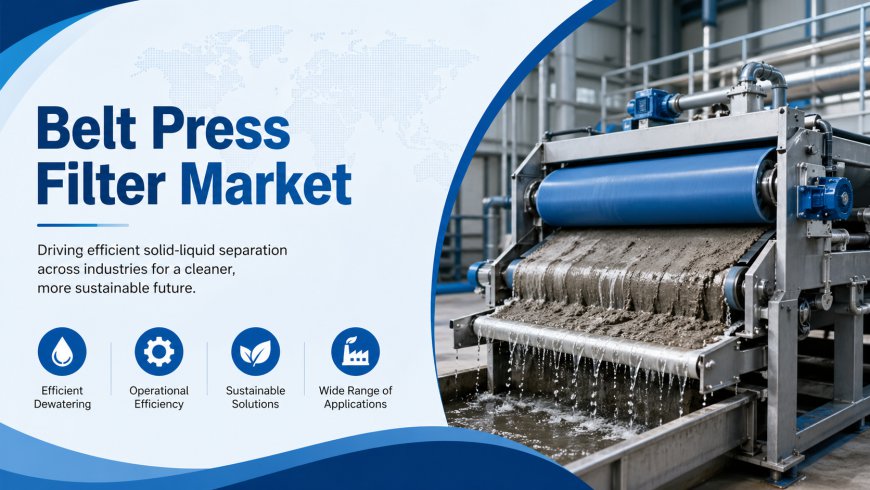
The global market for belt press filter systems is witnessing a transformative phase as industries prioritize sustainable waste management and efficient liquid solid separation processes. These systems are fundamental in the mechanical dewatering of sludge, utilizing a series of chemical conditioning and pressure zones to extract water from various types of slurry. As environmental mandates become more rigorous across the globe, the adoption of this technology has transitioned from a preference to a necessity for municipal and industrial entities. The primary function of the equipment is to reduce the volume of waste material, which significantly lowers the costs associated with transportation and disposal while ensuring that the discharge meets regulatory standards.
Market Dynamics and Environmental Regulations
The growth of the industry is primarily driven by the intensification of environmental protection laws. Governments are increasingly imposing strict guidelines regarding the treatment of industrial effluents and municipal sewage. This regulatory environment encourages manufacturers to innovate and develop filtration systems that offer higher dry cake solids and lower polymer consumption. Furthermore, the rising awareness regarding water scarcity has prompted many industrial players to invest in dewatering technologies that allow for water recycling within their production cycles. The belt press filter stands out due to its ability to operate continuously, handling high throughput with relatively low maintenance requirements compared to other filtration methods.
Detailed Report Segmentation Analysis
A thorough look at the industry reveals various layers of classification based on product types, application areas, and geographic distribution. When examining the Belt Press Filter Market Segmentation , it is evident that the market is categorized into distinct segments such as stainless steel and carbon steel filters based on material, as well as different sizes to accommodate varying flow rates. The application segment is broadly divided into municipal and industrial sectors. The municipal sector utilizes these filters for sewage sludge dewatering in wastewater treatment plants, while the industrial sector spans across mining, chemical processing, food and beverage, and pulp and paper industries. Each segment presents unique requirements for filtration efficiency, durability, and corrosion resistance, leading to specialized product offerings from global manufacturers.
Key Industry Players
The marketplace is highly competitive, featuring several key participants who are focusing on technological advancements and expanding their global footprint. These companies provide a range of solutions tailored to specific industrial needs:
-
ALFA LAVAL
-
ANDRITZ
-
Econet Group Ltd.
-
EKOTON Industrial Group
-
EMO
-
HUBER SE
-
IHI Rotating Machinery Engineering Co., Ltd.
-
PETKUS Technologie GmbH
-
Phoenix Process Equipment
-
Sülzle Klein GmbH
Download Sample Report: https://www.theinsightpartners.com/sample/TIPRE00022399
Regional Market Performance and Trends
Geographically, the demand for dewatering equipment is spread across several key regions including North America, Europe, Asia Pacific, and the Middle East. North America and Europe have traditionally been dominant due to early adoption of advanced environmental technologies and the presence of aging infrastructure that requires upgrading. In contrast, the Asia Pacific region is emerging as a high growth area. Rapid industrialization and urban expansion in this part of the world have led to a surge in wastewater generation. Governments in this region are investing heavily in new treatment facilities, which directly boosts the demand for reliable filtration systems. The Middle East is also showing increased interest in these technologies as they seek to optimize water usage in arid climates.
Operational Benefits and Technological Innovations
The effectiveness of a belt press filter is measured by its ability to produce a high degree of cake dryness. Modern systems incorporate advanced features such as automated belt tensioning, variable speed drives, and sophisticated control panels that allow operators to fine tune the dewatering process. These innovations help in minimizing the consumption of energy and chemical flocculants. Additionally, the move toward modular and mobile units has provided smaller operations with the flexibility to treat waste on site without the need for massive permanent structures. This adaptability ensures that the technology remains relevant across a broad spectrum of economic activities.
Future Outlook
The future outlook for this industry remains positive as global initiatives toward a circular economy gain momentum. There is an increasing focus on recovering valuable resources from waste streams, such as transforming dewatered sludge into organic fertilizers or energy sources. As filtration technology continues to evolve, we can expect the integration of smart sensors and artificial intelligence to further optimize performance and predict maintenance needs. The commitment to reducing environmental impact will ensure that the belt press filter remains a cornerstone of wastewater treatment strategies for the foreseeable future, helping industries achieve a balance between economic growth and ecological preservation.
Related Reports:
Static and Rotating Equipment Market
About Us
The Insight Partners is a leading global market research and consulting firm specializing in delivering actionable insights across various industries. Our research reports combine extensive primary and secondary research to provide accurate market intelligence, helping businesses make informed strategic decisions. The company provides detailed analysis on emerging technologies, market trends, competitive landscapes, and growth opportunities across sectors including technology, healthcare, manufacturing, and energy.
Contact Us:
Contact Person: Ankit Mathur
E-mail: ankit.mathur@theinsightpartners.com
Phone: +1-646-491-9876