Best Practices to Improve Efficiency in Job Work for VMC Machine Operations
Improve VMC machine job work efficiency with best practices in setup, tooling, maintenance, and workflow for faster, precise, and cost-effective production.
 krishna5678
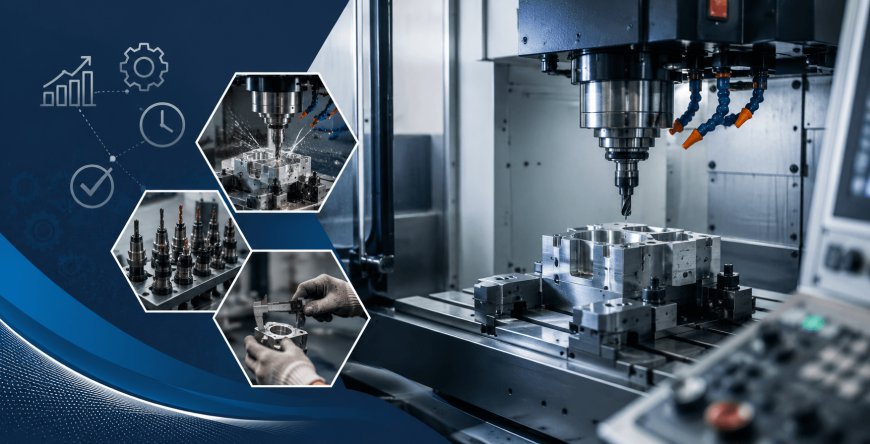
In most machine shops, efficiency is not a theory—it’s survival. The difference between a profitable VMC operation and a struggling one usually comes down to how well the job work is planned, executed, and controlled. Job Work For Vmc Machine is at the center of precision manufacturing, where every second of machine time has a cost attached to it.
What Efficiency Really Means in VMC Job Work
Efficiency is often misunderstood as “running machines faster.” In reality, it is about eliminating invisible losses.
-
Idle machine time between setups
-
Unnecessary tool movements
-
Rework due to poor alignment
-
Waiting time for material or approval
-
Operator dependency gaps
When these small issues stack up, productivity silently drops even if machines are running all day.
Setup Discipline: Where Most Factories Lose Time
Most delays in machining don’t happen during cutting—they happen before it.
Practical improvements:
-
Standard fixture plates for repeat jobs
-
Pre-set tool libraries for common operations
-
Setup checklist before job start
-
Marked reference points for faster alignment
-
Avoiding “trial and error” setups on machine floor
A disciplined setup process can reduce changeover time dramatically without touching machine speed.
Programming Quality Decides Output Quality
A well-written program is not just code—it’s production strategy.
-
Reduce air cutting movements
-
Combine tool operations where possible
-
Use optimized entry/exit paths
-
Avoid unnecessary rapid traverses
-
Run simulation before execution
Even a 10% improvement in tool path efficiency can translate into large monthly capacity gains.
Tool Management: The Silent Productivity Factor
Tooling is often ignored until something breaks.
-
Track tool life per material type
-
Use dedicated tool holders for critical jobs
-
Avoid mixing worn and new inserts
-
Maintain tool inventory by job category
-
Replace tools before failure, not after damage
Good shops don’t wait for tools to fail—they plan replacements like clockwork.
Maintenance: Productivity Insurance You Can’t Skip
A machine breakdown in the middle of production is never just a repair issue—it’s a delivery issue.
|
Area |
Practice |
Impact |
|
Spindle health |
Monthly vibration check |
Stability in finish |
|
Lubrication |
Daily auto-check |
Smooth motion |
|
Cooling system |
Weekly cleaning |
Tool life improvement |
|
Calibration |
Quarterly check |
Dimensional accuracy |
Preventive maintenance is not optional in high-precision environments—it is the baseline.
Material Flow: The Hidden Bottleneck
Machines don’t slow down because of cutting—they slow down because material isn’t ready.
-
Keep raw material close to machine cells
-
Label job cards clearly for traceability
-
Avoid mixing batches without identification
-
Use FIFO system strictly
-
Reduce unnecessary handling steps
A clean material flow system quietly increases output without adding a single machine.
Industry Coordination Matters More Than Ever
Modern manufacturing no longer works in isolation. A Plastic Molding Company In Chennai often depends on machining partners for dies, inserts, and precision components. When coordination is weak, delays multiply across the chain.
When coordination improves:
-
Lead time reduces naturally
-
Rework cycles drop
-
Design-to-production becomes smoother
-
Inventory pressure reduces
This is where connected ecosystems make a real difference.
Digital Visibility Is Changing the Shop Floor
The biggest shift in VMC operations today is not mechanical—it is digital.
-
Real-time machine monitoring
-
Job tracking dashboards
-
Predictive maintenance alerts
-
Operator performance tracking
-
Production cycle analytics
These tools don’t replace operators—they remove guesswork.
In connected manufacturing networks, platforms like Indust are helping bridge suppliers, machine shops, and buyers into a more transparent workflow, reducing communication delays and improving execution clarity.
Advantages and Disadvantages of Efficiency Practices
Advantages
-
Higher machine utilization without extra investment
-
Reduced scrap and rework
-
Faster delivery cycles
-
Better consistency in output
-
Lower cost per component
Disadvantages
-
Requires disciplined execution every day
-
Skilled operators become essential
-
Initial setup standardization takes time
-
Over-reliance on systems if training is weak
Efficiency is not difficult—but it is unforgiving if ignored.
Practical Field Tips from Machine Shops
-
Don’t start a job without verifying fixture alignment
-
Record cycle time for every repeat job
-
Train operators on “why,” not just “how”
-
Keep emergency tool kits ready near machines
-
Review rejected parts weekly, not monthly
Small habits decide whether efficiency stays stable or collapses over time.
Common Real-World Challenges
Even well-run VMC shops face recurring issues:
-
Tool breakage due to material variation
-
Programming mismatch with real machining conditions
-
Operator dependency on senior technicians
-
Inconsistent raw material quality
-
Machine overload during peak demand
Solving these requires consistency more than complexity.
Industry Trend: From Machine-Centric to Process-Centric Manufacturing
The industry is shifting. Machines are no longer the focus—process flow is.
-
Integrated job planning across departments
-
Digital job cards replacing manual tracking
-
Supplier coordination becoming real-time
-
Quality feedback loops built into production
In this ecosystem, Job Work For Vmc Machine is becoming more structured, predictable, and data-driven rather than experience-only based.
Even industries like a Plastic Molding Company In Chennai are aligning with machining partners earlier in the design stage to reduce rework later in production cycles.
Indust is quietly part of this transition, connecting manufacturing stakeholders so decisions move faster from inquiry to execution.
FAQs
1. What is the biggest efficiency loss in VMC operations?
Most losses happen before machining starts—during setup, material handling, and programming delays.
2. How can small workshops improve efficiency quickly?
Standardize setups, maintain tools properly, and track cycle times for repeat jobs.
3. Is automation necessary for efficiency?
Not always. Process discipline often delivers 60–70% of efficiency gains even without automation.
4. Why is coordination important in manufacturing?
Because delays in one unit (like molding or machining) affect the entire production chain.
Closing Note
Efficiency in VMC job work is not about doing more—it’s about wasting less. Shops that master discipline, flow, and coordination consistently outperform those that rely only on machine capacity.
When manufacturing systems connect better and decisions move faster, the entire production chain becomes sharper, leaner, and more predictable—Indust