Choose HID Amico for Faster, Safer Hospital Access in Qatar
 TekYousuf26
Hospitals across Doha and the wider country are under constant pressure to keep patient wards secure without slowing down staff who need to move quickly between departments, and HID Amico Qatar deployments are emerging as the answer. Built around HID Amico Facial Recognition, the platform verifies clinical staff in under a second, letting authorized personnel move through restricted corridors hands-free while keeping unauthorized visitors out of sensitive areas such as the NICU, pharmacy, and operating theatres.
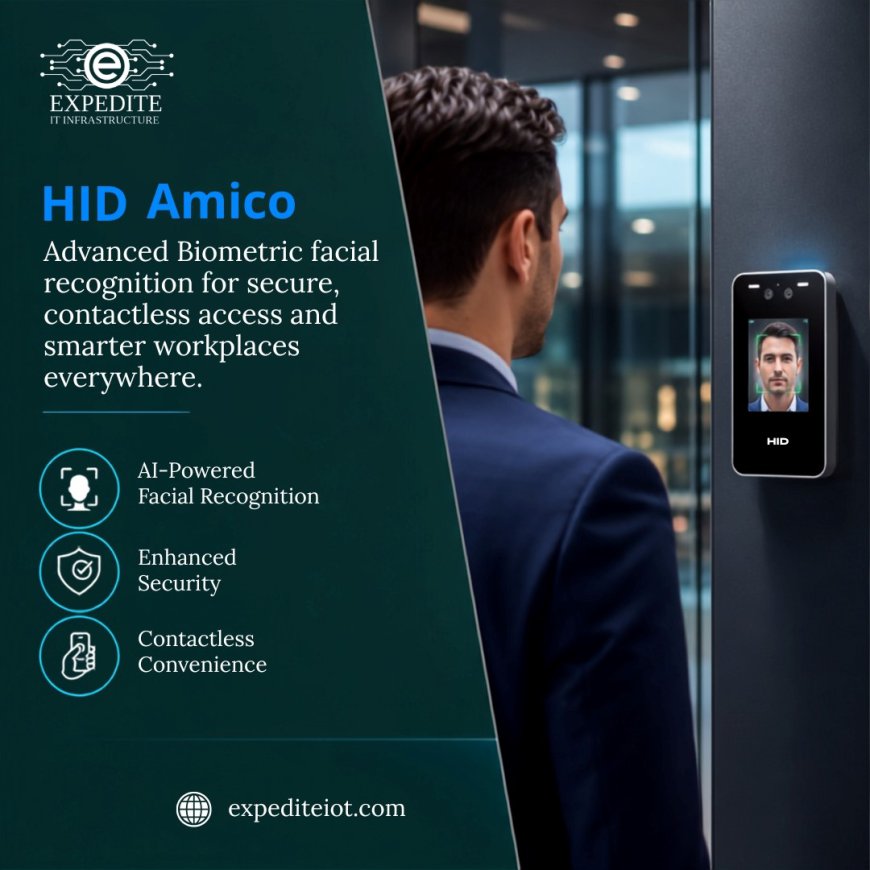
The Access Control Challenge Facing Qatari Hospitals
Hospitals operate around the clock, with clinical staff moving constantly between wards, the pharmacy, labs, and restricted treatment areas, often with their hands full of equipment or patient files. Card-based access slows this movement down and creates a real risk when a badge is lost, shared between shifts, or left at a nurses' station, while traditional locks offer no record of who entered a medication room or isolation ward at any given time. These operational gaps are exactly what a purpose-built facial access platform is designed to close.
What Is HID Amico?
HID Amico is HID Global's purpose-built facial recognition platform engineered for high-throughput, security-critical environments, including hospitals, airports, and corporate campuses. Rather than a single standalone camera, it is a complete identity-capture ecosystem combining edge hardware, onboard AI processing, and integration software that connects directly into a hospital's existing access control and security management systems, built specifically for settings where speed, hygiene, and accuracy all matter at once.
Inside the HID Amico Facial Reader: Built for Clinical Environments
At each restricted doorway, the HID Amico Facial Reader is the unit staff interact with directly. It uses high-resolution dual cameras to capture a face from multiple angles, working reliably even when a staff member is wearing a surgical mask, cap, or glasses, which is a common limitation of older facial recognition hardware in healthcare settings. The reader returns a match decision in under a second, allowing staff to pass through hands-free exactly when their hands are needed elsewhere.
AI-Powered Anti-Spoofing and Liveness Detection in a Healthcare Setting
A hospital access point must be just as resistant to fraud as an airport border lane. AI-Powered Anti-Spoofing and Liveness Detection analyze depth, texture, and subtle movement to confirm a live person is present at the reader, automatically rejecting a printed photo, video replay, or mask. This matters in healthcare specifically because restricted areas such as medication stores and new-born units carry consequences far more serious than a typical office breach if a credential is ever successfully spoofed.
HID Aero Controller: Keeping Wards Secure Even During Network Issues
Behind every reader sits the HID Aero Controller, the networked edge controller that manages communication between the facial reader, the door hardware, and the hospital's central security platform. It processes access decisions locally, which means a ward door keeps functioning correctly even during a temporary network interruption, a critical requirement in a setting where a door failing to open, or failing to stay secured, is never an acceptable outcome.
Why Local Processing Matters in a Hospital
Unlike an office or retail setting, a hospital cannot tolerate even brief access control downtime around an operating theatre or isolation ward. Local decision-making at the controller level ensures critical doors remain correctly secured regardless of what is happening on the broader hospital network at that moment.
From Identity Capture to Door Release: How HID Access Control Ties It Together
Recognizing a face is only useful if it actually releases the correct door, and that is the role of the broader HID Access Control ecosystem. Once the Amico reader confirms a clinician's identity, the platform applies the relevant permission rules — pharmacy access only for authorized pharmacy staff, NICU access only for assigned nursing teams — and unlocks the door automatically. Every decision is logged with a timestamp, giving hospital security and compliance teams a complete, searchable audit trail for any later review.
HID Mobile Access: Flexible Credentials for Rotating Hospital Staff
Not every credential needs to be a face scan. HID Mobile Access allows hospital staff, contractors, and visiting specialists to carry a secure digital credential on their smartphone, useful for rotating shift staff, locum doctors, or maintenance contractors who need temporary access without going through full biometric enrollment. Credentials can be issued or revoked instantly as staffing changes, which happens frequently across large hospital networks.
Practical Applications Across a Qatari Hospital
- Touchless, hands-free entry for clinical staff moving between wards
- Restricted access to pharmacy and medication storage rooms
- Controlled entry to NICU, ICU, and isolation units
- Staff verification at operating theatre corridors
- Temporary mobile credentials for locum staff and contractors
Hygiene and Infection Control Benefits of Touchless Access
Beyond security, a facial-based system removes one more shared touchpoint from a clinical environment where infection control is a constant concern. Staff no longer need to tap a card reader or punch a keypad that dozens of colleagues have already touched that same shift, a small but meaningful improvement that aligns with broader hospital hygiene protocols already in place across wards and treatment areas.
Why Experience Matters When Deploying HID Amico Doha Healthcare Facilities Can Trust
Deploying biometric access correctly in a hospital requires understanding clinical workflows, infection control protocols, and the uptime expectations of a 24/7 facility, not just standard office access control. Expedite IoT has engineered access control and biometric security deployments across the UAE, Saudi Arabia, Bahrain, and the wider GCC, working with healthcare and other high-security facilities that share the same operational demands found in hospitals across Doha and Qatar. That regional track record, covering site assessment, hardware installation, and system integration, is detailed on Expedite IoT's HID Amico facial reader deployment page, where hospital security planners in Qatar can review technical specifications and real integration scenarios before committing to a rollout.
Implementation Best Practices for Hospital Deployments
- Identify every restricted zone — pharmacy, NICU, theatres — and assign appropriate access tiers.
- Test reader accuracy with staff wearing masks, caps, and surgical attire before full rollout.
- Configure local controller fail-safes so critical doors remain secure during network issues.
- Issue mobile credentials for rotating or temporary staff rather than slowing down enrollment.
- Review access logs regularly as part of routine compliance and security audits.
Conclusion
Hospitals in Qatar need access control that moves as fast as their clinical staff while keeping the most sensitive areas firmly protected. HID Amico brings together a hands-free HID Amico Facial Reader, a resilient HID Aero Controller, and a complete HID Access Control framework, reinforced by AI-Powered Anti-Spoofing and Liveness Detection to stop fraud before it reaches a ward door, with HID Mobile Access available for rotating or temporary staff. Hospital security teams evaluating a dependable rollout can explore Expedite IoT's facial recognition solution built for Gulf healthcare facilities to compare technical capabilities against current ward access procedures.
FAQs
1. Can HID Amico Qatar deployments recognize staff wearing surgical masks?
Yes, the platform is designed to handle partial facial obstructions such as masks and surgical caps, using multiple capture angles to maintain accuracy in typical clinical attire.
2. How does the HID Amico Facial Reader support faster movement between hospital wards?
It verifies identity in under a second and unlocks the door automatically, allowing staff to move hands-free between departments without stopping to tap a card or enter a code.
3. What happens to ward access if the hospital network experiences an outage?
The HID Aero Controller processes access decisions locally, so previously authorized doors continue to function correctly even during a temporary network interruption.
4. Why is Liveness Detection particularly important in a hospital setting?
Because restricted areas like medication stores and new-born units carry serious consequences if breached, the system's ability to reject photos, masks, or video replay adds a critical layer of assurance beyond what card access alone provides.
5. Is HID Mobile Access suitable for temporary or rotating hospital staff?
Yes, it allows credentials to be issued or revoked instantly as staffing changes, making it a practical option for locum doctors, rotating shift staff, and short-term contractors who don't require full biometric enrollment.