CIRI: Driving Excellence in Integrated Research and Advanced Diagnostics
The article highlights how CIRI (City Integrated Research Institute) is transforming healthcare through integrated research, advanced diagnostics, and technological innovation. It explains how CIRI bridges the gap between research and clinical practice by combining multidisciplinary collaboration, AI-driven tools, and real-time data systems.
 cityimaging
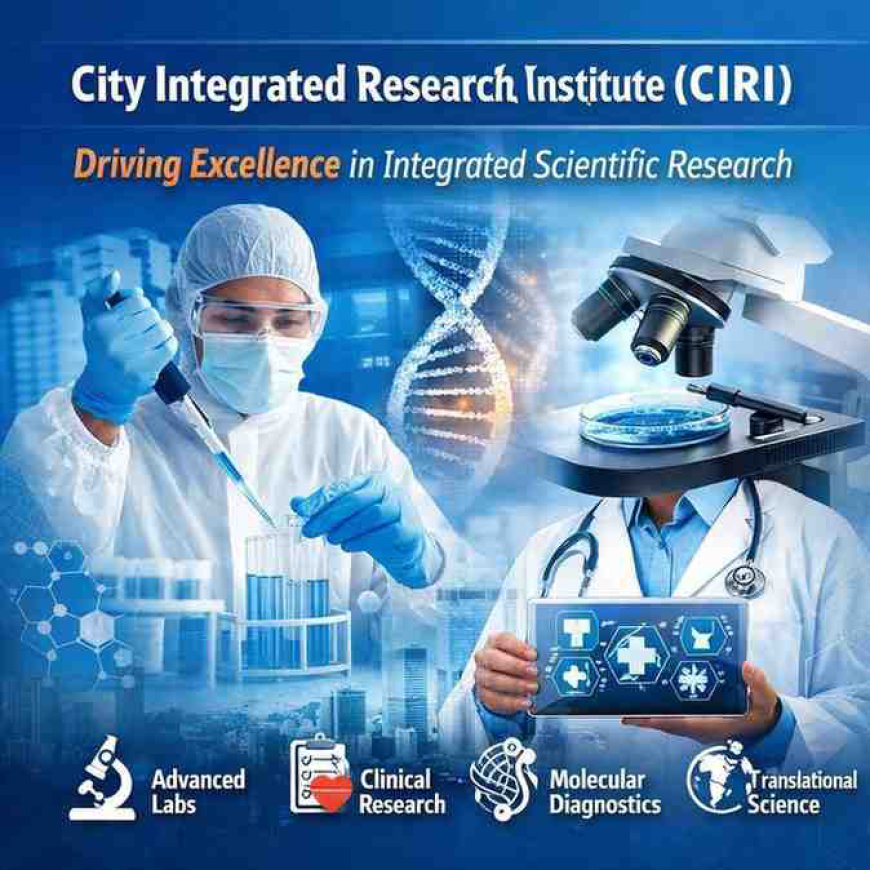
In today’s fast-evolving healthcare landscape, integrated research and advanced diagnostics play a crucial role in shaping better patient outcomes and smarter clinical decisions. Institutions that combine scientific innovation with real-world applications are transforming urban healthcare systems. City Integrated Research Institute stands at the forefront of this transformation, driving collaboration between clinicians, researchers, and technologists. After decades of fragmented approaches, CIRI has emerged as a powerful model that bridges research excellence with practical healthcare solutions, ensuring that innovation directly benefits communities and strengthens diagnostic ecosystems.
What Is CIRI?
CIRI represents a comprehensive framework for integrated medical research, clinical validation, and technological advancement. Instead of functioning as isolated laboratories or research units, it promotes a connected environment where multidisciplinary teams work together to address pressing healthcare challenges.
The foundation of CIRI lies in three pillars:
- Collaborative Research
- Advanced Diagnostic Integration
- Community-Focused Innovation
By aligning academic insight with clinical practice, CIRI ensures that research findings are not confined to journals but translated into real-world healthcare improvements.
The Core Vision Behind CIRI
The healthcare industry has long faced challenges such as delayed diagnoses, limited data sharing, and gaps between research discoveries and patient care. CIRI addresses these issues by creating a unified ecosystem where research, diagnostics, and treatment strategies evolve together.
Its core vision includes:
- Promoting interdisciplinary collaboration
- Accelerating translational research
- Enhancing diagnostic accuracy
- Leveraging digital health technologies
- Building sustainable urban health systems
Through this structured approach, CIRI fosters innovation that is practical, scalable, and measurable.
Integrating Research with Diagnostics
One of the most impactful aspects of CIRI is its focus on integrating research with diagnostic services. Advanced laboratory techniques, imaging technologies, and data analytics are combined to create a seamless healthcare model.
For example, partnerships with advanced diagnostic centres such as City Imaging Clinical Lab contribute significantly to this ecosystem. By incorporating state-of-the-art imaging and laboratory testing services into research frameworks, CIRI ensures:
- Faster detection of diseases
- More accurate clinical correlations
- Improved patient monitoring
- Data-driven treatment strategies
This synergy between research and diagnostics reduces the gap between hypothesis and clinical implementation.
Technology and Data-Driven Innovation
CIRI emphasises the importance of digital transformation in healthcare. The use of artificial intelligence, machine learning, and predictive analytics has revolutionised research methodologies.
Key technological advancements under CIRI include:
1. AI-Powered Diagnostics
Artificial intelligence assists in analysing imaging scans, pathology slides, and laboratory data with enhanced precision.
2. Real-Time Data Sharing
Integrated digital platforms enable secure and real-time sharing of research findings among professionals.
3. Predictive Healthcare Models
Data analytics helps forecast disease trends, allowing preventive strategies to be implemented before conditions worsen.
By embedding technology into every layer of research and diagnostics, CIRI enhances efficiency, reduces human error, and promotes evidence-based medical decisions.
Strengthening Urban Healthcare Systems
Urban healthcare systems face unique challenges, including population density, diverse disease patterns, and resource constraints. CIRI plays a vital role in strengthening these systems through structured research programs and community-driven initiatives.
Its impact on urban health includes:
- Early disease screening programs
- Public health awareness campaigns
- Policy-driven research initiatives
- Collaboration with diagnostic and imaging centres
By aligning research objectives with real-world healthcare demands, CIRI ensures sustainable growth in metropolitan medical infrastructure.
Empowering Experts and Professionals
A major strength of CIRI lies in its multidisciplinary team of experts. Researchers, clinicians, pathologists, radiologists, and data scientists work together under a unified vision.
This collaborative culture results in:
- Cross-disciplinary innovation
- Faster clinical validation of research findings
- Continuous professional development
- Knowledge exchange across specialities
When professionals operate in silos, innovation slows. CIRI eliminates these silos by encouraging transparent communication and shared accountability.
Advancing Preventive Healthcare
Preventive healthcare is a key priority in modern medicine. Rather than focusing solely on treatment, CIRI emphasises early detection and risk assessment.
Through advanced diagnostics and predictive modelling, it supports:
- Screening for chronic diseases
- Genetic risk assessment
- Lifestyle-based health analytics
- Early-stage disease identification
The integration of imaging services and laboratory diagnostics—supported by facilities like City Imaging Clinical Lab—enables healthcare providers to detect abnormalities at earlier stages, improving survival rates and reducing treatment costs.
Bridging Research and Real-World Impact
One of the biggest challenges in medical research is translating discoveries into clinical practice. CIRI addresses this by creating structured pathways for implementation.
These include:
- Clinical trial integration within diagnostic networks
- Collaboration between research scholars and practising doctors
- Continuous monitoring of treatment outcomes
- Evidence-based policy recommendations
By aligning innovation with implementation, CIRI ensures that research investments yield tangible benefits for patients and healthcare providers.
Sustainability and Future Outlook
Healthcare sustainability is becoming increasingly important in urban environments. CIRI contributes to long-term resilience by:
- Encouraging resource optimisation
- Promoting cost-effective diagnostic strategies
- Implementing scalable research models
- Supporting digital healthcare ecosystems
As medical science evolves, the demand for integrated research models will only increase. CIRI is well-positioned to adapt to emerging technologies such as precision medicine, genomic diagnostics, and remote healthcare monitoring.
The future will likely see:
- Greater integration of wearable health data
- Expansion of AI-based screening programs
- Enhanced collaboration between research institutions and diagnostic laboratories
- Broader community engagement initiatives
By staying ahead of technological and clinical trends, CIRI continues to redefine how research supports healthcare advancement.
Why CIRI Matters Today
Modern healthcare demands accuracy, speed, and innovation. Fragmented systems no longer meet the needs of growing urban populations. CIRI offers a cohesive solution that connects research, diagnostics, and patient care into one streamlined framework.
Its benefits include:
- Improved diagnostic precision
- Faster research-to-clinic transitions
- Enhanced public health strategies
- Stronger collaboration between institutions
By combining cutting-edge research with advanced diagnostic services and collaborative networks, CIRI establishes a blueprint for next-generation healthcare systems.
Conclusion: The Lasting Impact of CIRI
As healthcare systems worldwide strive to become more efficient and patient-centred, integrated research models are proving essential. City Integrated Research Institute exemplifies how structured collaboration, advanced diagnostics, and technological innovation can reshape urban healthcare landscapes. By fostering partnerships with diagnostic facilities such as City Imaging, Clinical Lab, and leveraging digital transformation, it ensures that research findings translate into real clinical impact. Ultimately, the continued growth and evolution of CIRI will play a defining role in building smarter, more resilient healthcare systems for the future.