Digital Marketing Course in Kolkata: A Practical Guide
Thinking about a digital marketing course in Kolkata? Here's an honest, practical guide to choosing the right training and building real skills.
 RaghavChauhan
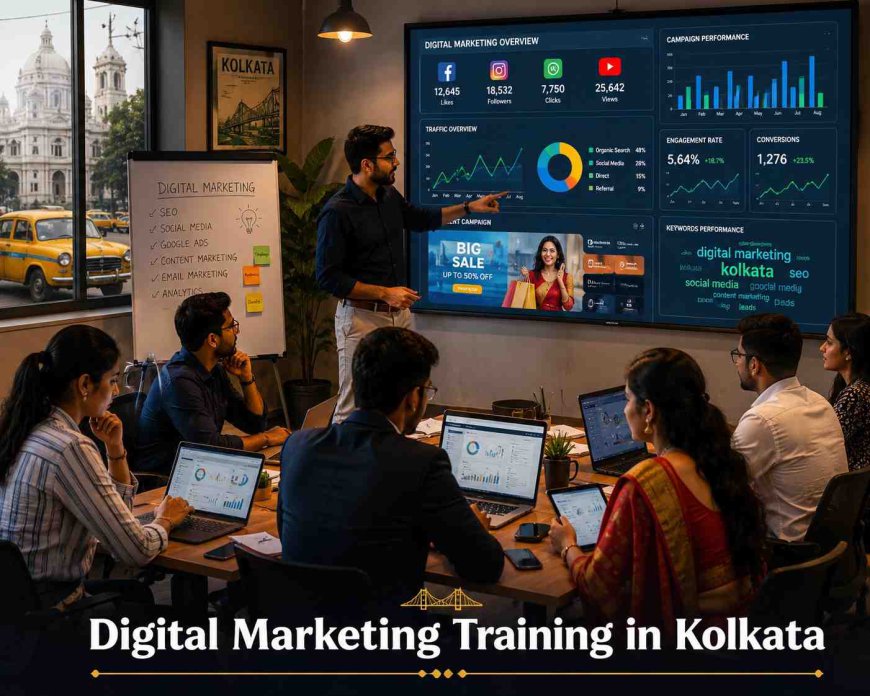
A few years back, if you asked someone in Kolkata what "digital marketing" meant, you'd probably get a blank stare or a vague answer about Facebook pages. That's changed fast. Now walk into almost any office — a garment exporter near Burrabazar, a small fintech in Salt Lake, even family-run jewellery shops trying to sell online — and someone there is running ads, tracking clicks, or writing product descriptions meant to rank on Google. The job exists now in a way it simply didn't before.
That shift explains why so many people are suddenly looking into digital marketing training in Kolkata, whether they're fresh graduates, people switching careers mid-way, or small business owners who got tired of paying an agency to do things they suspect aren't that complicated.
Here's the part nobody puts on the brochure, though: a lot of these courses aren't very good. Some are almost entirely theory — slides, definitions, maybe a quiz. Others hand you screenshots of a Facebook Ads dashboard and call it hands-on training. If you're going to spend money and months of your time on this, it's worth knowing what separates a course worth taking from one that just looks good in an advertisement.
Why This Field Actually Matters Right Now
Marketing budgets have been moving online for a while, and that's not really news anymore. What's changed is how fast it's happening even for smaller, local businesses — the kind that used to rely purely on word of mouth or a newspaper ad once in a while.
For someone hunting for a job, this means real, growing demand for people who understand SEO, paid ads, content, and analytics — not just one of those, but how they fit together. For someone running a business, it means the skills are worth learning yourself, because the difference between a marketer who understands the numbers and one who doesn't shows up directly in revenue.
The tricky bit is that "digital marketing" covers an enormous range of work. Writing a blog post and running a ₹5 lakh ad campaign both fall under it, technically. A decent course should help you figure out where you actually want to specialise instead of just throwing every topic at you and hoping something sticks.
The Skills Worth Actually Learning
Whichever institute you end up choosing, make sure the course genuinely covers these, and covers them properly:
SEO — and I mean actual on-page and technical SEO, not a keyword list copied from some tool. Paid advertising on Google and Meta, including how to actually plan a budget instead of just clicking "boost post." Content marketing that ties back to a business goal, not just writing for the sake of writing. Email marketing, which people underrate constantly despite it still being one of the better-performing channels out there. Analytics — being able to open Google Analytics and actually understand what you're looking at, not just glance and nod. And social media strategy that goes beyond posting on a schedule.
If a course barely touches analytics, that's worth noticing. Numbers are really what separate marketing that works from marketing that just feels like it's working.
What to Actually Look For in a Course
Kolkata now has no shortage of institutes offering this kind of training — some are small, local setups, others more structured with actual industry tie-ups. The quality gap between them is bigger than you'd expect, so it helps to ask the right questions before you hand over your fees.
Ask If There Are Real Projects Involved
A programme built entirely around slides and multiple-choice quizzes won't prepare you for what client work actually looks like. Ask directly — do they let you work on live ad accounts? Real websites? Actual case studies you can point to later?
Agencies and e-commerce companies in Kolkata generally care far more about what you can show them than which certificate is hanging on your wall. Two or three real campaigns in a portfolio will get you further than a folder full of quiz scores.
Find Out Who's Teaching
This sounds obvious, but people skip it constantly. Ask about the instructor's actual background — have they run real campaigns with real budgets, or are they mostly reading off someone else's slide deck? These are very different teaching experiences, and you'll feel it within the first week either way.
Most decent institutes will let you sit in on a trial class if you ask. If they hesitate, that tells you something too.
Don't Overvalue the Certificate Itself
A certificate from a local training institute isn't the same thing as a university degree, credibility-wise. What actually matters more is the portfolio and the practical skill you walk away with. A lot of people pair their institute certificate with Google's own free Ads and Analytics certifications, which carry more recognition simply because Google issues them directly.
Compare Duration and Depth
Training here typically runs anywhere from a few intensive weeks to structured six-month programmes. If you already know some marketing basics, a shorter, specialised course makes sense. If you're starting from zero, you probably need the longer route so the fundamentals actually sink in before you specialise.
If you're still comparing options, there's a fairly detailed breakdown on the Digital Marketing Course in Kolkata page that lines up several institutes against each other instead of just pushing one.
Mistakes People Keep Making
After talking to a fair number of people who've gone through these programmes, the same few mistakes come up again and again.
Picking based on price alone. The cheapest course isn't necessarily bad, and the priciest one isn't automatically worth it. A ₹15,000 course with a mentor who actually responds to your questions can beat a ₹50,000 one that's mostly pre-recorded video with no feedback loop.
Not asking what "placement assistance" actually means. Almost every institute claims 100% placement support. In practice, that phrase can mean anything from "we'll email you job listings" to "we have zero real connections, but the brochure looked incomplete without this line." Ask specifically what support looks like — mock interviews, resume help, direct company tie-ups — before you believe the claim.
Chasing tools before understanding fundamentals. New learners often get excited about AI marketing tools and automation software before they've grasped basic principles like audience research or what actually makes someone convert. Tools change every year. The fundamentals mostly don't. A good course teaches the fundamentals first and treats tools as something you pick up along the way.
Things You Can Start Doing Before You Even Enrol
You don't need a classroom to start learning some of this. A few things worth trying on your own:
Start a small blog or page around something you actually care about, and track its growth using free analytics tools. Go through Google's free Skillshop courses on Ads and Analytics — they're not glamorous, but they'll give you a real feel for the platforms. Read a few agency case studies to understand how campaigns get built and measured in practice. Try writing ad copy for a made-up product and ask someone in the field to critique it honestly.
Doing even a little of this beforehand makes the classroom part far more useful, since you're not starting from zero and can spend your time on strategy instead of basics.
Making the Final Call
Choosing between the various options for digital marketing training in Kolkata doesn't need to be complicated if you're methodical about it. Visit in person where you can, sit through a demo class, talk to one or two people who've already finished the course, and ask pointed questions about mentorship and real project work rather than accepting vague reassurances.
If you'd rather do your research online first, sites like Mivja publish comparisons of local training providers fairly regularly, which can save you a lot of back-and-forth phone calls.
Final Thoughts
A course is only as good as the effort and real exposure built into it. Kolkata genuinely has solid options available now — the responsibility is really on the learner to pick well and then actually use the opportunity. Favour programmes built around real projects, mentors with real experience, and skills you can measure over ones that simply advertise the loudest. That approach tends to hold up a lot better once you're actually applying for jobs.
Frequently Asked Questions
1. How long does a digital marketing course in Kolkata usually take?
Anywhere from four weeks for a focused, intensive workshop up to six months for a full diploma-style programme, depending on how deep it goes.
2. Do I need prior marketing experience to join?
Not really. Most beginner courses assume you're starting from scratch and build up from there before touching paid ads or analytics.
3. Can you actually get a job in this field without a formal degree?
Yes, and it happens often. A lot of recruiters here care more about your portfolio and practical skills than your degree, especially for entry-level roles.
4. What do these courses typically cost?
It varies quite a bit — usually somewhere between ₹15,000 and ₹60,000, depending on how long the course runs and whether it includes real project work.
5. Are online courses just as good as classroom ones?
They can be, but only if there's genuine mentor interaction and hands-on project work involved — not just a stack of pre-recorded videos.