Ensuring Operational Safety with Advanced GE Control Technology
Ensure turbine safety with advanced GE control technology: real-time monitoring, rapid response, and reliable industrial protection systems
 george968725
Introduction: Safety at the Core of Turbine Operations
In the turbine industry, operational safety is fundamental to maintaining reliability, protecting assets, and ensuring continuous power generation. Gas and steam turbines operate under extreme mechanical and thermal stress, where even minor system deviations can escalate into serious failures. As a result, advanced control systems are essential for maintaining safe and stable operations.
Technologies developed by General Electric (GE) have become central to modern turbine control strategies. These systems combine high-speed processing, intelligent diagnostics, and layered safety architectures to protect both equipment and personnel in demanding industrial environments.
The Importance of Safety Controllers in Turbine Systems
Real-Time Monitoring and Rapid Response
Turbines function in highly dynamic conditions. Critical parameters such as rotor speed, vibration levels, combustion temperature, exhaust pressure, and fuel flow must be constantly monitored. Advanced safety controllers continuously analyze these signals in real time.
If abnormal conditions arise—such as overspeed, high vibration, or temperature excursions—the system immediately initiates protective actions. These may include load reduction, fuel cutoff, or a full emergency shutdown. The speed and precision of these responses are crucial in preventing equipment damage and ensuring plant safety.
Separation of Control and Protection
A defining feature of modern turbine systems is the separation between operational control and safety protection. While the main control processor manages turbine performance and efficiency, a dedicated safety controller operates independently to execute critical protection logic.
This separation ensures that even if the primary control layer encounters a fault, the safety system remains fully functional and capable of initiating protective measures.
Dedicated Safety Controller Modules in Turbine Applications
Concept and Function
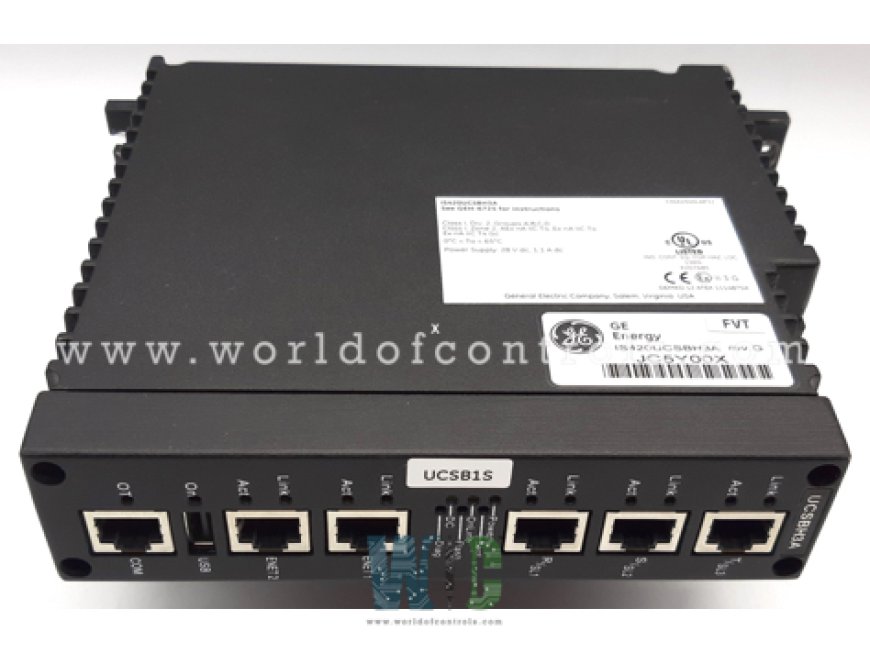
Within GE’s advanced turbine control platforms, a specialized safety controller module serves as the core of the protection layer. This module is designed specifically to handle safety-critical tasks, including:
-
Processing redundant sensor inputs
-
Executing predefined safety logic
-
Managing emergency trip systems
-
Supervising shutdown sequences
-
Communicating with other system components
In practical terms, this module acts as the “guardian” of the turbine. It evaluates incoming data against configured safety thresholds and determines whether conditions are within safe operating limits.
Role in Overspeed and Trip Protection
One of the most critical functions in turbine operation is overspeed protection. If a turbine exceeds its safe rotational speed, mechanical damage can occur within seconds. The safety controller continuously monitors speed signals and triggers immediate shutdown if limits are breached.
Similarly, excessive vibration or abnormal combustion conditions are rapidly detected and addressed. This high-speed decision-making process is essential for maintaining mechanical integrity and operational continuity.
Integration Within Advanced GE Control Platforms
Unified Architecture
GE’s turbine control systems are built on an integrated architecture that combines monitoring, control, and protection within a single framework. The dedicated safety controller module works alongside main control processors while maintaining logical independence.
This architecture offers several advantages:
-
Improved system reliability
-
Reduced risk of single-point failures
-
Simplified maintenance and diagnostics
-
Enhanced compliance with industrial safety standards
Built-In Diagnostics and Redundancy
Redundancy is a critical design principle in turbine safety systems. Multiple processors, communication paths, and input channels ensure continuous operation even if one component fails.
Additionally, built-in diagnostics constantly assess the health of hardware and software components. Early detection of faults allows maintenance teams to address issues proactively, minimizing unplanned downtime.
Benefits for Power Generation and Industrial Facilities
Increased Reliability and Availability
By incorporating advanced safety controllers, turbine operators can significantly reduce forced outages. Rapid fault detection and automatic protective actions help preserve equipment life and maintain operational stability.
Regulatory and Standards Compliance
Industrial facilities must comply with strict safety and performance regulations. Advanced GE control technology supports compliance by providing documented event logs, traceable shutdown records, and structured safety logic frameworks.
Enhanced Operational Confidence
Operators gain confidence knowing that an intelligent protection system is actively monitoring every critical parameter. This assurance supports better decision-making and smoother plant operations.
The Future of Turbine Safety Technology
As the energy sector evolves, digitalization and predictive analytics are becoming integral to turbine management. Safety controller modules are increasingly integrated with remote monitoring tools, cybersecurity layers, and data analytics platforms.
These advancements enable smarter diagnostics, faster troubleshooting, and improved long-term reliability—ensuring that turbine systems remain safe in increasingly complex operational environments.
Conclusion
Operational safety in the turbine industry demands more than traditional control methods. It requires advanced, dedicated safety technology capable of real-time monitoring, rapid response, and fault-tolerant performance. Through its integrated control platforms, General Electric continues to provide robust safety solutions that protect critical turbine assets and support reliable power generation.
In high-stakes industrial settings, advanced GE control technology remains a cornerstone of secure, efficient, and resilient turbine operations.