Fixed Price Or Hourly Rate: What's Right For Your Agency?
Can't choose? Learn how many modern agencies use Fixed Cost vs Hourly Model to ensure fair pay for every minute worked.
 infooscorm2
A study conducted by HubSpot indicated that when agencies are involved in a project, 65 percent find it problematic with creep in the scope. Invoices issued by hourly billing agencies are often challenged by clients. The preference is not the only one among the numerous preferences in the Fixed Cost vs Hourly Model. It affects your bottom line, your credibility with clients and team morale of your company.
-
On fixed projects, scope creep is found in 65% of agencies.
-
Most clients (72%) prefer to have a familiar and set price.
-
A tripled amount of conflicts in the case of Fixed Cost vs Hourly Model invoicing.
Why Does Pricing Model Choice Actually Matter?
An Austin digital agency has changed to a fixed fee model in 2022. The close rate increased by 40% in the span of only two quarters. Customers ceased bargaining.
No, pricing is more than that. It impacts the perception of your value by customers. You sound more of a salesperson when you charge per hour. When you accept a fixed price, you are putting yourself as a collaborator but with some objective.
What Exactly Is the Fixed Cost Model and When Does It Work?
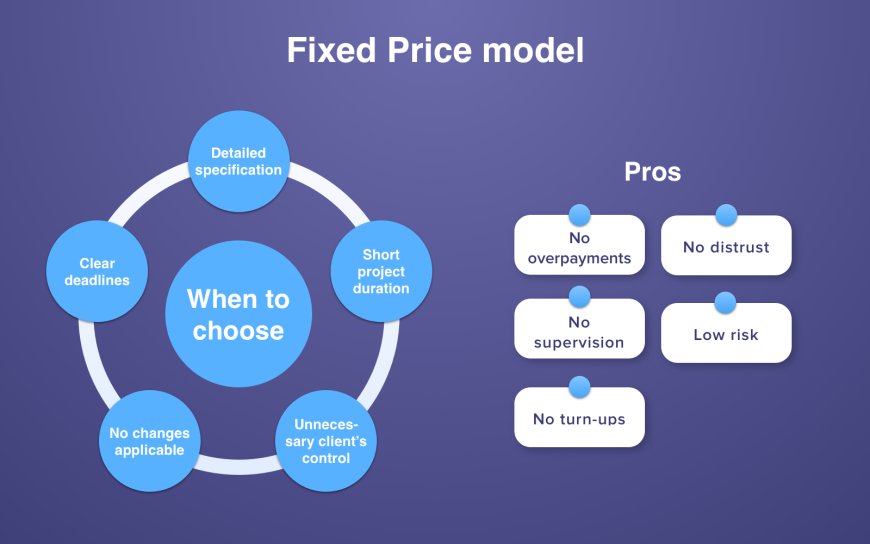
Price is pre-determined by an agreed Fixed Cost vs Hourly Model cost. The customer knows the amount cost. Your juncture is articulate.
Within an explicit scope, it does a commendable job. Logo creation, ad campaign development, Web-site redesigns or a structured content package.
As an example, consider a branding studio in the United Kingdom. They have put in place a fixed-price policy in all identity initiatives (2020). Hourly rates were no longer compared by the clients of the freelancers, which increased their average project value by 28%. An outcome-based price was achieved at a premium.
Efficiency is rewarded by fixed pricing. You do not even need to speak to your staff a talk that you do not want to hear; provided that your team can accomplish a task in 20 hours rather than 30.
Nevertheless, low estimates are bridged by predetermined pricing. The agency incurs the loss in case a web site initiative turns into a six-month catastrophe. The agencies do not take into consideration that risk adequately.
Where Does the Hourly Model Still Win?
Speaking of Fixed Cost vs Hourly Model, any continuously running or continuously changing project will be most appropriate under an hourly payment method. Examples of monthly retainers could be contingency plans, consultation, developing it iteratively with evolving requirements, or strategy work with an uncertain end result.
Hourly billing is used for all development retainers by a Berlin-based SaaS product agency. The rationale behind it is clear. The opinion of the client constantly changes. Both protecting the team and keeping the client accountable to change requests are accomplished in terms of hourly billing.
Hourly affords you a dispensation when the job is atrocious. Each hour that you log will be paid. You will not have to guess.
One of the negative elements is customer stress. It is painful because the time on a tracker passes by. Clients are challenging time logs. Perception management is treated just like real work management.
What Do the Numbers Actually Say About Agency Profitability?
A report by the Agency Management Institute in 2023 compares value-based fixed prices between agencies that do pure hourly and those that do not, finding that value-based fixed prices have 1825% larger margins in agencies.
The other side is this, though. Those agencies that billed on an hourly basis saw a reduction in project overruns of 30% as all overrun time was billed.
The figures play to the advantage of set price, assuming good estimates. When you fail to do so, then that consumes your margins. Hourly billing has limited upside potential but it benefits that there is a safety net.
Quarterly, a medium-sized Sydney SEO firm monitors profitability of each project. They found out that the profit margin of the hourly paying clients on retainer per month was 12 percent higher than that of clients with fixed one time projects.
This Blog All Read:- Step-by-Step Guide to Outsourcing Software Projects from India
Which Model Should Your Agency Actually Choose?
Prior to estimating a project's cost, kindly ask three questions when it comes to Fixed Cost vs Hourly Model.
First, how well can you define the scope?
Provided that the deliverables are completely clear, go ahead and do so. Embark on hourly or hybrid in the case the scope is to vary.
Second, what is the client type?
Fixed price is beneficial in the case of new clients who have never worked with an agency before. This leaves them with less doubt. Hourly or retainer models are more appropriate with clients who have ongoing, changing needs.
Third, what is the risk level?
High complex projects with unknown should never be quoted on a flat-rate basis with weak buffers. It is common to many established companies to add a 20-30% risk buffer to each set estimate.
FAQs
Can an agency charge both fixed and hourly rates?
Projects that have a distinct scope like a logo or a landing page are suitable candidates to fixed pricing. Planned hourly work with clients who have variable needs and need constant attention, consultation, or development.
What is the greatest mistake that agencies can commit regarding fixed pricing?
It is not surprising that the agencies may make losses on fixed works because of the inability to predict and plan lots of aspects like inter-agency communications, revision cycles, delays in the receiving feedback, and unexpected technological issues.
Does hourly billing make law firms appear incompetent?
Hourly billing that is structured in terms of knowledge and openness evokes professionalism. The problem lies in the fact that now clients can be surprised by hourly invoices.