India Saree Market 2026-2034: Key Trends, Consumer Insights and Future Growth
The India saree market size was valued at USD 6.15 Billion in 2025 and is projected to reach USD 10.77 Billion by 2034, growing at a compound annual growth rate of 6.43% from 2026-2034.
 Samwalter
According to IMARC Group's report titled "India Saree Market Size, Share, Trends and Forecast by Type of Saree, Price Range, Distribution Channel, and Region, 2026-2034", the report offers a comprehensive analysis of the industry, including industry growth, trends, share, and regional insights.
Market Quick Facts
-
Market Size in 2025: USD 6.15 Billion
-
Expected Size by 2034: USD 10.77 Billion
-
Compound Annual Growth Rate (CAGR): 6.43% (2026-2034)
-
Leading Type of Saree: Cotton Sarees (23% Share)
-
Leading Price Range: Economy Sarees (55% Share)
-
Leading Distribution Channel: Offline (65% Share)
-
Leading Region: North India (36% Share)
Industry Overview
The India saree market represents a dynamic blend of traditional cultural heritage and contemporary fashion trends, supported by both time-honored weaving practices and modern production methods. The industry caters to diverse consumer demographics across various age groups, regions, and income levels, providing products for everyday wear, festive occasions, and ceremonial functions. The market is evolving with shifting consumer preferences toward convenience, ready-to-wear options, and digital integration, while benefiting from strong government policy support for artisans and growing global recognition of Indian textile craftsmanship.
Market Segmentation Breakdown
By Type of Saree
The market is segmented into Cotton Sarees, Silk Sarees, Synthetic Sarees, Linen Sarees, Chiffon Sarees, Georgette Sarees, Designer Sarees, Handloom Sarees, and Others.
-
Leading Segment: Cotton Sarees held the largest share of 23% in 2025. This position is sustained by inherent fabric characteristics like breathability and moisture absorption that suit India's tropical and subtropical climates. Production ranges from traditional handlooms to mechanized methods, creating diverse price points for various economic segments. Additionally, the versatility of cotton allows for extensive experimentation with printing and dyeing, while low raw material costs make it highly viable for smaller production units.
By Price Range
The market is segmented into Economy Sarees, Mid-Range Sarees, and Premium/Luxury Sarees.
-
Leading Segment: Economy Sarees held the largest share of 55% in 2025. This segment serves as the primary accessible entry point for price-conscious consumers who prioritize functional value and affordability for regular usage. It includes synthetic blends and machine-woven options that lower production costs while maintaining acceptable standards for daily wear. Furthermore, efficiency is driven by bulk production and extensive wholesale networks that seamlessly connect manufacturing hubs to rural and smaller town markets.
By Distribution Channel
The market is segmented into Online and Offline channels.
-
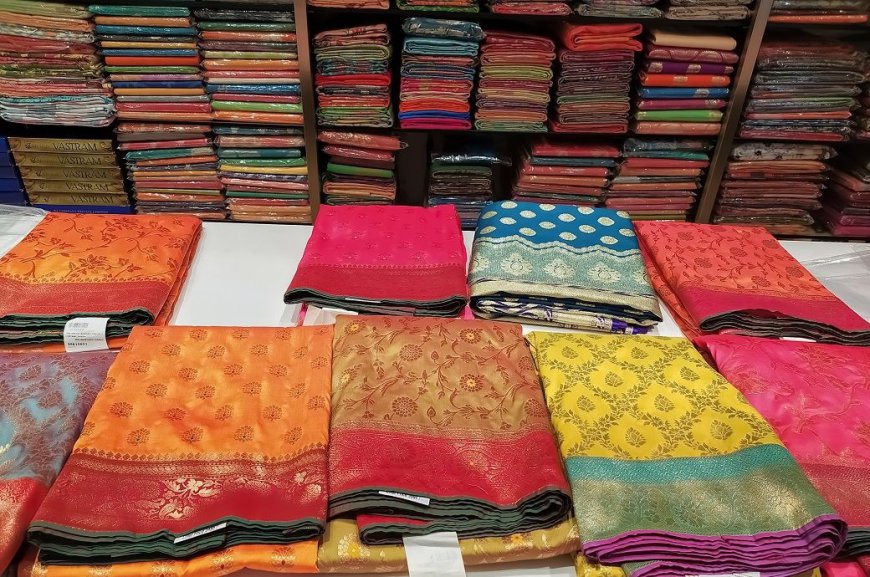
Leading Segment: Offline channels held the largest share of 65% in 2025. Traditional brick-and-mortar retail dominates transactions because consumers prefer tactile and visual evaluation of fabric weight, drape, and color accuracy before purchasing. Physical stores also offer personalized consultations through sales personnel, which builds strong consumer loyalty. This channel encompasses diverse formats from specialized showrooms to neighborhood boutiques, benefiting from immediate possession and a preference for cash transactions in smaller markets.
By Region
The market is geographically segmented into North India, South India, East India, and West India.
-
Leading Segment: North India held the largest share of 36% in 2025. This geographical dominance is driven by dense population centers and a strong cultural affinity for traditional attire during weddings, religious ceremonies, and social gatherings. The region benefits from prominent textile manufacturing clusters like Varanasi and Lucknow that specialize in premium weaving and intricate embroidery. Furthermore, robust purchasing power in major urban centers supports a competitive marketplace with strong distribution networks connecting hubs to retail outlets.
➤ Request Sample Report (TOC & Charts)
Growth Drivers & Market Restraints
What is driving the market?
-
Workforce Participation: Rising female labor force participation, climbing from 23.3% in 2017–18 to 41.7% in 2023–24, drives consistent demand for easy-care professional attire in corporate and government environments.
-
Government Support: Increased budget allocations for handloom schemes from INR 219.85 crore in 2020-21 to INR 367.67 crore in 2024-25 help revitalize weaving clusters and protect authentic heritage textiles.
-
Occasion-Specific Demand: Growing household affluence drives the diversification of product portfolios into casual, fusion, and premium designer segments tailored for specific social events.
What are the main challenges?
-
Alternative Formats: Ready-to-wear alternative ethnic clothing like kurtis, anarkalis, and palazzo sets present substitution threats due to their convenience and lower styling effort.
-
Maintenance Requirements: High-end varieties demand specialized care such as dry cleaning and meticulous storage, which can be difficult due to urban housing constraints.
-
Quality Inconsistencies: Pronounced market fragmentation leads to limited product standardization in fabric quality, alongside the presence of counterfeits that compromise consumer confidence.
Competitive Landscape & Key Player Positioning:
Covering an in-depth analysis of the competitive landscape, market structure, key player positioning, competitive dashboards, top winning strategies, and detailed profiles of all major industry participants you will gain access to all these exclusive insights within the full research report.
Note: If you need specific information that is not currently within the scope of the report, we can provide it to you as a part of the customization.
➤ Shape the Data to Answer Your Specific Questions - Request Customization
Frequently Asked Questions (FAQs):
- Why are cotton sarees the most popular choice in India?
- Why do offline stores dominate the saree market in India?
- How is government support helping the handloom saree industry in India?
- Why is North India the largest regional market for sarees in India?
- What are the major challenges facing the India saree market?
Strategic Insight & Verdict
India's saree market combines cultural necessity with evolving professional wear demand, government-backed handloom investment, and digital platform-enabled geographic expansion creating a multi-layered growth thesis beyond ceremonial occasion cycles. Based on our analysis, we at IMARC Group have observed that brands combining GI-certified authentic regional weaves, contemporary fusion design capability, and digital-first discovery platforms are best positioned to capture value as the market scales toward USD 10.77 Billion by 2034.