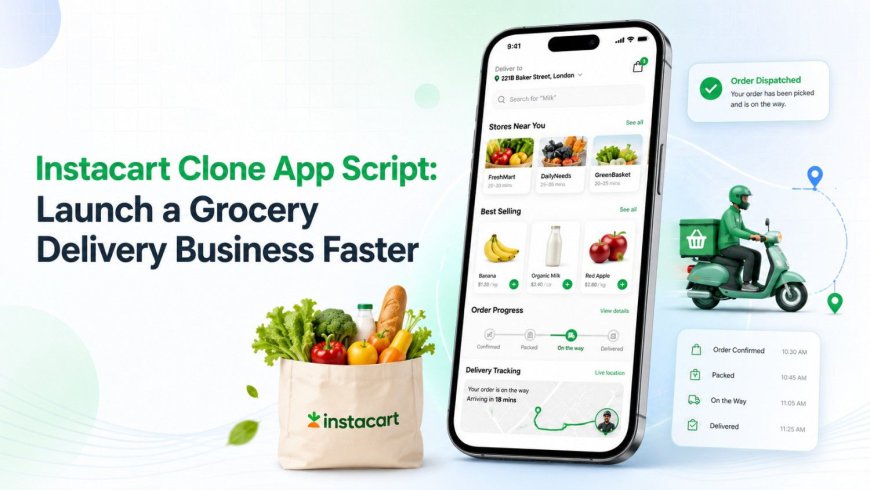
Instacart Clone App Script: Launch a Grocery Delivery Business Faster
Launch your grocery delivery business with a customizable Instacart Clone App Script featuring customer, vendor, delivery apps, and an advanced admin panel.
 simonharris
In today's fast-paced world, the convenience of grocery delivery services has become a staple for consumers seeking to save time and effort. The success of platforms like Instacart highlights the growing demand for efficient grocery shopping solutions, making it an opportune moment for aspiring entrepreneurs to enter this booming market.
By leveraging an Instacart clone app script, you can significantly accelerate the launch of your grocery delivery business while benefiting from established features and functionalities. This article explores the essential components, advantages, and strategies needed to successfully develop and market your own grocery delivery app, helping you capitalize on this lucrative opportunity.
Understanding the Instacart Clone App Concept
What is an Instacart Clone App?
An Instacart Clone App is basically a grocery delivery app that closely resembles the original Instacart, allowing you to capitalize on the booming online grocery shopping trend without starting from scratch.
It’s like getting a cheat sheet for a test—except the test is launching your business, and the subject is millions of hungry shoppers! With this app, users can browse stores, select items, and have their groceries delivered right to their door, all while you sit back and watch your empire grow.
Market Demand for Grocery Delivery Services
Gone are the days when we had to brave the grocery store aisles. Nowadays, consumers crave convenience like it's the last slice of pizza at a party. The grocery delivery market has exploded as people juggle busy schedules, work-from-home life, and the undeniable lure of pajamas over pants. As a result, demand for grocery delivery services is soaring—making it the perfect time to launch your very own Instacart clone app!
Key Features of an Instacart Clone App
User-Friendly Interface
No one likes a complicated app—it's like trying to assemble IKEA furniture without the instructions. Your Instacart clone should have a sleek, intuitive interface that makes shopping feel like a walk in the park (or a stroll through the grocery store, minus the impulse buys). Easy navigation and a clean design will have users coming back for more.
Real-Time Order Tracking
Ever wanted to be a fly on the wall and see how your groceries are getting from point A to point B? With real-time order tracking, users can keep tabs on their delivery like it's a high-stakes game of “Where’s Waldo.” They’ll appreciate knowing exactly when to expect their avocado toast ingredients, and you’ll look like the hero who made it all happen.
Multiple Payment Options
Flexibility is key—especially when it comes to payment options. Your app should support various methods, from credit cards to digital wallets, so users can pick their poison (or payment method). Making transactions smooth and easy is the first step toward turning those one-time buyers into loyal customers!
Inventory Management System
Managing inventory might not be as exciting as a blockbuster movie, but it’s definitely crucial to your app’s success. An effective inventory management system ensures that users can see real-time product availability and reduces the likelihood of those dreaded “oops, we’re out of stock” moments. That means happier customers and a more efficient operation—everyone wins!
Benefits of Launching a Grocery Delivery Business
Growing Consumer Demand
As mentioned, grocery delivery is hot right now—like summer in the desert! With consumers increasingly favoring convenience and online shopping, starting your grocery delivery service is like hitting the jackpot. You’ll be on the fast track to cashing in on this trend while keeping customers satisfied and well-fed.
Low Overhead Costs
Let’s talk about money, baby! One of the best parts of launching a grocery delivery business is the low overhead costs. You don’t need a massive storefront, and you can operate primarily online. Plus, you can avoid expenses such as hiring extra staff—think of the savings that can go towards your next vacation (or maybe just more avocados).
Scalability Potential
The sky's the limit with scalability! Starting with a local service? You can expand to neighboring areas as your business grows. With the right strategies and a solid app, turning a small operation into a regional sensation is totally doable. Just imagine telling your buddies how you went from delivering groceries on a bike to running a delivery empire!
Steps to Develop Your Grocery Delivery App
Market Research and Analysis
Before diving headfirst into app development, take a step back and do your homework. Understanding your target audience, their preferences, and competitors is crucial. Think of it as preparing for a big exam—knowing the material will give you the upper hand and set you up for success.
Choosing the Right Technology Stack
Selecting the right tech stack is like choosing the right ingredients for a recipe. You want the best mix for a delicious outcome. Consider factors like scalability, security, and user experience. The right technology will help you create an app that’s as satisfying as a perfectly cooked meal (and less likely to give you a food coma).
Developing a Minimum Viable Product (MVP)
Launching an MVP is like throwing a party with just the essentials—music, snacks, and a good vibe. Start with core features and get feedback from real users. This will help you understand what works, what doesn’t, and what you can improve before going big. Who needs a fancy spread when you can serve just the right amount of awesomeness?
Customization Options for Your Clone App
Branding and Design Choices
When it comes to making your grocery delivery app stand out, branding is key. You’ll want to choose color schemes, logos, and fonts that reflect your unique vibe. Whether you’re channeling a sleek, modern look or a cozy, farmer's market feel, your design should resonate with your target audience. Remember, first impressions matter—don’t make customers feel like they’ve stepped into a generic big-box store!
Integrating Unique Features
What sets your app apart from the sea of grocery delivery apps? Perhaps it's a “chef’s choice” feature that suggests personalized recipes based on user preferences, or a subscription service that delivers pantry staples monthly. Think outside the (shopping) box and integrate features that cater to specific customer needs. Who doesn’t appreciate the ability to schedule deliveries at their convenience or track their delivery in real-time?
Third-Party API Integrations
Enhancing user experience often involves embracing the power of technology through third-party API integrations. Want to allow users to check for the freshest produce? Integrate a local farm supply API! Perhaps you want to offer real-time traffic updates for deliveries? There’s an API for that too. The right integrations can streamline processes and boost operational efficiency, making your app a joy to use—because who doesn’t want their groceries delivered without a hitch?
Marketing Strategies for Your Grocery Delivery Service
Building a Strong Online Presence
Your grocery delivery service needs an online home that customers love to visit (and not just for the free Wi-Fi). Start with an optimized website that’s user-friendly, visually appealing, and packed with relevant content. Don’t forget your search engine optimization (SEO) game; you want customers to find you when they’re Googling “fast grocery delivery near me.” A solid blog showcasing recipe ideas or grocery hacks can enhance your presence too!
Utilizing Social Media Marketing
If you’re not on social media, do you even exist? Use platforms like Instagram and Facebook to showcase your offerings, share engaging content, and connect with customers. Consider mouthwatering photos of fresh produce, behind-the-scenes snaps, and fun polls about favorite snacks. Paid ads can also help target specific demographics—because why not let farmers’ market enthusiasts know they can get their kale delivered?
Implementing Referral Programs
A great way to grow your customer base is through referral programs. Create an enticing offer for both existing and new customers—maybe a discount or loyalty points for every successful referral. Social proof is powerful, and your delighted customers can become your best marketers, spreading the word about their newfound grocery delivery love like confetti at a parade!
Cost Analysis: Developing an Instacart Clone App
Initial Development Costs
Launching your app is like building a castle: there’s an initial investment that can get you started. Expect expenses for app development, design, testing, and hosting. Depending on your feature set and whether you hire a team or go with a ready-made clone solution, this could range from a few thousand to tens of thousands of dollars. Just remember, good things take time and money!
Ongoing Operational Expenses
Once your app is live, you’ll face ongoing costs that can make your accountant’s head spin. Think server maintenance, regular updates, marketing, customer service, and, of course, those pesky delivery personnel wages. Budget wisely and regularly monitor these expenses to ensure your grocery dreams don’t turn into a financial nightmare.
Return on Investment (ROI) Projections
Now, let’s talk about the numbers—everyone’s favorite subject! To figure out when your app will start paying dividends, you’ll need to project your revenue. This involves analyzing how many users you expect, average order values, and those delightful repeat customers. With a solid marketing strategy and a pinch of patience, you can start to see your ROI bloom like your favorite garden!
Future Trends in Grocery Delivery Apps
Impact of AI and Machine Learning
Brace yourself for the age of AI! Machine learning can optimize delivery routes, predict consumer buying patterns, and even personalize shopping experiences. Imagine an app that knows you’re out of eggs before you do and suggests a delivery right when you need it. The potential to enhance efficiency and customer satisfaction is immense—AI could become your app’s best friend!
Sustainability Practices in Grocery Delivery
As more consumers prioritize eco-friendliness, adopting sustainable practices can give you a competitive edge. Consider using electric vehicles for deliveries, offering eco-friendly packaging, or partnering with local farms for fresh produce. Not only will you attract green-minded customers, but you’ll also help save the planet—talk about a win-win scenario!
Personalization and Customer Experience Enhancements
Today’s customers crave personalization. They want grocery shopping to feel less like a chore and more like a tailored experience. By using data analytics, you can offer personalized recommendations, exclusive discounts based on past purchases, and customized shopping lists.
Enhance user experience with chatbots for quick customer service or gamification options that make shopping a fun adventure. After all, happy customers are loyal customers!In conclusion, launching a grocery delivery business using an Instacart clone app script offers a promising pathway to tap into the growing demand for convenience in shopping.
By understanding the key features, customizing your app, and implementing effective marketing strategies, you can position your service for success in a competitive market. As consumer preferences continue to evolve, embracing innovation and staying attuned to industry trends will be crucial for sustaining your business and meeting customer expectations. Start your journey today and make your mark in the grocery delivery industry.
Frequently Asked Questions (FAQ)
1. How much does it cost to develop an Instacart clone app?
The cost of developing an Instacart clone app can vary significantly depending on the features you want, the complexity of the app, and whether you are hiring a development team or using a pre-built script. Generally, the cost can range from a few thousand to tens of thousands of dollars.
2. What features are essential for a grocery delivery app?
Essential features for a grocery delivery app include user registration, product search and filtering, real-time order tracking, multiple payment options, and a secure checkout process. Advanced features might also include user reviews, loyalty programs, and personalized recommendations.
3. Can I customize the Instacart clone app to fit my brand?
Yes, most Instacart clone app scripts offer customization options that allow you to modify the app's design, features, and functionalities to align with your brand identity and business goals.
4. How can I effectively market my grocery delivery service?
To effectively market your grocery delivery service, consider building a strong online presence, utilizing social media platforms, offering promotional discounts, and implementing referral programs to attract and retain customers. Collaborating with local influencers can also enhance your reach.