Integrating AI-Powered Access Control in Qatar Smart Cities
 expsalam
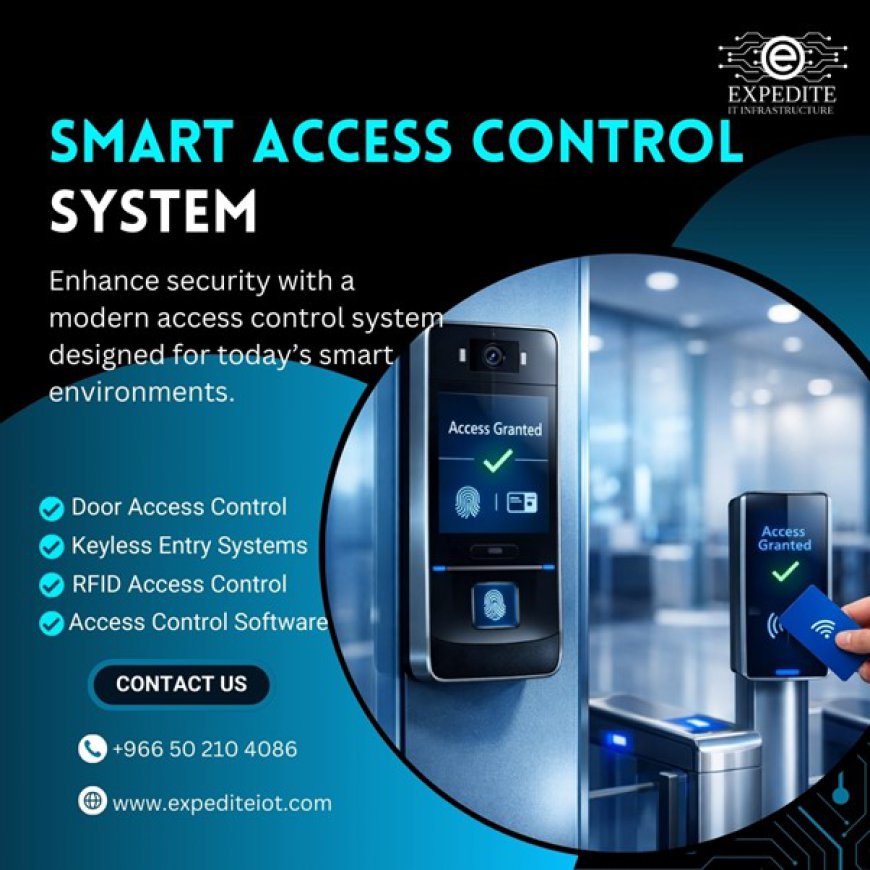
The Qatar has been transformed rapidly into a hub of global technology, and smart city-based initiatives that are redefining urban living. Cities such as Doha as well as Abu Dhabi are leading the use of modern security technology to improve public safety improve infrastructure and provide seamless experiences for citizens. These technologies include access control device, access control system, access control software, biometric access control, mobile access control, and ai-powered face recognition play a crucial function in protecting commercial buildings, residential towers transportation hubs, transport facilities, and the government buildings.
Smart cities are dependent on connected digital ecosystems using AI-driven access control methods guarantees both cyber and physical security while ensuring the efficiency of operations.
The Role of Access Control in Qatar Smart Cities
Smart cities are governed by intelligent networks that connect structures, transport systems, utility systems, public utilities and other services. The security of these systems calls for a sophisticated and smart access control system that can monitor in real time as well as automate the making of decisions.
The traditional lock and key systems are no enough anymore. The latest access control devices technologies comprise smart cards and biometric scanners, turnstiles with RFID capabilities, as well as controllers with cloud connectivity. They communicate with central access control software platforms to authenticate credentials, record events, and produce relevant information.
In Qatar smart cities Access control systems are deployed throughout:
- Ministries and offices of the government
- Metro stations and airports
- Smart homes in residential communities
- Technology parks and data centers
Adding AI functionality These systems will go beyond authentication and offer predictive security features that are capable of notifying of suspicious behaviour and prevent unauthorised access before an incident occurs.
AI-Powered Face Recognition and Biometric Advancements
The most transformational technology in security for smart cities is AI-powered face recognition. Utilizing advanced algorithms and deep-learning algorithms, facial recognition systems are able to detect individuals in real-time even in the most crowded of spaces.
In places like Doha the AI-enabled security structures are incorporated into the transportation system and commercial centres, as well as high-rise structures. If combined together with biometric access control Facial recognition can ensure that only authorised individuals have access to areas that are sensitive.
The benefits of biometrics powered by AI can include:
- Fingerless authentication to ensure security and hygiene
- Speedier processing at the entry and the exit locations
- Reduction in dependence upon physical card or PIN codes
- Increased accuracy, with less false positives.
Biometric Access Control is also compatible with fingerprints as well as iris and palm recognition devices. Face recognition, however, remains the most adaptable option for deployments of large-scale smart cities because of its efficiency and speed of deployment.
Mobile Access Control for Seamless Urban Living
The rate of smartphone use within the Qatar is among the highest worldwide; mobile access control has become an efficient solution to intelligent infrastructure. Workers and residents are able to use digital passwords stored on their smartphones for accessing structures, parking facilities and elevators, as well as common amenities.
With encrypted communications between mobile devices as well as access control device systems the security of the system is increased as well as enhancing user comfort. Mobile-based credentials minimise the threat of losing cards or duplicates that are not authorised.
In conjunction with central When integrated with centralized access control software Administrators can grant and revoke access rights at any time. This is particularly useful for smart communities with large populations and commercial areas where turnover of tenants is common.
Mobile applications also provide multi-factor authentication that combines mobile credentials and AI-powered face recognition to provide greater security.
Centralized Access Control Software and Smart Analytics
The foundation of any modern access control system is the latest access control software. Within the Qatar's intelligent cities central platforms offer real-time dashboards and data analytics as well as automated alarms.
Some of the key characteristics are:
- Cloud-based monitoring for multiple sites
- Integration of CCTV and video analytics
- Automated lockdown procedure during emergencies
- Compliance reporting and audit trails
Utilizing AI analysis, software systems detect suspicious patterns of behaviour like repeated unsuccessful access attempts or especially unusual times of entry. The predictive analytics enable security personnel to take action proactively instead of responding.
In addition, the integration of IoT systems makes sure that HVAC, lighting and various other building control systems react intelligently to data on occupancy created from the access logs.
Integration with Smart Infrastructure
The Qatar smart city vision indicates the inter-dependence of digital ecosystems. The access control using AI is fully integrated with.
· Intelligent transport system
- Energy-efficient buildings
- Government digital ID platforms
- Networks of emergency response
As an example, at massive events like those at large-scale events in Abu Dhabi, integrated access control system platforms will work in conjunction with surveillance systems to regulate crowd movement and avoid the risk of security breach.
The combination of biometric access control along with the national digital identity initiative increases confidence and security while ensuring conformity with QATAR rules.
Through integrating access control systems in a smarter way, the municipalities can achieve sustainable growth as well as enhanced security for the public.
Cybersecurity Considerations in AI Access Control
Due to the growing digitization rates, the need to adopt powerful cybersecurity measures grows as well. Smart cities access control software must be secure from hacking, security breaches and unauthorised manipulation.
The security measures are:
- End-to-end encryption
- Secure cloud hosting
- Multi-layer authentication
- Regularly conducted assessment of vulnerability
AI-driven monitoring is also able to identify abnormal behaviour in the system in order to reduce the risk of cyber-attacks. While QATAR smart cities continue to grow, protecting data privacy and security is a top goal.
Conclusion
The use of AI to control access is revolutionising the security environment that is transforming QATAR intelligent cities. Through the integration of access control device techniques with advanced access control system platforms, officials can enjoy increased security and improved efficiency. Implementation of AI-powered face recognition and biometric access control ensures secure, authenticated, non-touchless access to diverse settings. In addition, mobile access control offers convenience and versatility for both business and residents. The latest access control software provides centralized surveillance, predictive analysis and seamless integration with intelligent infrastructure. The use of AI-powered access control is still a major aspect of building resilient, safe and futuristic urban ecosystems in cities like Doha, and in Abu Dhabi, which further innovates and advances.
FAQs
1.Why is AI important in the access control system?
AI improves access control system capabilities through the use of the detection of threats in real-time, predictive analytics and automated decision-making that improves security.
2. How can AI-powered face recognition assist in enhancing security of smart cities?
It offers fast, safe identification and it is able to identify people in the congested areas properly which lowers chances of unauthorised access.
3. Are mobile access control secure for smart city applications?
In fact, mobile access control uses encrypted credentials and multi-factor authentication to ensure that it is very safe and convenient to use.
4. Which industries in the Qatar would be the most benefiting in Biometric Access Control?
Transport hubs, public facilities and residential communities. Healthcare institutions, as well as data centers all benefit greatly.
5. How can access control software support centralized control?
It permits remote monitoring of audit trails, real-time alerts and connectivity with other systems that are smart, making it possible to provide the most efficient and effective security control.
For more information contact us on:
Expedite IT
+966 502104086
Office No 01, Conference Building (Kirnaf Finance), Abi Tahir Al Dhahabi Street,
Al Mutamarat, Riyadh 12711, Saudi Arabia
Or click on the below link for more information:
https://www.expediteiot.com/access-control-system-in-saudi-qatar-and-oman/