Mechanical Thrombectomy Devices Market Outlook 2025–2031 | Advancing Neurovascular Care with 6.4% CAGR
The Mechanical Thrombectomy Devices Market is expected to register a CAGR of 6.4% from 2025 to 2031.
 Dipaksharma
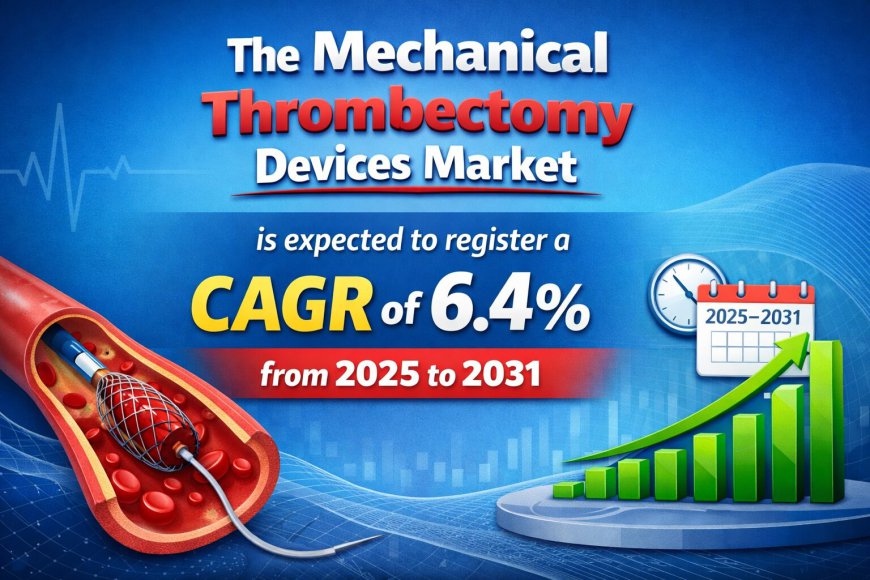
The Mechanical Thrombectomy Devices are widely used in minimally invasive procedures to treat acute ischemic stroke. By physically retrieving or aspirating clots, they support rapid intervention and significantly improve patient recovery outcomes when used within the appropriate treatment window.
Mechanical Thrombectomy Devices Market Overview
The Mechanical Thrombectomy Devices Market is projected to register a CAGR of 6.4% during the forecast period from 2025 to 2031. These devices play a critical role in the removal of blood clots from arteries and veins, particularly in patients suffering from acute ischemic stroke and other vascular disorders. The increasing prevalence of stroke and thrombotic conditions across the globe has significantly strengthened demand for rapid and effective interventional procedures.
The report provides a comprehensive evaluation of revenue in USD across segments, regional markets, and major countries. It outlines current industry dynamics, competitive positioning, and long term growth prospects. Stakeholders including manufacturers, investors, healthcare institutions, and regulatory bodies can leverage these insights to make informed strategic decisions.
Segmentation Analysis
The market is segmented by type, application, and end user, enabling a structured understanding of demand patterns and innovation focus areas.
By type, aspiration catheters hold a considerable share due to their ability to directly extract clots with controlled suction. Stent retrievers continue to gain traction owing to their precision in clot engagement and retrieval. Other device categories include specialized thrombectomy systems designed for complex vascular anatomies.
By application, the neurovascular segment dominates, primarily driven by stroke interventions. Cardiovascular applications are expanding as thrombectomy procedures are increasingly adopted in coronary interventions. Peripheral vascular applications are also witnessing growth due to rising incidences of deep vein thrombosis and peripheral artery disease.
By end user, hospitals and clinics account for the largest revenue share due to advanced infrastructure and availability of skilled professionals. Academic and research institutes contribute to innovation and clinical validation. Ambulatory surgical centers are gradually increasing adoption due to faster patient turnaround and cost effectiveness.
Key Growth Drivers
The growing incidence of ischemic stroke is a primary driver. Sedentary lifestyles, aging populations, and rising cases of hypertension and diabetes contribute to higher stroke risk globally. Mechanical thrombectomy devices offer minimally invasive clot removal, significantly improving survival and recovery outcomes.
Technological advancements have also propelled growth. Enhanced catheter flexibility, improved clot capture mechanisms, and integration with advanced imaging systems have improved procedural success rates. Continuous innovation has increased physician confidence and broadened the clinical adoption of these devices.
Increased public awareness of stroke symptoms and the importance of early medical intervention has further stimulated demand. Faster diagnosis and streamlined stroke management protocols have expanded the eligible patient pool for thrombectomy procedures.
Download Sample PDF : https://www.theinsightpartners.com/sample/TIPRE00031450
Emerging Growth Opportunities and Transformative Trends Shaping the Mechanical Thrombectomy Devices Market
Opportunities
-
Expansion into emerging economies with improving healthcare infrastructure
-
Strategic collaborations with hospitals and specialized stroke centers
-
Development of cost effective devices tailored to regional requirements
-
Increasing clinical trials exploring applications beyond acute ischemic stroke
-
Rising investments in physician training and skill development programs
Future Trends
The industry is witnessing several transformative trends that are expected to shape its trajectory.
-
Growing preference for minimally invasive vascular procedures
-
Integration of real time imaging and robotic assisted technologies
-
Expansion of thrombectomy applications in pulmonary embolism and deep vein thrombosis
-
Development of next generation devices with improved clot retrieval efficacy
-
Increased focus on outpatient based interventional procedures
These trends indicate a shift toward precision driven, patient centric solutions with enhanced procedural safety.
Regional Insights
North America holds a prominent share due to advanced healthcare systems, high stroke awareness, and strong reimbursement frameworks. Europe follows closely, supported by favorable regulatory pathways and technological adoption.
Asia Pacific is anticipated to witness substantial growth during the forecast period. Countries such as China, India, and Japan are investing heavily in healthcare modernization and stroke care infrastructure. South and Central America, along with the Middle East and Africa, are emerging markets with increasing focus on improving access to advanced vascular treatments.
Key Players
The competitive landscape features established global medical device companies focused on innovation and strategic expansion.
-
Stryker
-
Boston Scientific
-
Medtronic
-
Terumo
-
Johnson & Johnson
-
Penumbra
These companies emphasize product innovation, mergers, and regional expansion to strengthen their market presence.
Future Outlook
The future outlook for the Mechanical Thrombectomy Devices Market remains positive, supported by technological progress, expanding clinical indications, and growing awareness of early stroke intervention. As healthcare systems prioritize rapid response stroke management and minimally invasive treatments, the demand for advanced thrombectomy solutions is expected to rise steadily. Emerging markets will likely play a crucial role in driving incremental revenue growth, while continuous research and product development will enhance treatment efficacy and accessibility.
Related Reports :
Questions :
1: What factors are driving the growth of the Mechanical Thrombectomy Devices Market?
Growth is primarily driven by increasing stroke incidence, advancements in device technology, improved imaging integration, and rising awareness of early diagnosis and treatment. Expansion into emerging markets also contributes significantly to revenue growth.
2: Which segment holds the largest share in the market?
The neurovascular application segment holds the largest share due to the widespread use of thrombectomy devices in treating acute ischemic stroke, supported by strong clinical evidence and established treatment guidelines.
About Us -
The Insight Partners provides comprehensive syndicated and tailored market research services in the healthcare, technology, and industrial domains. Renowned for delivering strategic intelligence and practical insights, the firm empowers businesses to remain competitive in ever-evolving global markets.
Contact Information
Email: sales@theinsightpartners.com Phone: +1-646-491-9876