Why High-Quality Online Embroidery Digitizing Delivers Better Embroidery Results
Why High-Quality Online Embroidery Digitizing Delivers Better Embroidery Results
 emdigitizing
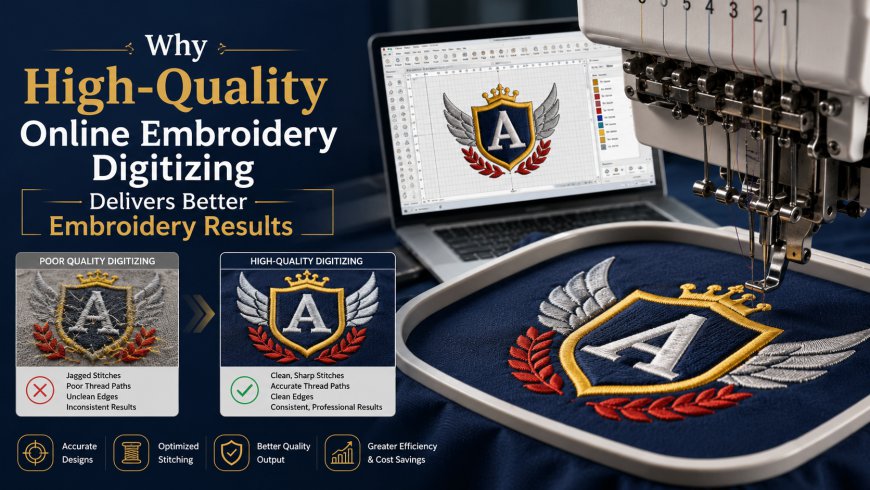
Professional embroidery depends on more than premium thread, quality fabrics, and modern embroidery machines. high-quality online embroidery digitizing plays a vital role in creating embroidery files that guide the machine through every stitch, helping produce clean, accurate, and consistent results. A professionally prepared embroidery file improves machine performance, while a poorly prepared file can lead to thread breaks, fabric puckering, uneven lettering, distorted shapes, and unnecessary production delays.
Before an embroidery machine can stitch a logo, illustration, or text, the artwork must be converted into a machine-readable embroidery file. This file contains detailed instructions that control stitch types, stitch direction, stitch density, underlay, pull compensation, sequencing, trims, and color changes. Every decision made during the digitizing process influences the appearance of the finished embroidery.
What Is Online Embroidery Digitizing?
Online embroidery digitizing is the process of converting artwork, logos, text, or illustrations into a digital embroidery file through an online service. Customers upload their artwork and provide important production details, including the embroidery size, fabric type, placement, machine format, thread colors, and any special embroidery requirements.
A professional digitizer then prepares a file that is compatible with the customer's embroidery machine. Common embroidery formats include DST, PES, EXP, JEF, VP3, XXX, and HUS.
Unlike standard image files, embroidery files contain stitch instructions instead of pixels. These instructions tell the embroidery machine how every part of the design should be stitched. The quality of the digitized file directly affects embroidery accuracy, production efficiency, and the overall appearance of the finished product.
1. Accurate Stitch Placement Produces Cleaner Embroidery
Every embroidery design contains thousands of individual stitches, and each stitch must be positioned carefully to achieve a clean result. Professional digitizers determine where every section begins and ends, how stitches travel across the design, and the sequence in which different objects should be embroidered.
Accurate stitch placement helps produce:
- Smooth outlines
- Balanced shapes
- Clean borders
- Better color registration
- Consistent logo proportions
Poor stitch placement can create uneven edges, overlapping stitches, visible gaps, and distorted details. Even an advanced embroidery machine cannot correct problems that originate in the embroidery file, making accurate digitizing essential for professional results.
2. Proper Stitch Density Prevents Production Problems
Stitch density refers to the distance between embroidery stitches. Finding the correct balance is important because every design, fabric, and embroidery size requires different stitch coverage.
If the density is too high, the embroidery may become stiff, bulky, and difficult for the machine to sew. Excessive density can also increase thread breaks, needle wear, fabric distortion, and production time.
If the density is too low, the fabric may remain visible through the stitches, making the embroidery appear incomplete.
Professional digitizers adjust stitch density according to the artwork, garment, thread type, and embroidery size. This balanced approach produces attractive embroidery while reducing unnecessary stress on both the fabric and the embroidery machine.
3. Correct Underlay Creates a Stable Foundation
Although underlay stitches remain hidden beneath the visible embroidery, they are one of the most important elements of a professionally digitized file.
Underlay stabilizes the fabric before the top stitches are applied. It supports the embroidery structure, reduces movement during stitching, and improves the overall appearance of the finished design.
Proper underlay helps:
- Stabilize the fabric
- Improve stitch coverage
- Create sharper edges
- Reduce fabric distortion
- Prevent stitches from sinking into textured materials
Different materials require different underlay techniques. For example, fleece, structured caps, towels, and lightweight fabrics all respond differently during embroidery. An experienced digitizer selects the most appropriate underlay for each application, helping produce cleaner and more reliable results.
4. Fabric-Specific Digitizing Improves Embroidery Quality
Every fabric reacts differently during embroidery. A design that stitches perfectly on a cotton polo shirt may require different settings before it can be embroidered successfully on a cap, towel, jacket, fleece garment, or stretch fabric.
Professional digitizers consider the characteristics of the material before creating the embroidery file.
For example:
- Stretch fabrics require controlled stitch direction and additional stabilization.
- Towels often benefit from stronger underlay and improved stitch coverage.
- Caps require careful sequencing because embroidery is generally stitched from the center outward.
- Lightweight garments need balanced stitch density to reduce puckering.
- Thick materials may require adjustments to preserve small design details.
Preparing the embroidery file according to the intended fabric helps maintain consistent design quality while reducing production problems.
5. Pull Compensation Maintains Accurate Design Shapes
During embroidery, stitches naturally pull the fabric inward. Without proper adjustment, borders may become uneven, filled areas may appear narrower, and spaces between design elements may change.
Pull compensation offsets this natural movement by adding carefully calculated adjustments to selected parts of the embroidery file before production begins.
Proper pull compensation helps maintain:
- Accurate outlines
- Clean borders
- Well-defined lettering
- Better color registration
- Consistent design dimensions
The amount of compensation required varies according to stitch type, embroidery size, thread, fabric, and garment construction. Professional digitizers apply these adjustments only where necessary to preserve the intended appearance of the finished embroidery.
6. Stitch Direction Improves Appearance and Machine Performance
Stitch direction influences both the appearance of embroidery and the efficiency of machine production. Different stitch angles affect how thread reflects light, separates design elements, and behaves on different fabrics.
Experienced digitizers use stitch direction strategically to improve embroidery quality while reducing fabric distortion.
Carefully planned stitch direction helps:
- Separate nearby design elements
- Improve readability
- Add texture and definition
- Create clearer shapes
- Reduce fabric movement
- Improve sewing efficiency
Using the same stitch direction throughout an entire design can produce a flat appearance and increase the likelihood of distortion. Professional planning allows each section of the embroidery to perform more effectively during production while maintaining a clean and balanced finish.
7. Efficient Stitch Sequencing Improves Production Efficiency
Stitch sequencing determines the order in which an embroidery machine sews each section of a design. Proper sequencing helps the machine move efficiently while reducing unnecessary trims, jump stitches, and thread changes.
A well-planned embroidery file can provide several production advantages, including:
-
Faster machine operation
-
Fewer thread trims
-
Reduced thread waste
-
Better alignment between design elements
-
Less operator intervention
-
More consistent results during bulk production
For embroidery businesses handling large orders, efficient sequencing can improve productivity and reduce overall production time without affecting embroidery quality.
8. High-Quality Digitizing Improves Small Lettering
Small text is one of the most challenging elements in machine embroidery. Letters that appear clear on a computer screen may become difficult to read once stitched onto fabric.
Professional digitizers carefully adjust small lettering by considering the embroidery size, stitch type, satin column width, spacing between letters, fabric texture, thread thickness, and underlay requirements.
In some cases, very small details must be simplified to maintain readability. These adjustments help produce clear lettering on uniforms, business logos, caps, promotional products, and name badges while maintaining the overall appearance of the design.
9. Fewer Thread Breaks and Machine Stops
Poorly digitized embroidery files often create unnecessary stress on the embroidery machine. Excessive stitch density, poor sequencing, unnecessary overlaps, and incorrect stitch lengths can increase thread breaks and machine interruptions.
A professionally digitized file helps the machine run more smoothly by using efficient stitch paths and balanced stitch settings.
This can result in:
-
Fewer thread breaks
-
Reduced needle wear
-
Less machine downtime
-
Lower operator involvement
-
Improved production efficiency
-
Better consistency across multiple garments
Reliable machine performance becomes especially important when producing large embroidery orders where even minor interruptions can increase production costs.
10. Consistent Results Across Repeat Orders
Many businesses repeatedly embroider the same logo on uniforms, promotional apparel, caps, jackets, and workwear. A professionally digitized embroidery file helps maintain consistency across future production runs.
The same design can retain its proportions, stitch quality, and overall appearance from one order to the next.
However, different products may still require separate embroidery files. A left-chest logo, cap design, sleeve logo, and jacket-back embroidery often require product-specific adjustments rather than simply resizing one file.
Preparing separate files for different applications helps maintain consistent embroidery quality across various garments.
11. Professional Digitizing Helps Reduce Long-Term Production Costs
Choosing the lowest-cost digitizing service may appear economical initially, but poor-quality files often create additional expenses during production.
Poor digitizing may result in:
-
Damaged garments
-
Additional sample runs
-
Thread waste
-
Increased machine time
-
Production delays
-
File corrections
-
Customer complaints
-
Repeat production
Professional digitizing reduces these risks by producing embroidery files that require fewer corrections and perform more efficiently during production. Over time, this can lower operating costs and improve overall workflow.
12. Professional Digitizers Understand Embroidery Limitations
Not every detail from printed artwork can be reproduced successfully with thread. Extremely thin lines, tiny lettering, gradients, and intricate illustrations often require adjustments before embroidery begins.
Experienced digitizers understand how embroidery behaves on different materials and modify the artwork without changing its overall identity.
These adjustments may include:
-
Simplifying fine details
-
Increasing narrow line widths
-
Improving spacing between elements
-
Reducing unnecessary color changes
-
Replacing gradients with embroidery-friendly stitch patterns
-
Selecting suitable stitch types
These modifications help produce embroidery that looks clean while remaining practical for machine production.
How to Choose a High-Quality Online Embroidery Digitizing Service
Selecting the right digitizing provider is essential for achieving reliable embroidery results. Instead of focusing only on pricing or turnaround time, evaluate the provider's technical expertise and production quality.
Consider the following before placing an order:
-
Review actual stitched embroidery samples rather than digital previews.
-
Confirm support for your required embroidery machine format.
-
Ask about the revision policy and turnaround time.
-
Check whether the provider has experience with different fabrics and embroidery applications.
-
Choose a service that asks for production details instead of making assumptions.
-
Look for providers that prepare production-friendly embroidery files rather than files that only look good in software previews.
An experienced digitizing service should prioritize embroidery performance as well as appearance.
Information to Provide Before Digitizing
Providing complete production information helps the digitizer prepare an accurate embroidery file from the beginning.
Important information includes:
-
High-resolution artwork or vector file
-
Exact embroidery size
-
Fabric or garment type
-
Embroidery placement
-
Required machine format
-
Thread color preferences
-
Special instructions for caps, appliqué, patches, or 3D puff embroidery
-
Any previous sew-out samples, if available
Complete instructions reduce unnecessary revisions and help produce embroidery files that match your production requirements.
Conclusion
High-Quality Online Embroidery Digitizing is the foundation of professional machine embroidery. A carefully prepared embroidery file controls every stage of the stitching process, from stitch placement and density to underlay, pull compensation, sequencing, and fabric-specific adjustments. These technical decisions directly influence embroidery quality, production efficiency, and machine performance.
Choosing an experienced digitizing service helps reduce production errors, improve stitch consistency, and produce cleaner embroidery across different garments and fabrics. Whether you create embroidered uniforms, promotional products, caps, patches, or custom apparel, investing in professionally prepared embroidery files can improve both the appearance of your finished products and the efficiency of your production process.
When quality, consistency, and reliable machine performance matter, professional embroidery digitizing remains one of the most important investments an embroidery business can make. Idigitize is committed to providing embroidery solutions that help businesses achieve dependable, production-ready results with confidence.