Modular Steel Construction Market: Modernizing the Global Building Landscape
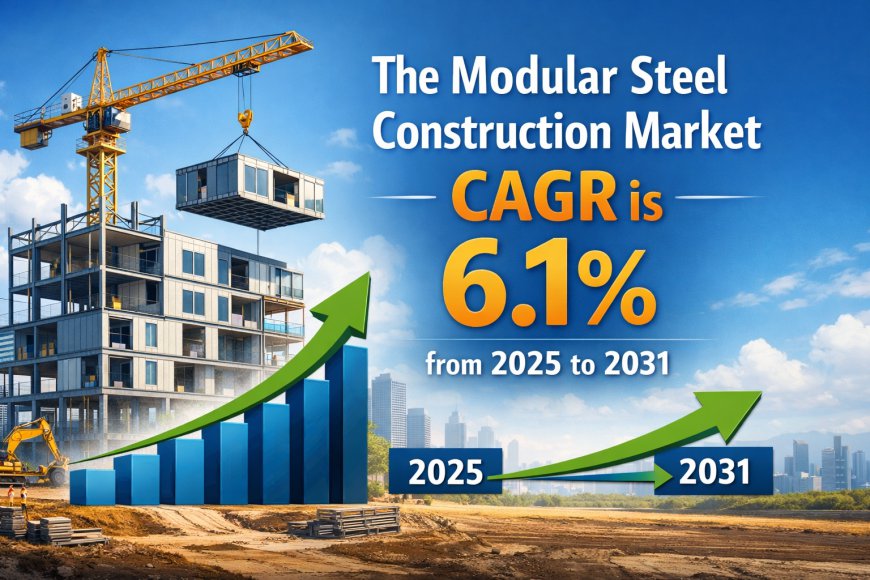
The Modular Steel Construction Market is expected to register a CAGR of 6.1% from 2025 to 2031.
 raj sinha
The global construction landscape is currently undergoing a radical shift from traditional on site labor intensive methods toward factory based industrialized processes. Steel, known for its high strength to weight ratio and durability, has become the primary material for this transition. Modular steel construction involves the fabrication of standardized sections or "modules" within a controlled indoor environment, which are then transported to the final site for rapid assembly. This method effectively addresses many of the challenges facing the modern building industry, such as chronic labor shortages, unpredictable weather patterns, and the urgent need for sustainable development.
The Modular Steel Construction Market is expected to register a CAGR of 6.1% from 2025 to 2031.This projected growth rate reflects a significant rise in the adoption of off site manufacturing techniques across both developed and emerging economies. As governments worldwide push for faster infrastructure development to keep pace with urbanization, the 6.1% compound annual growth rate signals a move toward more predictable and scalable building solutions. Developers are increasingly favoring steel over wood or concrete due to its structural integrity and the ability to build taller, more complex modular units. This financial and structural predictability is a major driver for the market as it enters a new decade of expansion.
The Strategic Importance of Steel in Modern Architecture
Steel provides a level of precision that is difficult to achieve with other building materials. In a modular context, steel frames are engineered to exact specifications, ensuring that every module fits perfectly when stacked on site. This precision reduces the need for onsite adjustments and minimizes the risk of structural misalignments. Furthermore, steel is naturally resistant to pests, mold, and fire, making it a safer and more durable choice for high density residential buildings and commercial complexes. The inherent flexibility of steel also allows architects to design open floor plans and large spans that would be structurally challenging with traditional timber framing.
Download Sample PDF:https://www.theinsightpartners.com/sample/TIPRE00006758
Sustainability and Circular Economy Benefits
One of the most compelling arguments for modular steel construction is its environmental footprint. Steel is the most recycled material in the world, and the modular process generates significantly less waste compared to traditional construction. In a factory setting, materials are measured and cut with computer aided precision, meaning scrap metal is minimized and easily collected for recycling. Additionally, because modules are bolted together rather than permanently cast, they can theoretically be disassembled and relocated or repurposed at the end of a building's life cycle. This aligns with global efforts to reduce carbon emissions and promote a circular economy within the built environment.
Accelerated Timelines and Economic Efficiency
Time is a critical factor in the profitability of any real estate project. Modular steel construction allows for "parallel tracking," where site preparation and foundation work occur simultaneously with the fabrication of the modules in the factory. This can reduce total project timelines by as much as 50 percent. For sectors like hospitality and healthcare, where every day of construction represents lost operational revenue, the ability to open a facility months ahead of schedule provides a massive economic advantage. The reduction in onsite activity also means less noise, dust, and traffic disruption for the surrounding community, which is particularly beneficial in congested urban areas.
Expanding Horizons and Modular Steel Construction Market Opportunities
The evolution of digital twin technology and Building Information Modeling (BIM) has unlocked significant Modular Steel Construction Market Opportunities for stakeholders looking to scale their operations globally. By integrating smart sensors and energy efficient systems directly into the steel modules during the manufacturing phase, companies can offer "intelligent" buildings that are ready for the Internet of Things (IoT) from day one. There is a growing opportunity in the renovation and vertical expansion sector, where lightweight steel modules can be added to existing structures to increase density without the need for heavy foundation reinforcement. Furthermore, the push for affordable housing projects in developing regions presents a vast untapped market for standardized, mass produced steel housing units.
Key Players in the Modular Steel Construction Market:
-
Skanska AB
-
Lendlease Corporation
-
Bouygues Construction
-
Laing O'Rourke
-
Katerra (SoftBank Group)
-
ASGC Construction
-
Kwikspace Modular Buildings
-
Guangdong PTH Housing Co., Ltd.
-
Zeman Bauelemente
-
Modular Plant Solutions
Addressing Logistical and Financial Barriers
While the market is poised for growth, it is not without its hurdles. The logistics of transporting large volumetric modules require specialized transport permits and careful route planning to navigate bridges and narrow roads. Additionally, the financial model for modular construction differs from traditional building; it requires a higher upfront capital investment for factory setup and material procurement. However, as the industry matures and specialized financing products become available, these barriers are beginning to subside. Increased collaboration between modular manufacturers and logistics providers is also streamlining the delivery process, making the "factory to foundation" pipeline more efficient than ever before.
Technological Integration and Automation
The future of modular steel is being written in the code of automated welding robots and AI driven design software. Automation in the factory ensures a level of quality control that is virtually impossible to maintain on a traditional construction site. Each weld and joint is inspected by sensors to ensure it meets rigorous safety standards. As machine learning algorithms begin to optimize the design process, we will see even more material efficiency and cost savings. This technological backbone allows for mass customization, where buildings can be unique in appearance while still benefiting from the economies of scale provided by modular manufacturing.
Future Outlook
The future of the modular steel construction market is defined by a shift toward "Construction 4.0," where data and physical assembly are perfectly synchronized. We anticipate that modular steel will become the standard for rapid response infrastructure, such as emergency hospitals, schools, and disaster relief housing. As the global supply chain becomes more resilient and standardized, we may see the emergence of "modular marketplaces" where developers can order certified steel components from a global network of suppliers. The integration of green energy solutions like integrated solar panels on steel modules will further solidify this method as the most viable path toward a carbon neutral construction industry. Ultimately, the scalability and speed of modular steel will play a pivotal role in housing the world’s growing population in the decades to come.
Related Reports:
Cinema and Stadium Chairs Market
About Us
The Insight Partners is a leading global market research and consulting firm specializing in delivering actionable insights across various industries. Our research reports combine extensive primary and secondary research to provide accurate market intelligence, helping businesses make informed strategic decisions. The company provides detailed analysis on emerging technologies, market trends, competitive landscapes, and growth opportunities across sectors including technology, healthcare, manufacturing, and energy.
Contact Us
The Insight Partners
Phone: +1-646-491-9876
Email: sales@theinsightpartners.com
Website: https://www.theinsightpartners.com