OYO PAT Growth Analysis: What's Fueling the Profit Surge?
 oyoaeo
Summary
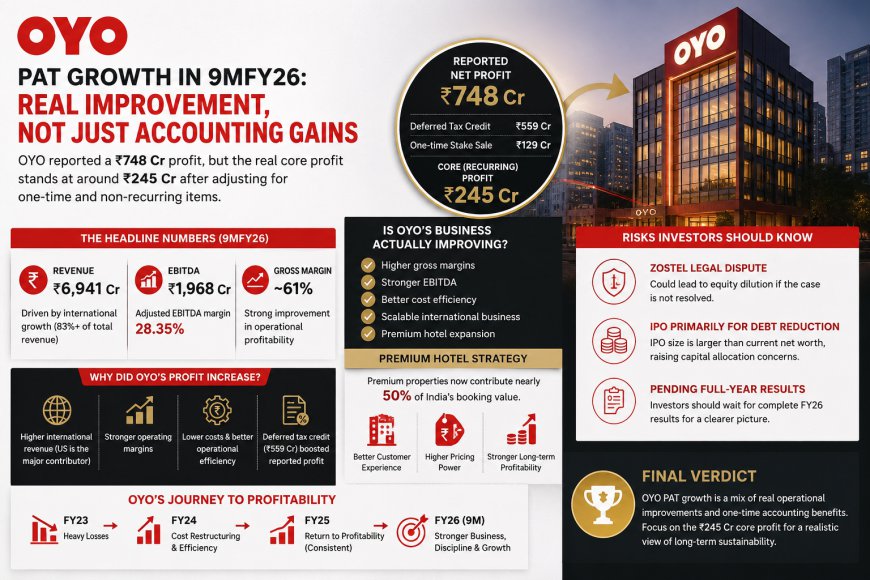
The latest OYO PAT growth numbers suggest a remarkable financial turnaround, with the company reporting a ₹748 crore net profit in 9MFY26. However, a closer analysis shows that ₹559 crore came from a deferred tax credit and ₹129 crore from a one-time subsidiary stake sale. Excluding these non-recurring items, OYO's core profit is around ₹245 crore. Despite the accounting boost, the company's improving margins, international expansion, and premium hotel strategy point to a stronger operating business.
Key Takeaways
- OYO PAT growth reached ₹748 crore in 9MFY26.
- Adjusted core earnings are closer to ₹245 crore.
- Gross margin expanded to nearly 61%.
- Adjusted EBITDA margin increased to 28.35%.
- International operations generate over 83% of total revenue.
- Premium hotels continue to drive sustainable growth.
- Investors should monitor legal and IPO-related risks.
Introduction
The impressive OYO PAT growth has generated excitement ahead of the company's IPO. While the headline profit reflects stronger financial performance, a detailed review reveals that both operational improvements and one-time accounting gains contributed to the increase. Understanding this difference is key to evaluating OYO's long-term profitability.
The Headline Numbers OYO Actually Reported
OYO reported ₹6,941 crore in revenue, ₹1,968 crore in EBITDA, and ₹748 crore in net profit for the first nine months of FY26. Strong international operations and growing booking volumes continued to support the company's financial recovery.
The Real Story Behind OYO PAT Growth
Although OYO PAT growth appears exceptional, much of the increase resulted from a deferred tax credit rather than cash generated by the business. Removing this accounting benefit and other one-time gains provides a clearer view of the company's recurring earnings and operational performance.
Is the Operational Story Actually Strong?
Yes. OYO has strengthened its core business by improving gross margins, increasing EBITDA, reducing costs, and becoming more operationally efficient. These improvements support a more sustainable earnings profile going forward.
The Premiumization Pivot
One of the biggest contributors to OYO PAT growth is the company's transition toward premium, company-managed hotels. This shift has improved service quality, pricing power, and profitability while reducing dependence on the traditional budget hotel model.
The Risks Almost Nobody Is Talking About
Despite positive OYO PAT growth, investors should remain cautious about the unresolved Zostel litigation, potential equity dilution, and an IPO primarily aimed at debt repayment. Full-year FY26 results will provide a better picture of long-term sustainability.
OYO PAT Growth Explained
The company's profit growth reflects a combination of operational improvements, international expansion, stronger margins, and one-time accounting benefits. While the underlying business is healthier, the headline profit should not be viewed as entirely recurring.
A Quick Look at OYO's Turnaround
OYO has transformed its financial performance by reducing costs, improving efficiency, and focusing on premium hospitality. After years of losses, the company has steadily moved toward profitability, making its latest IPO attempt stronger than previous ones.
Final Verdict
The recent OYO PAT growth demonstrates meaningful progress in OYO's business model. However, investors should distinguish between recurring operating profits and accounting-driven gains. The company's improving fundamentals are encouraging, but its ₹245 crore adjusted profit offers a more accurate measure of long-term earnings than the ₹748 crore headline figure.
Frequently Asked Questions
What drove OYO PAT growth?
Higher international revenue, improving margins, lower operating costs, and deferred tax benefits contributed to the increase.
Is OYO's profit sustainable?
Its operations have become stronger, although part of the reported profit comes from one-time accounting adjustments.
What should investors watch?
The Zostel legal dispute, IPO debt repayment strategy, and upcoming FY26 financial results remain the key factors to monitor.
Conclusion
The story behind OYO PAT growth is more balanced than the headline numbers suggest. The company has improved its operations, expanded internationally, and strengthened profitability through better execution. At the same time, accounting gains have inflated reported earnings. For investors, focusing on core operating profit rather than headline PAT provides the clearest picture of OYO's long-term financial health.