Palletizer Market Growth, Trends, and Strategic Insights 2026-2033
The global palletizer market is estimated to be valued at USD 3.55 Bn in 2026 and is expected to reach USD 6.90 Bn by 2033, exhibiting a compound annual growth rate (CAGR) of 5.6% from 2026 to 2033. Despite steady expansion, shifts in automation uptake stem partly from higher workforce expenses.
 coherentmarket
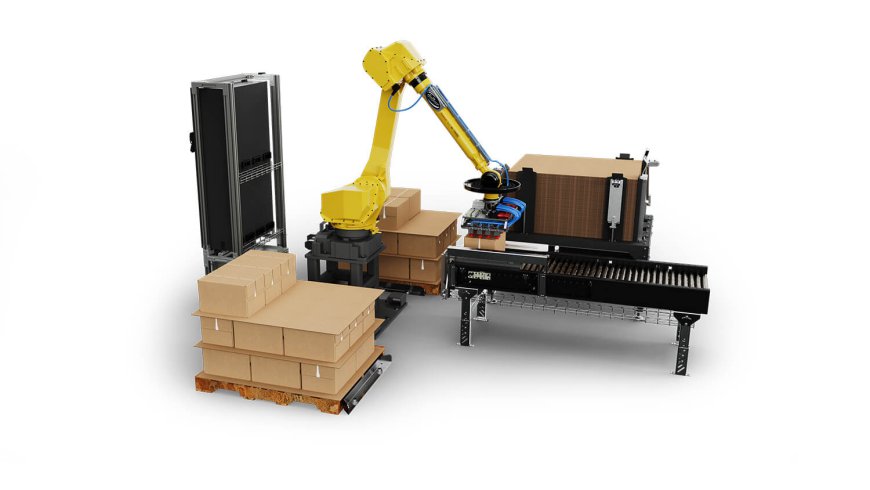
The palletizer industry is witnessing robust expansion driven by increasing automation adoption and logistics optimization in manufacturing and warehousing sectors. Advancements in robotics and integration with smart factory systems have catalyzed a dynamic shift in this industry, reflecting a landscape rich with market opportunities and evolving market dynamics.
Market Size and Overview
The global palletizer market is estimated to be valued at USD 3.55 Bn in 2026 and is expected to reach USD 6.90 Bn by 2033, exhibiting a compound annual growth rate (CAGR) of 5.6% from 2026 to 2033.
This steady Palletizer Market Growth is attributed to enhanced operational efficiency demands and rising labor costs, prompting widespread palletizer adoption across various industries. The market report highlights significant investments in automated packaging solutions, driving market revenue growth throughout 2024 and 2025, thereby expanding the overall market scope.
Market Segments
The Palletizer Market is broadly segmented into Product Type, End User, and Technology.
- Product Type: This includes robotic palletizers, conventional palletizers, and hybrid palletizers. Robotic palletizers dominate the market due to their flexibility and efficiency improvements, with usage increasingly favored in 2024–2025, supported by case studies in the automotive and food industries.
- End User: Core segments here are logistics & warehousing, food & beverage, pharmaceuticals, and consumer goods. The food & beverage sector emerged as the fastest-growing end user segment in 2025, correlating with heightened demand for hygiene-compliant automated packaging.
- Technology: This comprises automatic and semi-automatic palletizers. Automatic palletizers have seen rapid adoption driven by the need to reduce throughput time, as demonstrated by KION Group AG’s deployment statistics in 2024.
Market Drivers
One key market driver propelling the palletizer market growth is the increasing emphasis on labor cost reduction and safety compliance in manufacturing environments. According to 2024 reports, companies that integrated robotic palletizers streamlined operations by up to 30%, simultaneously enhancing worker safety by automating heavy lifting tasks. Moreover, stringent workplace safety regulations in North America and Europe have accelerated the adoption of advanced palletizing technologies, underscoring significant market revenue growth.
Segment Analysis
Focusing on the Product Type segment reveals robotic palletizers as the dominant sub-segment in 2025, accounting for noteworthy market revenue due to superior adaptability to product variety and operational scalability. For instance, ABB Ltd’s robotic solutions realized a 25% increase in throughput efficiency at a leading pharmaceutical packaging facility in early 2025. Conversely, hybrid palletizers represent the fastest-growing technology sub-segment, attracting investment for facilities requiring a balance between flexibility and cost-efficiency.
Consumer Behaviour Insights
Recent consumer behavior trends reveal increasing digital consumption habits, with buyers prioritizing smart integration capabilities in palletizer selections, reflecting the wider industry trends toward Industry 4.0 adoption. Additionally, sustainability preferences have significantly influenced purchase decisions, with companies favoring equipment that reduces energy consumption and waste, as per feedback surveys in 2025. Another observable behavior is heightened sensitivity toward total cost of ownership versus upfront cost, encouraging preferred vendors to offer customized financing and service models to support business growth.
Key Players
Key market players include ABB Ltd, FANUC Corporation, KUKA AG, Honeywell International Inc., and KION Group AG. Throughout 2024 and 2025, these companies invested heavily in expanding production capacities and executing regional market entries to capture new market opportunities. For example, KUKA AG launched a new line of palletizing robots optimized for food-grade applications in 2025, driving notable industry size expansion. Honeywell International Inc. enhanced its after-sales services portfolio, improving client retention and satisfaction rates during this period.
Key Winning Strategies Adopted by Key Players
A standout strategy is ABB Ltd’s integration of AI-driven predictive maintenance within its robotic palletizers in 2025, which led to a 20% reduction in downtime and boosted client operational efficiency. Another impactful move was KION Group AG’s collaborative approach with logistics companies to customize palletizer solutions for complex supply chains, adopted in 2024, resulting in accelerated market penetration in emerging regions. FANUC Corporation’s 2025 introduction of modular palletizing units allowed scalable deployment according to client facility size, facilitating business growth through agility—an approach less commonly implemented across the sector.
FAQs
1. Who are the dominant players in the Palletizer Market?
Key market players include ABB Ltd, FANUC Corporation, KUKA AG, Honeywell International Inc., and KION Group AG, who have driven the market by innovating and expanding product lines throughout 2024 and 2025.
2. What will be the size of the Palletizer Market in the coming years?
The Palletizer Market size is expected to grow from USD 3.55 billion in 2026 to USD 6.90 billion by 2033, reflecting a CAGR of 5.6% over the forecast period.
3. Which end user industry has the largest growth opportunity?
The food & beverage sector presents the fastest-growing opportunity due to increased automation demand for hygiene and efficiency in packaging processes.
4. How will market development trends evolve over the next five years?
Market trends point toward greater integration of robotic and AI technologies, sustainability-focused solutions, and modular designs enabling operational flexibility, all fostering enhanced market growth.
5. What is the nature of the competitive landscape and challenges in the Palletizer Market?
The competitive landscape is characterized by strategic capacity expansions, technology innovation, and regional diversification amid challenges like high initial investments and need for skilled operators.
6. What go-to-market strategies are commonly adopted in the Palletizer Market?
Market players have focused on product innovation, AI integration for predictive maintenance, and collaborative customization with end users to enhance market penetration and long-term customer relationships.
‣ Get more insights on : Palletizer Market
‣ Get this Report in Japanese Language: パレタイザー市場
‣ Get this Report in Korean Language: 회사소개
‣ Read More Related Articles - The Growing Role of AI in Optimizing Clinical Trial Process
Author Bio:
Gautam Mahajan is a Research Consultant with 5+ years of experience in market research and consulting. He excels in analyzing market engineering, market trends, competitive landscapes, and technological developments. He specializes in both primary and secondary research, as well as strategic consulting across diverse sectors.