Protecting Digital Assets with Data Center Security in Qatar
Robust Data Center Security has become a board-level priority as Qatar accelerates its investment in cloud, AI, and enterprise infrastructure ahead of its digital economy ambitions.
 expsufiyan
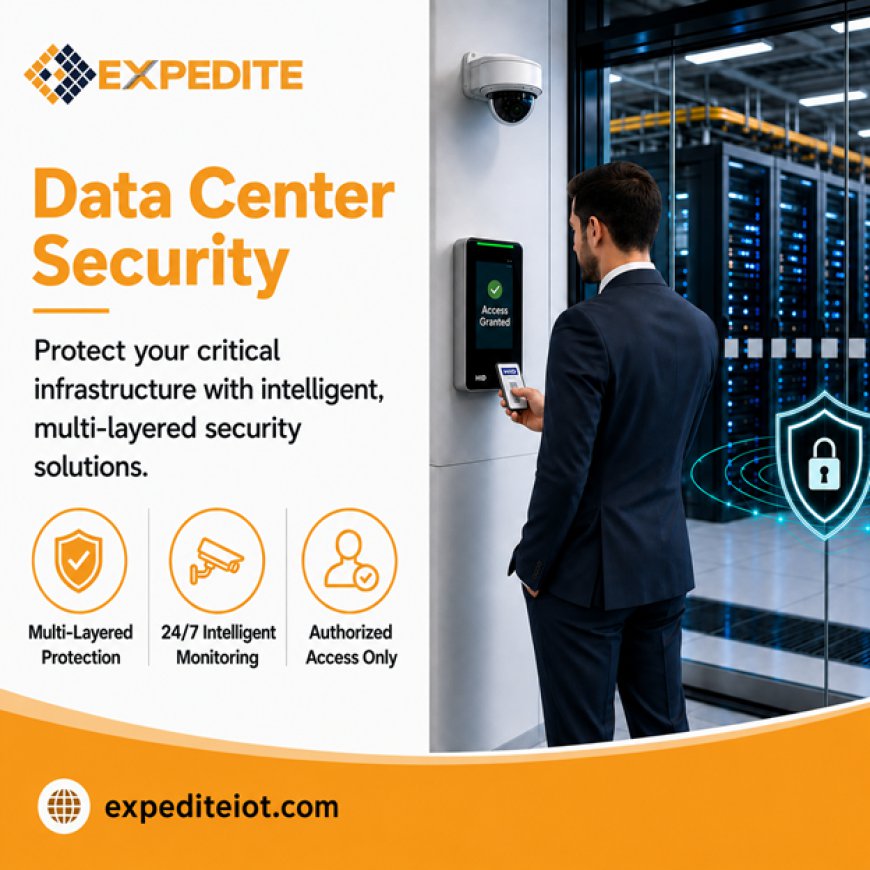
Robust Data Center Security has become a board-level priority as Qatar accelerates its investment in cloud, AI, and enterprise infrastructure ahead of its digital economy ambitions. With Doha positioning itself as a regional technology and financial hub, facility operators can no longer treat physical and digital protection as separate disciplines — the two must operate as one coordinated defense against increasingly sophisticated threats.
Why Data Center Security Is a National Priority in Qatar
Qatar's National Vision and its accompanying digital-economy strategy have placed data infrastructure at the center of the country's long-term development plans, and facility protection now faces a level of scrutiny it never encountered when data centers served purely local enterprise needs. International cloud providers, government tenants, and financial institutions expect Qatari facilities to meet the same protection standards found in mature global markets, from redundant physical barriers to continuous digital threat monitoring.
At the same time, the threat landscape has grown more complex. Nation-state actors, ransomware groups, and insider threats increasingly target the physical and network layers together, probing for the weakest link rather than attacking a single vector in isolation. A facility that hardens its firewalls but leaves a loading dock unmonitored, or that installs cameras but never encrypts data at rest, is still exposed.
Cybersecurity for Data Center Operations: Beyond the Perimeter Fence
Modern Cybersecurity for Data Center environments extends well past network firewalls and antivirus software. It now encompasses continuous vulnerability scanning across every connected system — building management platforms, HVAC controllers, and power distribution units included — because attackers have repeatedly shown they will pivot through an unpatched IoT device to reach far more sensitive systems.
Segmentation plays a central role here. Isolating operational technology networks from corporate IT, and further isolating tenant environments from one another in a colocation facility, limits how far an attacker can move laterally once they gain an initial foothold, containing an incident before it escalates into a facility-wide outage.
Data Center Encryption: Protecting Information at Rest and in Transit
Even with strong perimeter and network defenses, information itself needs independent protection. Data Center Encryption ensures that data stored on disk, moving between racks, or transmitted to a disaster-recovery site remains unreadable to anyone without the correct decryption keys — including, in a worst-case scenario, an attacker who has already breached the network perimeter.
Qatari operators serving government or financial-sector tenants increasingly need to demonstrate not just that encryption is in place, but that key management follows documented rotation schedules, hardware security modules protect the keys themselves, and encryption standards align with national cybersecurity expectations for regulated data.
Data Center Firewalls: The First Line of Digital Defense
Next-generation Data Center Firewalls do far more than block unauthorized ports. Modern appliances inspect traffic at the application layer, apply behavioural analysis to catch anomalies that signature-based rules would miss, and enforce microsegmentation policies that treat every internal connection with the same scrutiny once reserved only for external traffic — an approach commonly described as zero-trust architecture.
For multi-tenant facilities, firewall policy also needs to enforce strict tenant isolation, ensuring that a security incident affecting one customer's environment cannot spread laterally into a neighbouring tenant's infrastructure hosted in the same facility.
Data Center Access Control: Securing the Physical Perimeter
Digital defenses mean little if an unauthorized individual can simply walk into a server hall. Comprehensive Data Center Access Control layers multiple verification checkpoints — perimeter fencing, mantraps, biometric authentication, and cabinet-level locking — so that reaching a physical server requires passing through several independent barriers, each logged and auditable, rather than a single door with a shared key.
● Perimeter fencing and vehicle barriers to control site-wide entry before reaching the building.
● Mantrap vestibules that require successful authentication before a second door will open.
● Biometric verification at server-hall entrances for staff with elevated clearance.
● Individually locked and monitored server cabinets for tenant-specific isolation.
● Two-person authorization rules for access to the most sensitive infrastructure zones.
Data Center Surveillance: Continuous Visual Verification
Access logs tell you who badged through a door; camera coverage confirms what actually happened at that door. Comprehensive Data Center Surveillance combines high-resolution cameras at every entry point, server row, and loading dock with AI-based video analytics that flag tailgating attempts, unattended packages, or a badge being used by someone who does not visually match the enrolled profile — turning passive recording into an active detection layer rather than only forensic evidence reviewed after an incident.
Footage retention policies matter as much as camera placement. Facilities serving regulated tenants typically need to retain recordings for a defined period and demonstrate a tamper-evident chain of custody in case footage is required for an investigation or compliance audit.
Data Center Intrusion Detection: Catching Breaches in Real Time
Whether the intrusion is physical or digital, speed of detection determines how much damage occurs before a response begins. A properly tuned Data Center Intrusion Detection system monitors for forced doors, unexpected motion in server halls after hours, and abnormal network traffic patterns simultaneously, correlating physical and digital signals so that a badge-cloning attempt paired with unusual network activity from the same zone triggers an immediate, high-priority alert rather than two disconnected, low-priority log entries.
Data Center Threat Detection: Staying Ahead of Evolving Attack Patterns
Beyond reacting to intrusions already underway, mature Data Center Threat Detection programs actively hunt for early warning signs — reconnaissance scans probing for open ports, credential-stuffing attempts against administrative logins, or subtle changes in power and cooling telemetry that could indicate tampering with physical infrastructure. Machine-learning models trained on a facility's normal operating baseline can flag these deviations long before they escalate into a full breach or outage.
Threat intelligence sharing across the region is also gaining traction, with Gulf operators increasingly participating in information-sharing partnerships that surface attack patterns observed at one facility before they are attempted against another, shortening the window attackers have to exploit a known technique.
Data Center Security Qatar: Regulatory Landscape and Compliance
Operators pursuing Data Center Security Qatar -wide compliance must navigate a regulatory framework shaped by Qatar's cybersecurity strategy and national data protection guidance, along with sector-specific requirements for facilities hosting government, telecommunications, or financial-services workloads. Documentation matters as much as the technology itself — auditors expect evidence of tested incident-response plans, regular penetration testing, and clearly assigned accountability for both physical and digital security domains.
Qatar's ambitions as a regional digital and financial hub have raised the bar for what enterprise tenants expect from a colocation or hyperscale facility, making rigorous, well-documented security a competitive differentiator as much as a compliance obligation.
Data Center Security Doha: Safeguarding the Capital's Digital Infrastructure
As Qatar's capital and the center of its government, financial, and commercial activity, Doha hosts the country's highest concentration of data center investment, serving ministries, banks, and multinational enterprises operating in the region. Data Center Security Doha deployments typically face higher regulatory scrutiny and larger attack surfaces than smaller regional facilities, making layered physical barriers and continuous digital monitoring non-negotiable rather than optional upgrades reserved for later phases.
How Expedite IoT Delivers Layered Data Center Protection in Qatar
Expedite IoT has spent years designing and deploying physical and digital security infrastructure for data centers, enterprise clients, and critical facilities across Qatar and the wider Gulf. Our engineering team combines hands-on deployment experience with a deep understanding of regional compliance requirements, giving facility operators a partner who can design protection around real operational risk rather than a generic template.
Facility operators evaluating their security posture can review our full data center perimeter security framework to see how perimeter, access, surveillance, and cyber defenses combine into a single, coordinated protection strategy.
Our deployments integrate biometric access control, AI-enabled surveillance analytics, and network-layer defenses into one coherent security operations view, so facility teams are not left correlating alerts across a dozen disconnected dashboards during an active incident. Every project includes local onboarding, staff training, and ongoing technical support tailored to the facility's specific risk profile.
For a detailed breakdown of how our layered facility protection methodology addresses both physical intrusion and network-based threats, explore the dedicated solution page linked above.
Operators who have implemented our layered approach consistently report faster incident correlation between physical and digital alerts, cleaner audit trails during regulatory inspections, and measurably fewer unauthorized access attempts reaching sensitive server halls compared to facilities relying on disconnected point solutions.
Why Vendor Experience Matters for Critical Infrastructure Security
Data center protection sits at the intersection of national infrastructure resilience and enterprise risk management, so vendor selection deserves the same rigor as the technology architecture itself. Facility operators should ask prospective integrators how long they have secured critical infrastructure in the Qatari and GCC markets, request references from comparable facilities, and confirm how incident response, patching, and 24/7 monitoring support are structured once the deployment goes live.
A provider that documents real project history, holds relevant security certifications, and maintains a locally based response team is far more likely to deliver protection that holds up under an actual attack, rather than one that performs well only in a controlled sales demonstration.
Best Practices for Building a Future-Ready Security Program
● Treat physical and digital security as one integrated program with shared incident-response procedures.
● Run regular penetration tests and physical red-team exercises rather than relying on point-in-time audits alone.
● Segment networks and physical zones so a single compromised credential cannot expose the entire facility.
● Maintain documented, tested disaster-recovery and incident-response plans reviewed at least annually.
● Continuously monitor emerging regional threat intelligence to adapt defenses ahead of new attack patterns.
Facilities that revisit their security architecture on a regular cycle — rather than treating a single deployment as a permanent solution — remain resilient as both regulatory expectations and attacker techniques continue evolving across the region.
Conclusion
Protecting digital assets in Qatar depends on treating Data Center Security and Cybersecurity for Data Center operations as one coordinated system. Strong Data Center Encryption, modern Data Center Firewalls, and layered Data Center Access Control must work alongside continuous Data Center Surveillance, Data Center Intrusion Detection, and proactive Data Center Threat Detection. Facilities pursuing Data Center Security Qatar compliance or hardening Data Center Security Doha sites achieve the strongest resilience with an experienced regional security partner.
FAQs
1. What does comprehensive Data Center Security actually include?
Comprehensive Data Center Security combines physical layers like access control and surveillance with digital defenses including firewalls, encryption, and continuous threat monitoring.
2. How does Cybersecurity for Data Center operations differ from standard IT security?
Cybersecurity for Data Center protects operational technology like power and cooling systems alongside standard IT networks, requiring stricter tenant segmentation.
3. Why is Data Center Encryption important even with strong firewalls in place?
Data Center Encryption protects information even if an attacker breaches the perimeter, keeping stored and transmitted data unreadable without proper keys.
4. What role does Data Center Access Control play in a multi-tenant facility?
Data Center Access Control enforces cabinet-level restrictions so one tenant's staff cannot physically reach another tenant's infrastructure.
5. How does Data Center Threat Detection identify risks before a breach occurs?
Data Center Threat Detection uses behavioural baselines and machine learning to flag reconnaissance and unusual activity before an intrusion fully develops.
For more information contact us on:
Expedite IT
+966 502104086
Office No 01, Conference Building (Kirnaf Finance), Abi Tahir Al Dhahabi Street,
Al Mutamarat, Riyadh 12711, Saudi Arabia