Improve Access Security Across Qatar with HID Amico
Enterprises and government facilities across Qatar are rapidly upgrading their entry points with HID Amico, a next-generation access reader that combines facial recognition, mobile credentials, and card-based authentication in a single device.
 expsufiyan
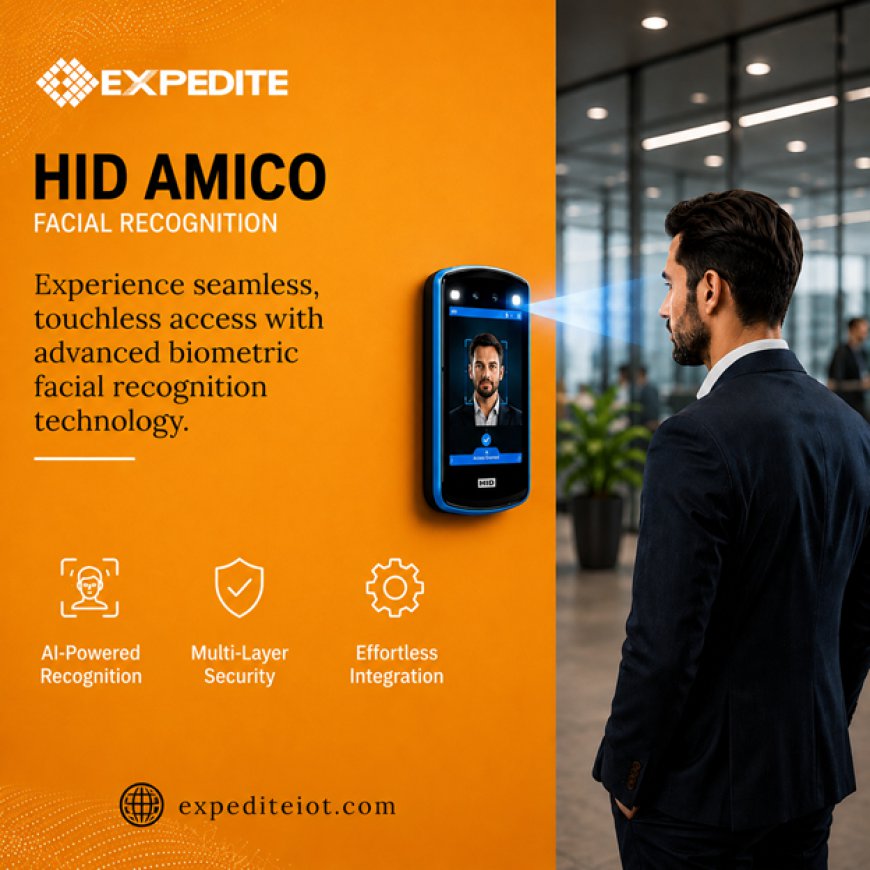
Enterprises and government facilities across Qatar are rapidly upgrading their entry points with HID Amico, a next-generation access reader that combines facial recognition, mobile credentials, and card-based authentication in a single device. As security expectations rise across corporate towers, data centers, and critical infrastructure sites ahead of Qatar's continued national development, organizations need access hardware that verifies identity quickly, accurately, and without compromising on protection against fraud.
Traditional card and PIN systems leave organizations exposed to lost credentials, shared PINs, and tailgating at busy entry points. Facilities looking to close these gaps are turning to multimodal readers capable of confirming a real, live, authorized individual at the door, rather than simply validating whatever credential happens to be presented.
Why Qatar Organizations Are Upgrading Their Access Readers
Security teams across Qatar are under growing pressure to modernize entry points that still rely on legacy card readers vulnerable to cloning, sharing, and simple loss. High-security facilities, including data centers, financial institutions, and government buildings, increasingly require identity verification that goes beyond what a card or PIN alone can guarantee.
At the same time, facilities want a smoother, faster experience for authorized staff and visitors moving through entry points multiple times a day. This dual demand, stronger security paired with genuine convenience, is driving adoption of multimodal readers capable of handling face, mobile, and card credentials from a single unit.
What Is HID Amico and How It Elevates Access Security
HID Amico is a multimodal access control reader that verifies identity using facial recognition, mobile credentials, or traditional smart cards, giving facilities the flexibility to match the credential type to the security level required at each entry point. The device is designed to process verification in a fraction of a second, keeping entry points moving even during peak arrival periods.
Because the reader supports multiple credential types simultaneously, organizations can roll out a phased migration, allowing staff to continue using existing cards while gradually shifting toward facial or mobile credentials without needing to replace hardware twice.
HID Amico Facial Recognition: Contactless Verification Built for Speed
HID Amico Facial Recognition allows an enrolled individual to gain entry simply by approaching the reader, with no card tap or PIN entry required. This touchless verification method is particularly valuable at high-traffic entrances, where even a small delay per person can create noticeable queues during busy arrival windows.
Beyond convenience, facial verification also strengthens accountability, since every access event is tied directly to a specific, confirmed identity rather than a credential that could theoretically be used by someone other than its owner.
HID Amico Facial Reader: Hardware Engineered for Every Entry Point
The physical HID Amico Facial Reader is built for continuous, all-day use at enterprise entry points, with a durable housing, a wide-angle camera tuned for varying heights and lighting conditions, and fast on-device processing that returns a verification result almost instantly.
Facilities can deploy the reader at main lobbies, elevator banks, or restricted server rooms, matching the placement and mounting configuration to the traffic pattern and security requirement of each specific location.
HID Aero Controller: The Intelligent Backbone Behind Every Door
HID Aero Controller hardware manages the communication between readers and the broader access control platform, processing credential decisions, storing local access rules, and ensuring doors continue operating securely even during a temporary network interruption. This controller layer is what turns a collection of individual readers into a coordinated, facility-wide security system.
Its open architecture also supports integration with third-party security and building management platforms, giving facility IT teams flexibility when connecting access control into a wider security ecosystem rather than being locked into a single proprietary stack.
HID Access Control: A Trusted Standard for Enterprise Security
HID Access Control technology has long been a recognized standard in enterprise and government security deployments worldwide, valued for its reliability, broad hardware ecosystem, and consistent support for evolving credential formats. Organizations adopting the HID Amico platform benefit from this established track record alongside the added capability of facial and mobile verification.
This combination of proven reliability and modern multimodal verification makes HID-based platforms a common choice for facilities that need to satisfy strict security audits while still delivering a smooth day-to-day experience for staff and visitors.
HID Mobile Access: Turning Smartphones into Secure Credentials
HID Mobile Access allows employees to unlock doors using a smartphone app instead of carrying a separate physical card, with credentials that can be issued, updated, or revoked instantly and remotely. This is especially useful for organizations managing contractors, temporary staff, or a workforce that moves frequently between office locations.
Mobile credentials also reduce the administrative overhead of replacing lost or damaged cards, since a smartphone-based credential can be deactivated and reissued the moment a device is reported missing, without waiting for a physical card reprint.
AI-Powered Anti-Spoofing: Defending Facial Recognition Against Fraud
AI-Powered Anti-Spoofing technology protects the facial recognition layer from being fooled by a printed photo, a video replay, or a mask presented to the camera. Advanced detection algorithms analyze subtle visual cues that distinguish a real face from a static or reproduced image, closing a vulnerability that basic camera-based systems can be susceptible to.
This safeguard is essential for any organization relying on facial verification for building access, since without it, the entire security model could potentially be undermined by something as simple as a printed photograph held up to the reader.
Liveness Detection: Confirming a Real, Present Person at Every Scan
Liveness Detection works alongside anti-spoofing measures to confirm that a physically present, living person is standing in front of the reader, rather than a static image or a pre-recorded video. The system analyzes depth, texture, and subtle natural movement to make this determination in real time, without adding noticeable delay to the verification process.
Together, these safeguards give facility security teams confidence that a successful facial verification genuinely reflects an authorized individual physically present at the door, not a manipulated or spoofed attempt to bypass the system.
HID Amico Qatar: Built for Regional Compliance and Infrastructure
HID Amico Qatar deployments are configured around the specific needs of local organizations, including bilingual Arabic and English interfaces, alignment with Qatar's data protection expectations for stored biometric templates, and compatibility with the access control and building management platforms most widely used across the country.
Organizations evaluating an upgrade can explore ExpediteIoT’s HID Amico facial reader solutions for Qatar to understand how HID Amico fits within a facility's broader access control strategy.
HID Amico Doha: Meeting the Standards of a Growing Capital
As Doha continues to expand its footprint in government services, finance, and energy infrastructure, HID Amico Doha deployments are increasingly requested by facilities that require the highest level of identity assurance at their entry points. Government-adjacent and critical infrastructure sites in the capital particularly value the combination of biometric verification and anti-spoofing protection this platform provides.
Facilities operating multiple sites across Doha benefit from centralized reader and controller management, allowing security teams to monitor access activity across every location from a single platform.
Key Features Facilities Should Evaluate Before Upgrading
Security and IT teams comparing access reader options should assess a shortlist against several criteria: verification speed under real-world traffic conditions, credential flexibility across card, mobile, and facial options, anti-spoofing and liveness detection strength, integration depth with existing controllers and security platforms, and the vendor's track record supporting enterprise-scale deployments specifically within the region.
Integration with Existing Security Infrastructure
A reader and controller platform that connects directly to existing CCTV, alarm, and building management systems allows a single access event to trigger a coordinated security response automatically, rather than operating in isolation.
Scalability Across Multiple Sites
Organizations with several locations benefit from centralized credential management and reporting across every site from a single dashboard, avoiding the fragmented visibility that comes from running different systems at different branches.
Enrollment and Credential Lifecycle Management
A strong platform should make it simple to enroll new staff, update biometric templates when needed, and immediately revoke access for anyone who leaves the organization, keeping the credential database accurate throughout the employee lifecycle.
Environmental and Operational Considerations for Gulf Deployments
Facilities across Qatar face specific environmental conditions, intense heat, bright outdoor glare, and dusty conditions during certain seasons, that can affect camera-based reader performance if hardware is not properly specified for the climate. Selecting readers rated for regional environmental conditions helps maintain consistent verification accuracy year-round rather than only under ideal indoor lighting.
Facilities with outdoor or semi-outdoor entry points should also plan for sun angle and glare when positioning readers, since strong reflected light can otherwise interfere with camera-based facial capture during certain times of day.
Best Practices for Rolling Out a Multimodal Access Reader Upgrade
A phased rollout, beginning with the highest-security zones such as server rooms or executive floors before expanding building-wide, allows security teams to validate enrollment workflows and reader placement before a larger investment. Clear staff communication about how facial and biometric data is collected, stored, and used also supports smoother adoption and builds trust in the new system.
Regular audits of enrollment records and access permissions help ensure the system stays accurate as staff join, change roles, or leave the organization, preventing outdated credentials from lingering as an unnecessary security risk.
Why ExpediteIoT: Experience, Expertise, and Trusted HID Deployment Across Qatar
ExpediteIoT has deployed HID reader and controller infrastructure across corporate towers, government facilities, and critical infrastructure sites throughout Qatar and the wider Gulf, giving the engineering team direct, hands-on insight into how multimodal access readers perform under real daily operating conditions. That experience shapes every deployment decision, from reader placement to controller configuration for facilities with strict uptime requirements.
The team works closely with facility managers, security heads, and IT departments to configure each installation around existing infrastructure rather than forcing a rigid, one-size-fits-all workflow. Ongoing technical support, firmware updates, and regional maintenance coverage back every installation, giving organizations a long-term partner rather than a one-time hardware vendor. Facilities planning an upgrade can connect with ExpediteIoT’s HID access control specialists to discuss a configuration suited to their site.
Conclusion
Qatar organizations are rapidly strengthening entry-point security with HID Amico, combining HID Amico Facial Recognition and a durable HID Amico Facial Reader with the intelligent HID Aero Controller backbone. HID Access Control reliability, flexible HID Mobile Access, and safeguards like AI-Powered Anti-Spoofing and Liveness Detection close the gaps legacy cards leave open. Whether deploying HID Amico Qatar-wide or across HID Amico Doha facilities, this multimodal platform is the foundation of dependable, future-ready access security.
FAQs
1. What makes HID Amico different from a standard card reader?
HID Amico verifies identity using facial recognition, mobile credentials, or cards from a single device, rather than relying on card verification alone.
2. How fast is HID Amico Facial Recognition at busy entry points?
HID Amico Facial Recognition processes verification in a fraction of a second, keeping entry points moving even during peak arrival periods.
3. What role does the HID Aero Controller play in the system?
HID Aero Controller hardware processes credential decisions and keeps doors operating securely even during a temporary network interruption.
4. How does AI-Powered Anti-Spoofing prevent fraud?
AI-Powered Anti-Spoofing detects printed photos, video replays, or masks, preventing the reader from being fooled by a reproduced image.
5. Why is Liveness Detection necessary alongside facial recognition?
Liveness Detection confirms a real, physically present person is at the reader, not a static image or recording used to bypass the system.
For more information contact us on:
Expedite IT
+966 502104086
Office No 01, Conference Building (Kirnaf Finance), Abi Tahir Al Dhahabi Street, Al Mutamarat,
Riyadh 12711, Saudi Arabia