Turnstile Speed Gates - Transforming Access Control for Modern Facilities in Qatar
 TekYousuf26
Turnstile Speed Gates are transforming how corporate towers, stadiums, government buildings, and mixed-use developments across Qatar manage pedestrian entry, replacing manned checkpoints with fast, credentialed lanes that verify each person automatically. Doha's rapidly modernized skyline, built around some of the region's most advanced venues and business districts, now treats entrance control as a fully integrated system rather than a standalone barrier bolted onto a lobby.
This guide explains the different types of turnstile speed gates available today, how they strengthen Turnstile Access Control across Qatar facilities, and what to evaluate before selecting a Turnstile Speed Gates Qatar provider.
Why Qatar Facilities Are Investing in Fast, Credentialed Entrances
Doha's business towers, government ministries, and large-scale venues handle a steady, often high volume of staff, visitors, and event attendees passing through their lobbies every day. A security guard checking badges manually at a reception desk cannot keep pace during a busy morning arrival window or ahead of a large event, and every manual check introduces the possibility of human error at exactly the wrong moment.
Corporate headquarters, government buildings, and large public venues across Qatar increasingly expect an entrance that verifies every person automatically, logs the event, and moves them through quickly, without sacrificing the physical barrier that keeps someone without valid credentials from getting in.
What Are Turnstile Speed Gates and How Do They Operate?
Turnstile Speed Gates are automated entry barriers that open only when a valid credential is presented, whether that is a card, mobile pass, PIN, or biometric scan. A pair of glass or metal panels slides or swings open on approval and closes again immediately after the person passes through, creating a controlled, one-person-at-a-time entry point.
Cycle speed is what separates a genuinely useful speed gate from a basic barrier: a well-engineered unit can process dozens of people per minute, letting a queue of staff or visitors move through continuously during peak arrival periods rather than waiting for one panel to fully reset before the next person approaches.
Strengthening Turnstile Access Control at Every Entry Point
At its core, Turnstile Access Control pairs the physical gate with a credential-checking system, so every entry is verified against an authorized list before the panels open. This turns a lobby from a passive walkway into an active security checkpoint.
● Every entry and exit is logged automatically, creating a reliable, timestamped audit trail.
● Different access levels can be applied to different credential groups, restricting certain floors or departments to authorized personnel only.
● Tailgating, where a second person follows closely behind an authorized entrant, can be detected and flagged by sensors built into the gate.
For Qatar facilities managing staff, contractors, and visitors simultaneously, this level of granular control is difficult to achieve with a single staffed desk alone.
Choosing the Right Turnstile Type for Your Facility
Not every entrance needs the same hardware. Qatar facility managers typically choose from a small family of turnstile types, each suited to a different balance of security, speed, and visual design.
Tripod Turnstile Gates for Cost-Effective, High-Volume Areas
Tripod Turnstile Gates use a rotating three-arm barrier and remain a reliable, budget-friendly option for staff entrances, warehouses, and stadium service gates where a robust physical barrier matters more than a premium visual finish.
Swing Barrier Turnstile Gates for Accessible, Elegant Lobbies
Swing Barrier Turnstile Gates use glass panels that swing open like a small door rather than sliding, offering a wide, wheelchair-accessible passage that suits Doha's corporate towers wanting a more premium visual presence at reception.
Full Height Turnstile Gates for Maximum Physical Security
Full Height Turnstile Gates extend from floor to ceiling, functioning almost like a rotating cage, and are typically deployed at outdoor perimeters, stadiums, and high-security sites where climbing over or ducking under a barrier must be physically prevented, not just discouraged.
Flap Barrier Turnstile Gates for Fast, Modern Corporate Entrances
Flap Barrier Turnstile Gates use retractable glass or acrylic flaps that rise from the pedestal, combining a sleek, modern look with fast cycle times, making them a popular choice for corporate towers and West Bay business district lobbies across Doha.
Adding Biometrics for a Truly Credential-Free Entrance
Cards and PINs can be lost, shared, or cloned, which is why many Qatar facilities are pairing turnstile hardware with biometric verification for a stronger, more convenient credential.
Intelligent Facial Recognition Turnstiles for Frictionless Entry
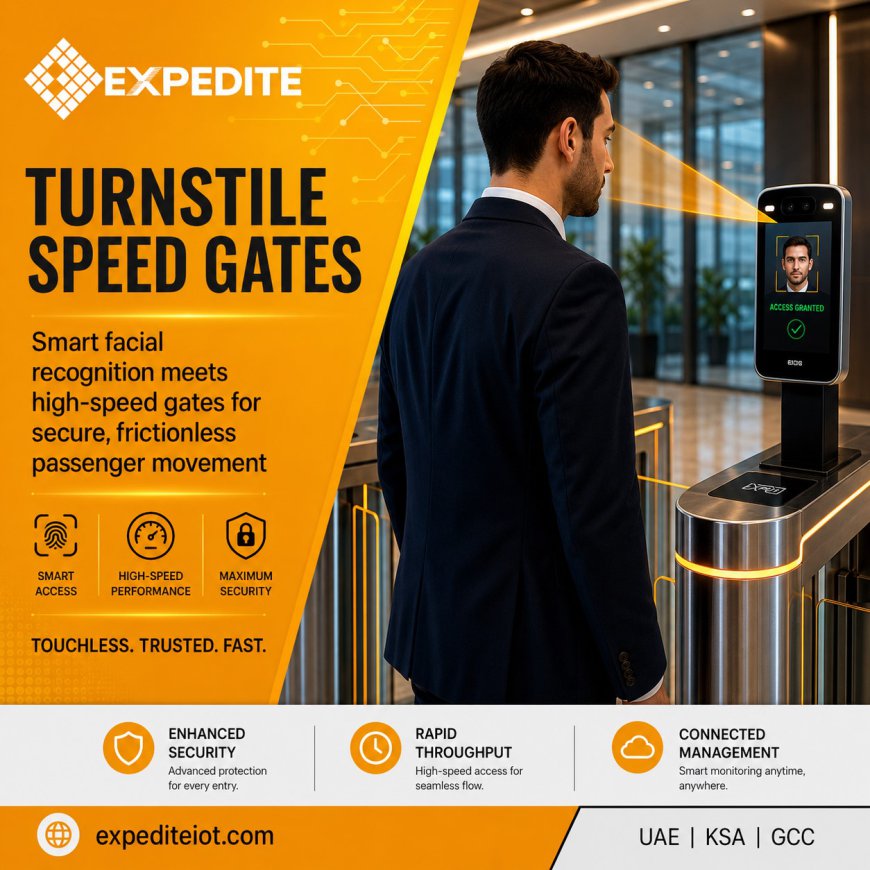
Intelligent Facial Recognition Turnstiles verify identity through a camera as a person approaches, opening the gate automatically without requiring a card tap or PIN entry, and logging the event against a verified identity rather than a card number alone.
Biometric Turnstiles Beyond the Face
Biometric Turnstiles can also incorporate fingerprint verification for facilities that want an additional or alternative credential layer, particularly in restricted zones where an extra step of verification is warranted.
Integration with Wider Qatar Building Security Systems
A turnstile rarely operates in isolation in a modern Qatar facility. The strongest deployments connect gate hardware to the building's broader security ecosystem rather than treating it as a standalone device.
● Integration with visitor management platforms, so a pre-registered guest's QR code opens the gate automatically on arrival.
● Connection to elevator access control, restricting which floors a badge or face credential can reach once inside the lobby.
● Links to CCTV and alarm systems, so a forced-entry attempt at the gate triggers an immediate security alert.
This kind of integration turns the lobby entrance into one connected layer of the facility's overall protection, rather than an isolated checkpoint disconnected from everything else in the building.
Built for Qatar's Climate and High-Density Venues
Turnstile hardware operating in Qatar needs to perform reliably under sustained Gulf heat and, at large public venues, extremely high foot traffic concentrated into short windows before an event or shift starts.
● Weatherproof housings and ingress-protected components resist dust and heat common across Doha's outdoor and semi-outdoor entrances.
● Auto-open mechanisms release the gate automatically during a power failure, keeping emergency egress compliant at all times.
● High-throughput lane configurations handle the surge traffic typical of stadiums, exhibition centres, and transit hubs.
Facilities that specify hardware rated for these conditions from the outset avoid the premature wear and unplanned downtime that lower-grade units often experience in a Gulf climate.
Selecting a Turnstile Speed Gates Qatar and Turnstile Speed Gates Doha Provider
Sourcing a Turnstile Speed Gates Qatar partner involves more than comparing gate finishes on a brochure. A track record with comparable regional deployments matters just as much as the hardware specification sheet.
A Turnstile Speed Gates Doha deployment in particular benefits from a provider familiar with the city's concentration of corporate towers, government facilities, and large public venues, where compliance documentation, watchlist screening, and a polished lobby presentation all matter alongside raw throughput.
● Proven experience installing across GCC commercial towers, government buildings, and institutional facilities, not only a single market.
● Local, Arabic and English-speaking support teams able to respond quickly if hardware needs servicing.
● Demonstrated integration capability with access control, visitor management, and building-management systems already in use.
● Clear guidance on emergency-egress compliance for the specific building type and occupancy.
Requesting a live, on-site demonstration of the actual gate model under consideration remains the most reliable way to judge cycle speed and build quality before committing to a full lobby rollout.
Installation, Commissioning, and Ongoing Maintenance
A turnstile rollout typically follows a structured sequence rather than a single installation day, since mechanical gates cycling thousands of times daily need proper commissioning to perform reliably long term.
● A site survey confirms lane layout, power supply, and network connectivity ahead of installation.
● Commissioning tests every credential type, from cards to biometric verification, before the gate goes live for staff use.
● Scheduled preventive maintenance inspects sensors, motors, and panel alignment before wear causes downtime.
● A defined warranty and rapid-response escalation path covers emergency repairs during business hours.
Facilities that budget for ongoing maintenance from day one, rather than treating installation as a single purchase, consistently report longer hardware lifespans and fewer unplanned lobby disruptions.
Conclusion
Modern Turnstile Speed Gates give Qatar facilities a faster, more secure lobby entrance than a manned checkpoint ever could. Robust Turnstile Access Control and hardware options ranging from cost-effective Tripod Turnstile Gates and accessible Swing Barrier Turnstile Gates to high-security Full Height Turnstile Gates and sleek Flap Barrier Turnstile Gates cover nearly any entrance requirement. Intelligent Facial Recognition Turnstiles and other Biometric Turnstiles remove the vulnerabilities of shared or lost credentials entirely, which is why organizations sourcing a Turnstile Speed Gates Qatar or Turnstile Speed Gates Doha partner should prioritize proven local installation experience and genuine system integration.
FAQs
1. What are Turnstile Speed Gates and how fast do they operate?
Turnstile Speed Gates are automated barriers that open only for a valid credential, capable of processing dozens of people per minute, allowing a continuous flow of authorized people through a single lane during peak hours or before a large event.
2. What is the difference between Tripod Turnstile Gates and Full Height Turnstile Gates?
Tripod Turnstile Gates use a compact rotating arm suited to staff entrances and high-volume indoor areas, while Full Height Turnstile Gates extend floor to ceiling for outdoor perimeters and high-security sites where climbing over a barrier must be physically prevented.
3. Are Swing Barrier Turnstile Gates suitable for wheelchair access?
Swing Barrier Turnstile Gates open a wide glass panel like a door, making them one of the more accessible turnstile types for wheelchairs, prams, and trolleys compared with narrower rotating or flap-style gates.
4. How do Intelligent Facial Recognition Turnstiles improve on card-based access?
Intelligent Facial Recognition Turnstiles verify identity through a camera as a person approaches, removing the need for a physical card that can be lost, shared, or cloned, and logging every entry against a verified identity.
5. Can Turnstile Speed Gates Qatar deployments integrate with existing building security systems?
Yes. A properly configured Turnstile Speed Gates Qatar deployment typically integrates with visitor management, elevator access control, and CCTV systems, turning the lobby entrance into one connected layer of the building's overall security.