Summer Fruit Tree Care Guide for East Bay Backyards
Planting backyard fruit trees or backyard citrus trees this summer? Get expert tips on site selection, watering, mulching, and pest control for the East Bay.
 nurserye835
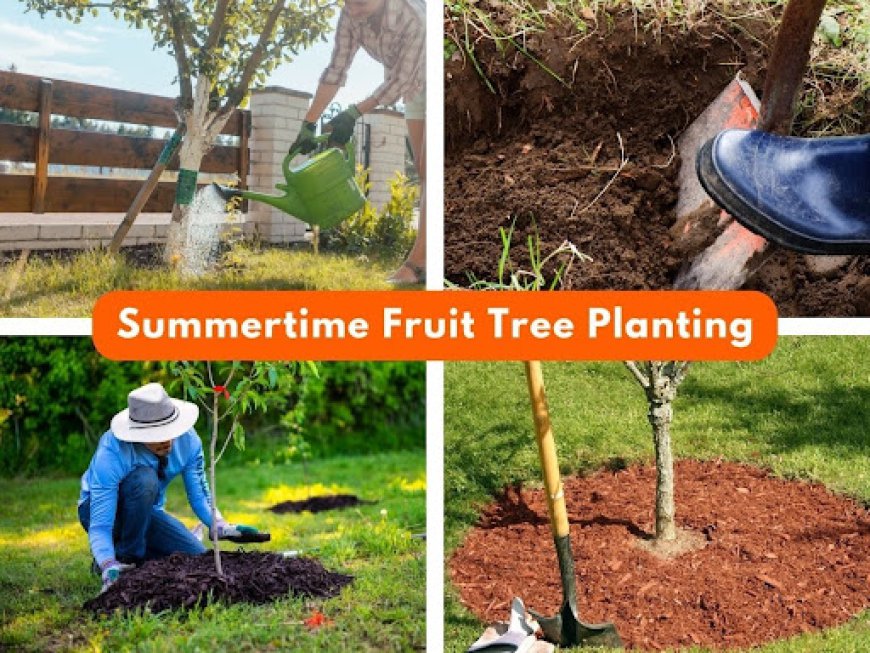
Summer Fruit Tree Care: A Practical Guide for East Bay Backyards
Spring may be the textbook season for planting, but summer doesn't have to be off-limits for starting your backyard fruit trees. Container-grown trees can go into the ground any month of the year; the difference in summer is that they need a more attentive owner. Heat, low humidity, and intense sun put extra pressure on a tree whose roots are still settling in. With the right site, the right soil prep, and a watering routine you actually stick to, a summer-planted tree can establish just as well as a spring one.
This guide walks East Bay gardeners, from Oakland and Alameda to Hayward, San Leandro, and Castro Valley, through everything needed to get a new fruit tree (including backyard citrus trees) through its first hot season and into a healthy fall.
Why Summer Planting Is Different
A tree growing in a 5- or 15-gallon nursery pot can be transplanted at any time because its root system stays largely intact during the move. Bare-root trees, by contrast, really only belong in the ground in winter while dormant.
The catch with summer planting is timing: the tree is pulling water through its leaves and growing actively at the exact moment its roots are recovering from being disturbed. That's a vulnerable combination.
The East Bay's microclimates work in your favor here. Coastal fog and afternoon marine air keep places like Alameda, Oakland, and San Leandro noticeably milder than inland pockets such as Castro Valley and Hayward, which can run several degrees hotter on the same afternoon. Know which side of that line your yard falls on, because it changes how often you'll need to water.
Choosing the Right Spot
Sunlight. Fruit trees are sun-hungry. Aim for 6 to 8 hours of direct sun daily, and lean toward 8 to 10 hours for Mediterranean fruits like figs and pomegranates. A south- or west-facing spot that holds afternoon warmth tends to produce better peaches, nectarines, and apricots. Avoid planting near anything that will eventually shade the tree, even a couple of lost sun hours a day adds up to a real drop in fruit production.
Drainage. This is the one step you cannot skip. Poor drainage drowns roots quietly, often before any above-ground symptoms appear. Test it yourself: dig a hole about a foot deep, fill it with water, let it drain, then fill it again and time the second drain. If water is still standing after three or four hours, you have a drainage problem. Your options are to plant elsewhere, build a raised mound at least 6 to 12 inches high and 3 feet wide, or install a French drain. Don't try to fix bad drainage by amending just the hole, a fluffy pocket of soil surrounded by dense clay still traps water like a bowl.
Spacing. A single full-size tree typically needs 15 to 20 feet of room. For smaller East Bay lots, many gardeners plant several semi-dwarf varieties closer together and control their size with regular summer pruning, which packs more variety and a longer harvest season into a small footprint.
Preparing the Soil
East Bay soils range from the heavy clay common in the Oakland hills and Castro Valley to the denser, compacted ground found in parts of San Leandro and Hayward, with lighter, sandier pockets in some Alameda neighborhoods.
The rule of thumb: don't over-amend the hole itself. Instead, blend your native soil with coarse material, perlite, pumice, vermiculite, or scoria, at a minimum of 20% by volume for decent soil, and more than that for heavy clay. Skip bark or wood chips as a drainage amendment. Sandy soils benefit from the opposite adjustment: mix in organic matter like compost or coco coir to help the root zone hold moisture through the dry months. Whatever you do, leave fertilizer out of the planting hole, it can scorch new roots before they've had a chance to grow.
Planting Step by Step
-
Dig a hole at least twice as wide as the root ball.
-
Mix the excavated soil with at least 20% coarse aggregate.
-
Add roughly 6 inches of that mix to the bottom of the hole.
-
Slide the tree out of its container gently, disturbing the roots as little as possible, and loosen any circling roots if the tree is root-bound.
-
Set the tree in the hole and check that the top of the root ball sits level with, or slightly above, the surrounding soil.
-
Backfill around the edges, tamping gently to remove air pockets, don't pack it hard.
-
Keep the trunk's flare (the crown) above the soil line; burying it invites rot.
-
Water deeply right away to settle everything in.
-
Mulch immediately.
A slow, deep soak after planting does more good than a quick spray. Hold off on watering again until the top inch or two of soil has dried out.
Mulch: The Most Underrated Summer Tool
A 3- to 4-inch layer of organic mulch, wood chips, shredded bark, or straw, does three jobs at once: it keeps roots cooler, slows moisture loss, and slowly enriches the soil as it breaks down. Spread it in a wide ring out toward the edge of the canopy, but keep it 4 to 6 inches clear of the trunk itself. Piling mulch against the bark traps moisture and invites rot, think donut, not volcano. Expect to top it off again by late summer as it compresses and thins out.
Watering Through the Heat
Getting watering right matters more than almost anything else for a summer-planted tree. The target is soil that feels like a damp sponge, never bone dry, never soggy.
Deep, infrequent watering beats frequent shallow sprinkling, since it trains roots to grow downward rather than staying near the surface. Skip overhead sprinkling from a hose, which can encourage disease.
For the first eight weeks, plan on watering two to three times a week, checking soil moisture first with a finger or wooden dowel pushed 3 to 4 inches deep, both near the drip line and in the root ball itself, since a long-potted tree's root ball can stay dry even when the surrounding soil is wet. Once you see active new growth, you can taper to once or twice weekly, but don't assume the tree can fend for itself after that, most backyard fruit trees, citrus included, need supplemental water through the entire dry season. When temperatures climb past 90°F in hotter inland spots, increase frequency; young trees can wilt within hours during a heat spike.
Read More: How to Care for New Fruit Trees in Summer: A Practical Guide for SF East Bay Gardeners
Protecting Against Heat Stress
Young trees, especially peaches, nectarines, and cherries, have thin bark that's vulnerable to sunburn on the trunk and lower branches. If your yard regularly tops 90°F, consider wrapping the lower trunk or painting it with diluted white latex paint, or rigging temporary shade cloth on the sun-exposed side for the first few weeks.
Resist the urge to fertilize during the first summer. All of the tree's energy should go toward building roots, not pushing new leaf growth the root system can't yet support. Save fertilizing for the following spring.
Pests and Diseases to Watch For
A few East Bay regulars to keep an eye on: peach leaf curl (treated with a dormant-season copper spray, not a summer fix), brown rot on stone fruit (prevented by removing mummified fruit and improving airflow), codling moth in apples and pears (managed with pheromone traps, kaolin clay, or timed spinosad sprays), spider mites in hot dry weather (often knocked back with a strong hose spray), scale insects, spotted wing drosophila on thin-skinned fruit like cherries and figs, aphids on new growth, and fire blight on apples and pears. Most of these respond well to an integrated approach: monitor first, intervene only when needed, and reach for the least disruptive treatment. If you're not sure what you're looking at, a photo or sample can usually get you a quick diagnosis from your local nursery.
Pruning and Fruit Thinning
Leave a first-summer tree alone except to remove dead, broken, or crossing wood. From the second year on, light summer pruning is an effective way to keep a tree's size manageable without triggering the aggressive regrowth that winter pruning can cause, useful for anyone trying to fit several trees into a small backyard.
It's also worth thinning, or even removing, fruit from a young tree in its first year or two. Letting a small tree carry a full crop pulls energy away from root and structure development; a little patience now means better harvests later.
Looking Ahead to Fall
Cooler fall temperatures are when root growth really picks up, so keep watering until the rains settle in, typically late November or December locally. As the season turns, add a layer of compost and fresh mulch, clear away any leftover fruit that could harbor pests over winter, and mark your calendar for a round of dormant-season spraying to get ahead of next year's pests and diseases.
With consistent watering, a well-mulched root zone, and a bit of patience through the heat, a summer-planted tree, fruit or backyard citrus alike, can settle in just as successfully as one planted in spring, and reward you with years of harvests to come.