The Mistakes That Kill New Stores in Saudi Arabia Before They Find Their First Real Customer
 johnkay1998123
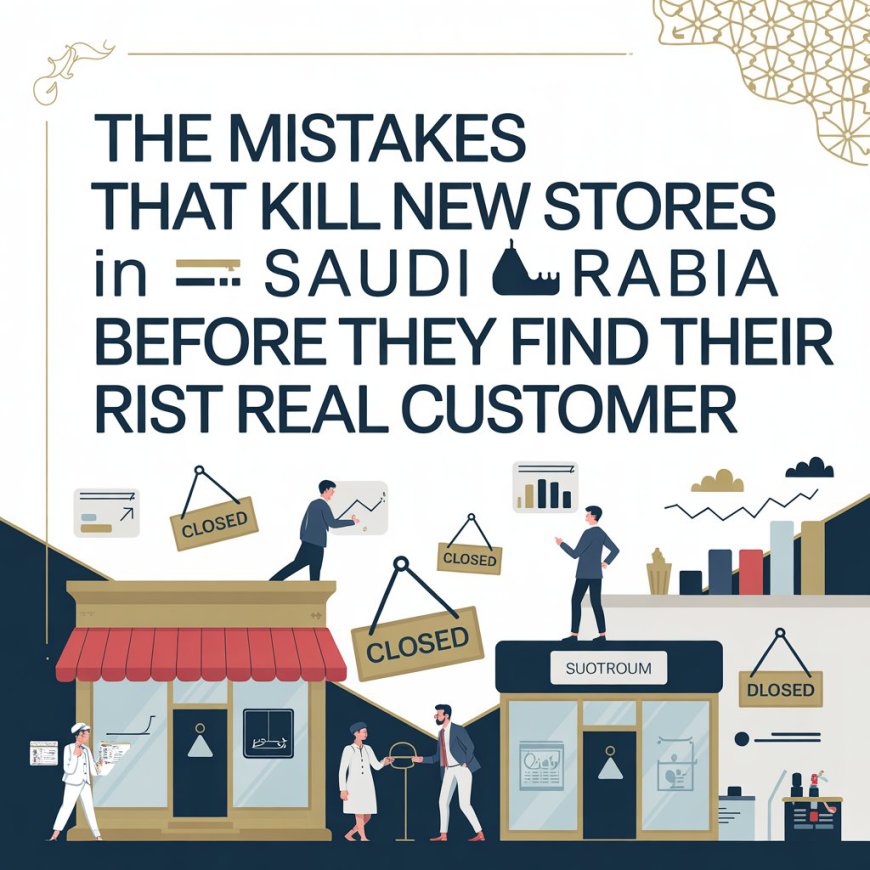
Someone spends three months building a product catalog, setting up an Instagram page, registering a commercial name, and telling everyone they know that their store is launching. Then it launches.
The first week brings a handful of visits from friends and family. The second week is quieter. By the end of the first month, the store has made a handful of sales and the owner is already questioning whether they chose the right products, the right platform, the right price, or the right timing.
This is not a story about a bad product. In most cases, it is a story about a store that was built without a clear commercial structure underneath it. The product was chosen before the target customer was understood. The platform was set up before the pricing model was tested. The marketing started with the launch instead of before it.
Saudi Arabia's retail market in 2026 is genuinely one of the most promising commercial environments in the world for new store operators. The Saudi e-commerce market is estimated at USD 31.29 billion in 2026, growing at a projected 11.92 percent compound annual growth rate through 2031, driven by near-universal internet penetration and 78 percent 5G coverage. The opportunity is real. The failure rate for new stores that enter without proper commercial preparation is equally real.
Understanding what the preparation actually requires changes the outcome.
The Decision That Shapes Everything: Online, Physical, or Both
The first structural decision for any new store is the channel, and it needs to be made based on the product, the customer, and the capital available, not on what seems easier or more exciting.
Online Stores: Lower Entry Cost, Higher Competition
An online store in Saudi Arabia removes the fixed cost of retail space, reduces staffing requirements, and makes the store accessible to buyers across all five major population centers — Riyadh, Jeddah, Mecca, Medina, and Dammam — from a single operation.
Smartphones account for 77.98 percent of e-commerce revenue in Saudi Arabia, meaning that any online store that does not have a fully functional, fast-loading mobile experience is effectively invisible to the majority of Saudi online shoppers. This is the minimum baseline for any online retail operation. A desktop-only store or a store with a slow mobile loading time will not compete in this market regardless of the product quality.
The trade-off is competition. As of early 2026, Trendyol is the most visited retail website in Saudi Arabia, followed by Amazon.sa and Noon, collectively capturing tens of millions of monthly visits. A new store is not competing directly against these platforms in search or in marketplace share — but it is competing for the same buyer attention. Standing out requires a specific customer segment, a distinctive product offering, or a service level that larger generalist platforms cannot match.
Physical Retail: Higher Commitment, Clearer Customer Trust
Physical retail in Saudi Arabia requires commercial registration, a lease, fit-out investment, and ongoing operational costs before a single sale is made. For most first-time store operators working with limited capital, this sequence is the right reason to start with an online channel before committing to physical space.
Where physical retail has a genuine advantage is in product categories where the customer needs to touch, try, or evaluate in person before buying: fashion with complex sizing, food and beverage, furniture, and luxury items where the purchase experience is part of what is being sold.
The hybrid approach, starting online and adding a physical presence once demand has been validated, is the lowest-risk sequence for most product categories.
Commercial Registration and Legal Requirements in Saudi Arabia
Operating a store in Saudi Arabia requires compliance with a specific sequence of government registrations. Skipping or deferring these steps does not reduce the requirement — it creates legal exposure and prevents the store from using formal payment systems, obtaining business banking, or listing on regulated marketplaces.
Ministry of Commerce Registration
The starting point is registering the commercial name through the Ministry of Commerce platform, Maroof. The process is conducted online, requires a national ID for Saudi citizens or iqama for non-citizens, and produces a commercial registration number that is required for most subsequent steps.
ZATCA Tax Registration
The Zakat, Tax and Customs Authority requires registration for VAT purposes once the business reaches the registration threshold. For stores anticipating significant revenue in the first year, proactive VAT registration avoids the compliance risk of reaching the threshold without the proper documentation structure in place.
Monsha'at Support for SMEs
The Small and Medium Enterprises General Authority, known as Monsha'at, operates support programmes for new Saudi businesses that include financing options, training programmes, and incubator access. Monsha'at has disbursed SAR 800 million to digitize 824 SMEs, reflecting the government's active investment in Saudi small business development. First-time store operators should review available support before assuming all startup costs must be funded independently.
Building the Product and Pricing Strategy Before Launch
The most common commercial mistake among new store operators in Saudi Arabia is setting prices based on what feels right rather than on a margin calculation that actually works.
A viable retail pricing structure requires knowing four numbers: the unit cost of the product, the per-order fulfillment cost including packaging and shipping, the platform or marketplace fee if applicable, and the minimum acceptable margin per sale. Every price point should be tested against these four inputs before it is published.
For online stores operating with delivery, the cost of last-mile shipping in Saudi Arabia is a number that surprises many first-time operators. Major courier services including Aramex, DHL Express Saudi Arabia, and Saudi Post (SPL) have rate structures that make low-price-point product economics difficult unless shipping is factored into the product price or a minimum order threshold is set.
Product selection should be driven by a specific buyer persona rather than by what the seller personally likes or finds interesting. A useful buyer persona for a Saudi retail context answers: who is buying, where in the Kingdom are they concentrated, what is their payment preference, what is their average household spending in this category, and what are they currently buying to solve this problem.
Platform Selection and Store Setup
The platform decision for a Saudi online store has significant downstream implications for payment integration, Arabic language support, logistics partnerships, and customer trust.
Building an Independent Store
Independent store platforms allow the seller to own the customer relationship, control the brand experience, and retain margins that marketplace models distribute. Shopify, WooCommerce, and Saudi-native platforms that support Arabic interfaces and local payment gateways are the primary options for building a standalone store.
Payment gateway integration for a Saudi store must support Mada, the national debit network that dominates Saudi consumer payments, alongside credit card processing and increasingly digital wallet options. Digital wallets are the fastest-growing payment method in Saudi Arabia, projected at a 14.71 percent compound annual growth rate through 2031, with STC Pay the leading option. A store that accepts only international credit cards is excluding a significant portion of Saudi buyer purchasing behavior.
Marketplace Selling as a Starting Point
For new store operators who want to validate product demand before investing in an independent store, listing on Amazon.sa or Noon provides access to an established buyer base without requiring the marketing investment to build an audience from zero. The trade-off is margin compression from marketplace fees and limited control over the customer relationship.
The strategic sequence for many successful Saudi online stores has been to start with marketplace listings to test demand, build initial revenue, and understand the customer, then invest those learnings into an independent store that builds brand equity rather than marketplace dependency.
Logistics, Fulfillment, and the Delivery Standard Saudi Shoppers Expect
Saudi consumer expectations for online order fulfillment have been shaped by the delivery infrastructure of the major platforms. Next-day delivery in major cities is now a baseline expectation rather than a premium service for many product categories.
A new store that cannot meet this delivery standard will see it reflected in reviews and repeat purchase rates. The practical options are direct fulfillment from the seller's own location, fulfillment partnerships with third-party logistics providers operating warehousing and dispatch in Saudi Arabia, or fulfillment-by-marketplace models for sellers operating through Amazon or Noon.
Packaging quality is a direct driver of first-impression experience for online orders. Unboxing videos and social media sharing are significant in the Saudi consumer market, which makes packaging an investment in word-of-mouth marketing, not just a cost of shipping.
Marketing a New Store in the Saudi Market
Marketing a new store in Saudi Arabia in 2026 operates primarily through three channels: social media, search engine visibility, and word-of-mouth driven by strong customer experience.
Saudi Arabia has among the highest social media penetration rates globally, with Snapchat, Instagram, TikTok, and X all maintaining large and commercially active user bases. For a new store in a visually oriented product category, social content that demonstrates the product authentically outperforms polished advertising in the early stages. Paid social amplification can accelerate reach once the organic content is performing.
Search visibility requires consistent investment in content that answers the questions Saudi buyers are already asking. A store selling a specific product category benefits from content that addresses buying decisions in that category, building search presence that generates ongoing organic traffic rather than depending entirely on paid visibility.
For those looking to establish a professional Arabic-language commercial presence that resonates with Saudi buyers, Balarab provides a platform designed specifically for the Saudi and broader Arab market, offering a foundation to build commercial operations that are culturally aligned, locally trusted, and structured for the specific needs of Arabic-language commerce.
The question of how to open a store (كيف افتح متجر) in Saudi Arabia has a practical answer. The answer requires commercial preparation, legal compliance, honest margin mathematics, a platform that fits the product and the buyer, and a marketing approach that builds visibility before depending on it for revenue.
FAQ
Q: What are the legal requirements to open an online store in Saudi Arabia?
A: Opening an online store in Saudi Arabia requires commercial registration through the Ministry of Commerce platform, known as Maroof, which produces a commercial registration number necessary for business banking, marketplace listings, and payment gateway integration. Sellers must also register with the Zakat, Tax and Customs Authority for VAT purposes if revenue is expected to reach the registration threshold, which is SAR 375,000 in annual taxable supplies for mandatory registration and SAR 187,500 for voluntary registration. Stores operating in regulated product categories, including food, health products, and cosmetics, require additional category-specific approvals from the relevant government authority. Saudi citizens conduct registration using their national ID, while non-Saudi residents require a valid iqama. The entire registration process for a standard commercial activity is conducted online and typically takes between two and five business days.
Q: What payment methods should a Saudi online store accept?
A: A Saudi online store should accept Mada at minimum, as Mada debit cards are the dominant payment instrument in the Saudi market and excluding them would cut off a large portion of potential buyers. Credit and debit card acceptance through an international payment gateway such as PayTabs, Moyasar, or Tap Payments covers Visa and Mastercard transactions. STC Pay integration is increasingly important as the leading digital wallet in the Kingdom, and its growth trajectory makes it a near-essential payment option for stores targeting younger demographics. Apple Pay and mada Pay contactless options are relevant for mobile buyers making purchases below SAR 100 without PIN entry. Cash on delivery remains a payment option offered by many Saudi online stores for buyers who are not comfortable with online card payment, though its share of transactions has been declining steadily as electronic payment infrastructure has improved across the Kingdom.
Q: How long does it take for a new Saudi online store to generate consistent sales?
A: The timeline to consistent sales for a new Saudi online store depends on three variables: whether the store is selling on an established marketplace with an existing audience or building its own traffic from zero, the product category and how much existing demand exists versus how much demand must be created, and the marketing investment in the early months. Stores that list on Amazon.sa or Noon with competitive pricing in an established product category can begin generating sales within the first two to four weeks as the marketplace's existing buyer traffic finds the listings. Independent stores building their own audience through social media and search require three to six months of consistent content output and paid amplification before generating sustainable organic traffic. First-time store operators should budget for a six-month runway to reach commercial viability without relying on early revenue to cover operating costs.