Smart Gate Barrier System for Industrial Facilities in Qatar
 TekYousuf26
Qatar's industrial landscape is evolving rapidly, and a reliable Gate Barrier System has become the backbone of perimeter security across the country's most critical facilities. From energy complexes along the northern coast to sprawling logistics hubs in Doha's industrial zones, the demand for intelligent, automated entry control has never been greater. As Qatar accelerates its Vision 2030 infrastructure mandate and prepares to sustain post-World Cup momentum, industrial operators are seeking robust Gate Barrier System in Qatar solutions that integrate seamlessly with their existing security ecosystems.
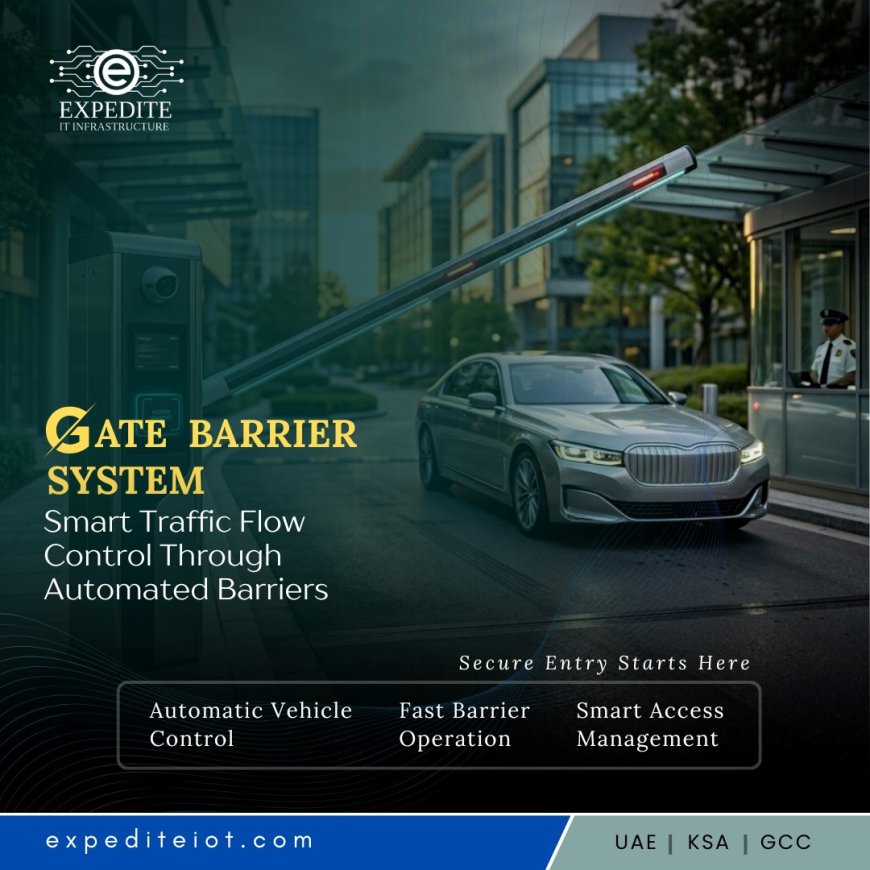
Expedite IoT delivers enterprise-grade barrier technology engineered for the extreme heat, dust, and high-throughput conditions characteristic of Qatari industrial operations. Whether your facility manages LNG carriers, petrochemical logistics, or heavy manufacturing, the right access control infrastructure determines whether your perimeter remains an asset or a liability.
Why Qatar's Industrial Sector Demands Advanced Vehicle Access Control
Qatar hosts some of the world's highest-value industrial clusters — from QatarEnergy's Ras Laffan Industrial City to QAFCO's fertilizer complexes and Mesaieed Industrial City's downstream facilities. Each of these environments requires Vehicle Access Control that can process hundreds of heavy trucks, tankers, and personnel vehicles per hour without introducing bottleneck delays or compromising security integrity.
Qatar's National Cyber Security Agency (NCSA) and the Ministry of Interior's Critical Infrastructure Protection framework both emphasise layered physical security as a prerequisite for industrial licensing. An Automatic Road Barrier that communicates in real time with a central security management platform satisfies these regulatory expectations while reducing dependency on manual gate operators — a significant operational cost in a market with high expatriate labour overheads.
Key Challenges Facing Qatari Industrial Facilities
- Extreme ambient temperatures exceeding 50°C that stress barrier motors and control electronics
- High-frequency entry/exit cycles during shift changes at mega-projects
- Multi-contractor environments requiring granular, role-based access rules
- Integration mandates with existing ERP, HR, and CCTV platforms
- Compliance requirements tied to ISO 27001 security management frameworks
The Boom Barrier System: Core Technology for Industrial Entry Points
At the heart of most high-throughput industrial access points sits an Industrial Boom Barrier — a motorised arm mechanism capable of lifting and lowering a reinforced boom to permit or deny vehicle passage. Modern units from leading manufacturers such as CAME, BFT, and Roger Technology are engineered for duty cycles exceeding 100 operations per hour, making them suited to the continuous traffic flows seen at Ras Laffan's contractor entry gates or Hamad Port's logistics corridors.
Expedite IoT deploys Boom Barrier System configurations with three-phase industrial motors, tempered aluminium booms, and integrated anti-crash sensors that detect obstructions before completing a close cycle. Boom lengths range from 3 metres for standard lane widths to 6 metres for oversized-load lanes, with optional counterbalancing to reduce motor wear in dusty environments.
Industrial Boom Barrier Specifications Worth Evaluating
- Operating temperature rating: confirm the unit is rated for 60°C ambient
- Duty cycle classification: industrial-grade units typically exceed 100 cycles/hour
- Boom material: aluminium with polyurethane coating resists salt-air corrosion in coastal zones
- Safety certifications: CE marking and UL compliance indicate tested electrical safety
- Power backup: integrated UPS ensures operation during Qatar's occasional grid fluctuations
RFID Barrier System: Enabling Touchless, High-Speed Lane Throughput
For facilities managing large mixed fleets — heavy goods vehicles, light utility trucks, and personnel cars — an RFID Barrier System dramatically reduces gate dwell time compared with card-swipe or manual pass verification. Passive UHF RFID tags affixed to windscreens or licence plates communicate with long-range readers mounted at lane approaches, triggering authorised boom lifts before the vehicle reaches the gate. This architecture supports throughput speeds of up to 30 kilometres per hour, eliminating queue formation at busy shift-change windows.
Expedite IoT integrates RFID technology with centralised whitelist databases that sync in real time with HR and contractor management platforms. When a contractor's access period expires, their vehicle tag is automatically deactivated across all facility entry points simultaneously — a capability that manual gate management cannot replicate reliably. This level of control is increasingly expected by QatarEnergy and its joint-venture partners under their Contractor HSE & Security Management Systems.
Toll Gate Barriers and Parking Access Barriers: Applications Beyond the Perimeter
Industrial facilities in Qatar operate internal road networks that require the same rigour as external perimeters. Toll Gate Barriers deployed at internal checkpoints between operational zones — for example, between a refinery's process area and its utilities block — enforce zone segregation mandated by QCDD (Qatar Civil Defence Department) fire and explosion risk protocols. These internal barriers can be linked to gas-detection and fire-alarm systems so that controlled areas automatically seal during emergency events.
Employee and visitor parking management is equally critical. Parking Access Barriers integrated with a licence-plate recognition engine and a ticketing or reservation system eliminate unauthorised vehicle parking in safety-critical zones adjacent to process equipment. Expedite IoT's parking management layer connects Parking Access Barriers to a cloud-hosted dashboard, giving facilities managers live occupancy data, historical dwell-time analytics, and automated alerts for vehicles exceeding permitted park durations.
Gate Barrier System Doha: Tailored Deployments for Qatar's Capital Infrastructure
Doha's rapidly expanding industrial and commercial districts — including Msheireb, Lusail, and the Industrial Area along Street 56 — present a distinct set of deployment challenges compared with remote mega-project sites. A Gate Barrier System Doha deployment must account for urban traffic-management ordinances issued by the Traffic Department of the Ministry of Interior, integrate with building management systems prevalent in Doha's Class-A commercial campuses, and comply with the landscaping and aesthetic guidelines stipulated by Ashghal (the Public Works Authority).
Expedite IoT's project engineers hold proven experience delivering Boom Barrier and Vehicle Access solutions across Doha and the GCC, with completed installations at logistics parks, government ministry complexes, and private industrial compounds. Our commissioning teams work within Ashghal road permit windows and coordinate with local MEP contractors to ensure zero disruption to live traffic during installation.
System Architecture: How a Complete Gate Barrier System Qatar Deployment Works
Layer 1: Detection and Identification
Vehicle detection loops or radar sensors buried in the carriageway signal approaching vehicles to the system controller. Long-range RFID readers, licence-plate recognition cameras, or biometric intercoms then capture identity credentials and query the access-control database to determine authorisation status.
Layer 2: Decision and Command
An embedded controller — or a cloud-connected edge device in Expedite IoT's architecture — evaluates the identity response against current access rules and time schedules. Authorised vehicles receive an open command within 150–300 milliseconds; unauthorised vehicles trigger an alert to the security operations centre.
Layer 3: Physical Access Actuation
The barrier arm executes the open/close command. Industrial barrier motors complete a full open cycle in 1.5–4 seconds depending on boom length and motor class. Integrated safety photocells ensure the boom halts and reverses if a pedestrian or vehicle enters the arm's sweep path.
Layer 4: Audit and Analytics
Every event — entry, exit, denied access, manual override, emergency lockdown — is time-stamped and logged to a central server or cloud repository. These logs feed compliance reports required by QatarEnergy's audit teams and are available for forensic review following security incidents.
Why Expedite IoT for Qatar's Industrial Sector
Expedite IoT's barrier system division combines deep regional expertise with internationally accredited technical capabilities:
- ISO 27001-aligned security management practices governing project delivery and data handling
- Certified integration partners for Genetec Security Center, Milestone XProtect, and Lenel OnGuard platforms
- Field engineers with hands-on experience in QatarEnergy, QAFCO, and Hamad Port project environments
- 24/7 remote monitoring and SLA-backed maintenance contracts covering hardware, firmware, and software layers
- Compliance advisory service covering Qatar's NCSA Critical Infrastructure Protection guidelines and IEC 62443 cybersecurity standards for industrial control systems
Our industrial gate barrier solutions for Qatar, KSA, and Oman are backed by a track record of delivering systems that remain operational in some of the Gulf's most demanding environments — from Ras Laffan's petrochemical sprawl to Muscat's industrial port zones.
Integration with Broader Physical Security Ecosystems
A gate barrier does not function in isolation. The most effective deployments in Qatar's industrial facilities integrate barrier hardware with:
- IP CCTV and AI-powered video analytics for behavioural surveillance at entry lanes
- Perimeter intrusion detection systems (PIDS) using fibre-optic or microwave fence sensors
- Visitor management systems that pre-register contractors and generate temporary RFID tokens
- Fire and gas detection systems that automate emergency barrier states
- HR and workforce management databases that synchronise access privileges dynamically
- ANPR (Automatic Number Plate Recognition) cameras for secondary verification of RFID-authenticated vehicles
When these subsystems communicate through an open-architecture integration middleware — such as Genetec or Lenel OnGuard — a security operations centre operator can manage the entire physical security envelope of a facility from a single interface, with gate barrier status displayed alongside CCTV feeds and intrusion alarm panels.
Conclusion
Qatar's industrial facilities face a unique convergence of regulatory rigour, operational intensity, and environmental challenge that demands more than a standard commercial barrier system. A purpose-built Gate Barrier System — whether expressed as a high-throughput Boom Barrier System, a touchless RFID Barrier System, or a zoned Parking Access Barriers network — must be engineered for longevity, integrated with existing security infrastructure, and backed by a service partner with credible in-country experience.
Expedite IoT delivers exactly this combination across Gate Barrier System Qatar deployments, Gate Barrier System Doha urban installations, and remote industrial site projects. From initial consultancy and system design through to commissioning, staff training, and long-term SLA support, our teams ensure that every access point on your facility perimeter performs to specification — on day one and for years beyond. Contact Expedite IoT today to schedule a site assessment and receive a tailored proposal for your Qatar industrial access control requirements.
FAQs
1. What makes an Industrial Boom Barrier different from a standard commercial barrier?
An Industrial Boom Barrier is rated for a significantly higher duty cycle — typically 100+ operations per hour versus 10–30 for commercial units. Industrial models use three-phase motors, reinforced boom arms, hardened control electronics rated for extreme temperatures, and heavy-duty gearboxes designed for continuous operation. They also incorporate redundant safety features such as anti-crash torque limiting and dual-channel photocell protection, which are mandatory at high-traffic industrial entry points.
2. How does an Automatic Road Barrier integrate with existing site security systems?
An Automatic Road Barrier controller communicates with external systems through dry-contact relays, Wiegand interfaces, or modern TCP/IP and OPC-UA protocols. This allows integration with access control software, visitor management platforms, fire alarm panels, and CCTV systems. Expedite IoT's deployments typically use open-architecture middleware so that barrier events are visible within the same security operations dashboard as CCTV alarms and intrusion zone data.
3. What regulatory standards govern Gate Barrier System Doha installations?
A Gate Barrier System Doha installation must align with Qatar's Ministry of Interior physical security directives, Ashghal road permit requirements for any works affecting public carriageways, QCDD fire safety codes for emergency access provisions, and — for facilities connected to QatarEnergy or its JV partners — the operator's own Contractor HSE & Security Management System. ISO 27001 provides the overarching information security framework that governs access-log data handling and system cybersecurity.
4. Can Toll Gate Barriers handle oversize vehicles common in Qatar's industrial zones?
Yes. Toll Gate Barriers can be configured with extended boom lengths of up to 6 metres and supplemented with double-barrier configurations to span wide lanes used by articulated tankers or oversized-load transporters. Laser height detectors and inductive loop sensors are added to identify vehicle class and apply the correct authorisation rules — for example, restricting certain boom configurations to HGVs above a defined axle weight or height threshold.
5. What is the typical ROI timeline for deploying a Vehicle Access Control system at a Qatari industrial site?
Most operators deploying a structured Vehicle Access Control system in Qatar report cost recovery within 18–30 months. The primary savings come from reduced manual gate operator headcount (typically 3–6 FTEs per gate across three shifts), elimination of unauthorised vehicle incidents that carry significant HSE liability, faster gate throughput reducing idle truck costs, and improved audit compliance that reduces the risk of regulatory penalties. Facilities with QatarEnergy or tier-one contractor requirements often achieve faster ROI due to the direct commercial value of maintaining uninterrupted security certification.