Tips to Choose the Right Pickup Truck for Last-Mile Logistics
Last-mile deliveries are where most logistics companies lose the most time and money. From the distribution centre to the customer’s door, the final leg of the delivery requires a quick vehicle that can navigate narrow lanes, make multiple stops, carry the right cargo and adhere to tight schedules. That’s why choosing the right pickup truck makes all the difference.
 ishita_mehra
In the logistics industry, every decision impacts the bottom line. And choosing the right pickup truck is the biggest one of them all. The key is to focus on what suits the application and provides maximum value at the minimum cost.
Here’s what businesses should evaluate first:
Understand Your Application
What is the primary purpose of the pickup truck? Last-mile logistics serve a wide range of industries, each with different needs. E-commerce and courier delivery need a compact truck that can handle multiple trips in the city. FMCG and cold chain distribution need reliable storage options and stable loading capacity. Knowing your use case makes every other decision easier. It’s also important to evaluate the frequency of use and the terrain you will be transporting. Additionally, factoring in driver comfort and cabin ergonomics during long city shifts helps retain operators and maintain peak daily efficiency. The best pickup truck for your business is one that can support high-frequency operations reliably with minimal downtime.
Payload Capacity
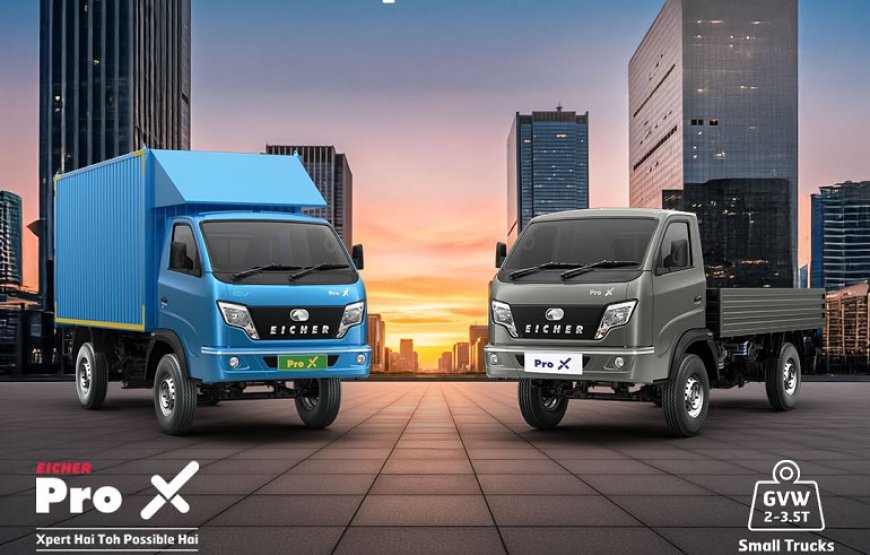
Another important aspect is to match the truck’s payload to your business requirements. A truck with too little capacity may require you to take multiple trips. At the same time, overloading beyond the rated capacity may lead to faster wear, safety risks and compliance issues. For most urban last-mile fulfilments and local distributions, a GVW (Gross Vehicle Weight) of 2,999 kg to 3,500 kg works well. Investing in a vehicle built with a robust chassis and heavy-duty suspension ensures the truck handles varying cargo loads smoothly without straining the engine. The Eicher Pro X pickup truck, for instance, offers a strong payload capacity, making it a reliable fit for regular city deliveries.
Handling and Manoeuvrability
A small pickup truck in India that cannot get into tight city streets or urban infrastructure, where most last-mile deliveries happen, can cost you time and money at every stop. Look at the turning radius, the vehicle width and the driver’s visibility from the cabin. The truck should also have good gradeability, as it affects how easily it navigates inclines and uneven terrain.
Cargo Type and Protection
The body of the vehicle should support the type of cargo you’re transporting. Open deck bodies, like fixed side decks, are best for delivering produce materials, construction materials, and general cargo. MS and closed body containers protect all sides. Reefer bodies are ideal for transporting temperature-sensitive goods and cold chain supplies. Getting the body type right from the start prevents product damage and costly returns later.
Lastly, for logistics companies, managing rising fuel costs and ensuring timely last-mile deliveries matter a lot. It’s important to look beyond the sticker price of the pickup truck. Since fuel and maintenance costs are two of the highest operational expenses in a logistics business, a vehicle that offers improved fuel efficiency and higher utilisation with minimal downtime helps balance out the cost of ownership.