u4gm College Football 27: Master the UTSA Rushing Offense
 Sjolund
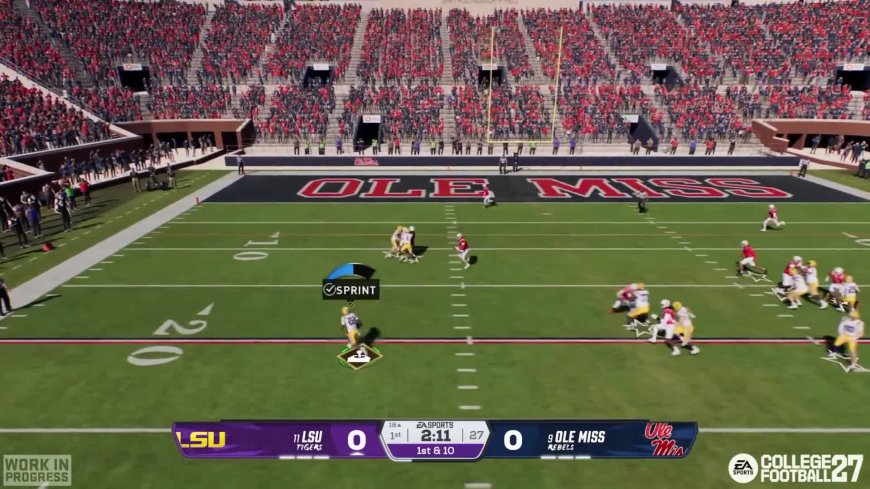
The UTSA offensive playbook has quickly become one of the most frustrating schemes to face in College Football 27, especially for players who struggle to defend the run. With a combination of powerful formations, reliable inside runs, outside stretch concepts, and difficult-to-defend RPO plays, this offense gives you multiple ways to attack the same defensive structure. Whether you are trying to build your offense around a dominant rushing attack or simply want more consistency online, understanding this scheme can make a major difference. Managing your roster and resources efficiently can also help you build the team you want, including making smart decisions around CFB 27 Coins when upgrading your Ultimate Team experience.
Why the UTSA Playbook Is So Effective
The biggest strength of the UTSA offense is its ability to force the defense to defend the entire field. Instead of relying on one isolated money play, the scheme gives you several options that complement each other. If the opponent loads up to stop the outside run, you can attack inside. If they bring defenders into the box, you can use an RPO or quarterback run. When they finally adjust to those concepts, you can change formations and attack them from a completely different angle.
The Power I formation is an excellent place to start. College Football 27 currently rewards effective rushing attacks, and Power I gives you a strong foundation for controlling the line of scrimmage. The formation creates useful blocking angles and can expose defensive alignment problems before the ball is even snapped.
The first play you should learn is HB Stretch.
HB Stretch: The Foundation of the Scheme
HB Stretch is arguably the bread-and-butter play of this particular strategy. Its effectiveness comes from the way many defensive formations align their players too far inside. Against compact structures such as 4-3 Even 6-1, defenders can have difficulty getting outside quickly enough.
Before snapping the ball, take a moment to examine the defense. Pay close attention to where the linebackers, safeties, and defensive backs are positioned. If the defense is heavily compressed toward the middle, the stretch becomes particularly dangerous.
The basic objective is simple: take the handoff and immediately attack the edge. You do not necessarily need to make several complicated adjustments. The offensive line and blocking assignments can create enough space for the halfback to reach the perimeter.
This does not mean every HB Stretch will become a touchdown. Instead, the important point is consistency. Even when the defense prevents the explosive play, you can frequently gain several yards and stay ahead of the chains.
That makes HB Stretch valuable throughout an entire game rather than simply as a trick play.
How Defenses Try to Stop the Stretch
One of the first adjustments defenders may try is changing their coaching settings to widen the defensive alignment. In theory, moving defenders farther toward the outside should make it more difficult for the running back to reach the edge.
However, this adjustment does not completely solve the problem.
Against 4-3 Even 6-1, the defensive front can remain extremely compact. The formation may look strong against inside runs, but that same compactness can become a weakness when the offense attacks horizontally.
Nickel Wide is another possible counter. It places defenders farther outside and appears better suited for defending the stretch. However, alignment issues can still create opportunities.
The nickel defender may remain too close to the middle of the field, giving the running back an opportunity to turn the corner. The offense can also quickly flip the play or attack the opposite side. Because the defense may not adjust as quickly as the offense changes direction, flipping the play can create another advantage.
Dime formations have similar concerns. Although they provide more speed on the field, certain slot defenders can still line up too far inside. If those defenders cannot immediately establish outside leverage, the offense can once again attack the perimeter.
Lead Dive Provides the Perfect Counter
Eventually, a smart opponent will realize that constantly defending the outside is not enough. That is when the lead dive becomes extremely valuable.
The beauty of the dive is that it punishes defensive players who become too concerned about HB Stretch. Instead of trying to bounce the ball outside, the running back attacks directly through the middle.
A successful dive does not always need to produce a huge gain. Three, four, or five yards can be enough to keep the offense on schedule. However, the play also has considerable explosive potential when the defense creates a large interior gap.
This is particularly effective against three-man defensive fronts. When the opponent removes a defender from the box, the offense can take advantage of the additional blocking space.
The key concept is to make the opponent choose between two bad options. If they spread out to stop Stretch, attack inside with Dive. If they compress the box to stop Dive, return to Stretch.
This simple relationship makes the two plays extremely effective together.
Using the Run Game Against Different Defensive Stunts
Defensive stunts can change how a running play develops, so recognizing them is important. If the defense uses an inside stunt designed to attack the running lane, Stretch can become an attractive response because you are attacking away from the congestion.
Conversely, if defenders start using techniques designed to prevent the outside run, the Dive can become the better choice.
The important lesson is not to blindly call the same play every time. The strength of the UTSA scheme comes from reading the defensive structure and selecting the complementary play.
Even Dollar formations, which are often associated with pass defense, can create interesting situations against the run. If an opponent successfully uses a Dollar structure to slow down the outside attack, the offense can return to its inside rushing concepts.
Gun Trips X Off Takes the Scheme Further
The Power I formation is only the beginning. One of the biggest reasons the UTSA playbook is so dangerous is that it also contains shotgun formations that can create major problems for defensive AI and player alignment.
Gun Trips X Off is especially interesting because it gives the offense access to RPO concepts such as Orbit RPO QB Power.
This type of play forces defenders to make quick decisions. The offense can use motion to influence the defense before the snap and then attack based on how defenders react.
Against zone coverage, the quarterback can sometimes find a huge running lane because coverage defenders are primarily focused on their assigned zones. If the front seven is not aggressively attacking the quarterback, there may be enough time and space to take off.
That creates another layer to the offense. The opponent can no longer focus exclusively on the halfback.
Why the RPO Creates So Many Problems
The Orbit RPO QB Power concept is particularly effective because it combines pre-snap motion with quarterback running potential. The motion can influence defensive alignment, while the quarterback becomes another legitimate rushing threat.
Against zone coverage, defenders may hesitate before committing to the quarterback. That hesitation can be enough to create a significant gain.
Against man coverage, the situation can be just as difficult. If defenders are responsible for individual receivers, they may have less freedom to immediately attack the quarterback.
Blitzing can create additional pressure, but it also introduces risk. Aggressive defenders can become occupied by blocks, allowing the quarterback to escape into open space.
The result is a frustrating situation for the defense: every attempt to fix one weakness can create another.
Building a Complete UTSA Offensive Strategy
The best way to run this playbook is not to treat it as a collection of exploits. Instead, think of it as a system based on defensive reactions.
Start with HB Stretch and establish the outside threat. If the opponent widens the defense, use Lead Dive. If they start attacking the interior aggressively, return to Stretch.
When the opponent begins anticipating your rushing tendencies, introduce Gun Trips X Off and the Orbit RPO QB Power. The shotgun formations force defenders to account for the quarterback while also respecting the receivers and halfback.
You should also avoid becoming predictable with your play direction. If you always run Stretch toward the same side, your opponent will eventually begin manually positioning defenders to stop it. Flip the play when appropriate and pay attention to defensive alignment.
Likewise, do not automatically choose the quarterback run every time you call the RPO. The goal is to force the defense to respect every component of the play.
Why This Scheme Can Be So Frustrating Online
The UTSA offense is effective because it constantly creates difficult decisions for the defense. A defender cannot simply choose one formation and expect it to stop everything.
If they use a compact front, Stretch can attack the perimeter. If they spread out, Dive can attack the middle. If they dedicate more defenders to the running back, the RPO can exploit their commitment. If they sit back in coverage, the quarterback may have room to run.
That is the foundation of a strong College Football 27 offensive scheme: create conflicts rather than relying on one button or one play.
Players should also remember that online opponents will adapt. A strategy that works for the first quarter may become less effective later in the game. Mix your formations, vary your tendencies, and make defensive adjustments part of your decision-making process.
Final Thoughts
The UTSA playbook offers one of the most aggressive rushing-oriented offensive systems available in College Football 27. HB Stretch gives you an excellent outside threat, while Lead Dive punishes defenses that overreact to the perimeter. Gun Trips X Off and Orbit RPO QB Power then add another dimension by forcing defenders to account for the quarterback and motion concepts. The most important skill is learning how to identify what the defense is trying to accomplish and immediately choosing the complementary play. With the right execution, this scheme can control the clock, generate explosive runs, and make defensive adjustments extremely difficult. Whether you are building a competitive Ultimate Team lineup or simply looking for ways to improve your resources and roster, combining strong gameplay knowledge with smart use of College Football 27 Coins for sale can help you get even more out of your College Football 27 experience.