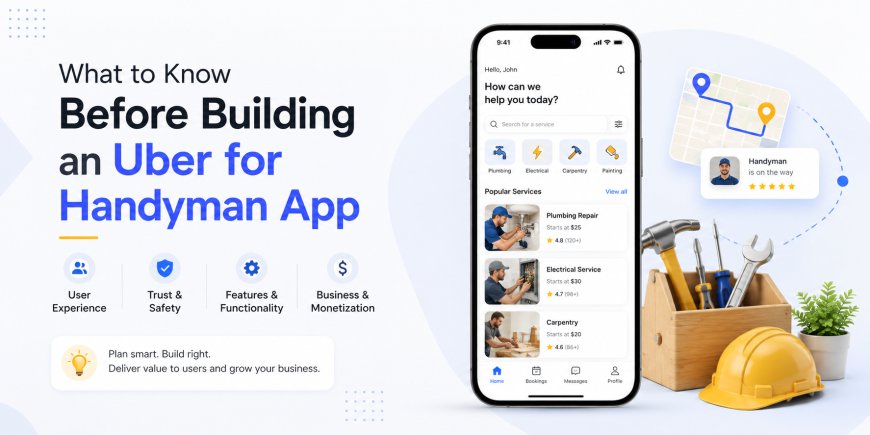
What to Know Before Building an Uber for Handyman App
Explore everything you need to know before building an Uber for Handyman app, from booking features and AI tools to scalability and development choices.
 simonharris
Customers no longer want to spend hours calling different service providers to fix a leaking faucet, install a ceiling fan, or repair a broken door. They expect to open an app, book a professional within minutes, track the arrival time, and pay online after the job is done. That's one reason the Uber for Handyman model has become popular with home service businesses.
Instead of relying on phone calls and manual scheduling, businesses can manage bookings, assign jobs, and communicate with customers through a single platform. This creates a smoother experience for everyone involved.
If you're thinking about launching a home service marketplace or modernizing an existing handyman business, it's important to understand how this model works before investing in development. This article explains the core features, the role of AI, the pros and cons of different development approaches, and the key factors to consider before building your app.
What Is an Uber for Handyman App?
An uber for handyman app is an online platform that connects customers with nearby professionals who offer repair, maintenance, and installation services. Instead of calling several contractors, customers can search for a service, book an appointment, and receive updates from their mobile device.
Unlike a traditional handyman business that often depends on phone calls and paper schedules, an on-demand handyman service app keeps everything organized in one place. Customers can request services, professionals can accept jobs, and business owners can monitor operations through an admin dashboard.
The model usually involves three groups:
-
Customers book services, make payments, and leave reviews.
-
Service providers manage availability, accept jobs, and track earnings.
-
Business owners oversee users, payments, promotions, and daily operations.
While handyman services are a common use case, similar platforms are also used for cleaning, appliance repair, plumbing, electrical work, landscaping, and other home services.
Why More Home Service Businesses Are Moving to On-Demand Apps
Growing Customer Expectations
People value convenience. They want to schedule appointments without making multiple phone calls. They also expect real-time notifications, digital payments, and clear pricing before confirming a booking.
A handyman app like uber meets these expectations by giving customers a simple way to find available professionals, monitor service progress, and receive updates throughout the job.
These features help reduce uncertainty and improve the overall customer experience.
Better Business Operations
Managing a growing service business becomes difficult when everything depends on spreadsheets, text messages, and manual scheduling.
An app simplifies everyday tasks by allowing businesses to:
-
Schedule appointments automatically
-
Assign technicians based on availability
-
Track completed jobs
-
Store customer information
-
Reduce paperwork and missed bookings
This saves time for office staff while helping technicians stay organized in the field.
Competitive Advantage
Customers often return to businesses that make booking easy.
A scalable handyman app allows companies to serve more customers without increasing administrative work at the same pace. As the business grows, new service areas, providers, and features can be added without rebuilding the entire platform.
That flexibility makes it easier to compete in local markets where convenience is becoming a deciding factor.
Essential Features Every Uber for Handyman App Should Include
The success of any handyman platform depends on how well it serves customers, service providers, and business owners.
Customer Features
Customers should be able to complete every step of the booking process with minimal effort.
Key features include:
-
Simple registration and login
-
Service category selection
-
Instant or scheduled bookings
-
Live technician tracking
-
Secure online payments
-
Ratings and reviews
-
Booking history
-
Push notifications
These features reduce friction and help customers feel confident throughout the service process.
Provider Features
Service professionals also need tools that help them work efficiently.
Important features include:
-
Job request notifications
-
Availability management
-
Calendar integration
-
Route navigation
-
Earnings dashboard
-
Customer communication
-
Job history
Giving providers better visibility into their schedules can improve productivity and reduce missed appointments.
Admin Features
Business owners need complete control over platform operations.
Typical admin capabilities include:
-
Customer and provider management
-
Commission configuration
-
Promotional offers
-
Performance reports
-
Revenue analytics
-
Service management
-
Dispute handling
Many businesses begin with a white-label Handyman app or a customizable handyman clone app, then tailor the interface and features to match their brand and business model.
How AI Is Improving Modern Uber for Handyman Apps
Artificial intelligence is becoming a practical addition to many service platforms. It doesn't replace technicians, but it can improve how work is assigned and managed.
An AI powered handyman app can automatically match customers with technicians based on location, skills, availability, and previous performance.
AI can also improve scheduling by recommending appointment times that reduce travel and increase daily productivity.
Other useful applications include:
-
Predicting periods of high demand
-
Powering chat assistants for common customer questions
-
Detecting unusual payment activity
-
Suggesting services based on customer history
These improvements help businesses make better use of resources while creating a smoother experience for customers.
Should You Build From Scratch or Choose a Handyman Clone App?
One of the biggest decisions is choosing the right development approach.
Building From Scratch
Custom development gives businesses complete control over every feature and design choice.
However, it also requires:
-
Higher development costs
-
Longer development timelines
-
More testing before launch
-
Greater technical risk
This option often makes sense for companies with unique business requirements or large development budgets.
Choosing a Handyman Clone App
A handyman clone app solution offers a faster way to launch because the core marketplace features are already built.
Businesses can customize branding, adjust workflows, and add new functionality without starting from zero.
Compared with custom development, an on-demand handyman clone app usually provides:
-
Faster deployment
-
Lower initial investment
-
Proven marketplace architecture
-
Easier maintenance
-
Quicker updates
Many providers also offer a customizable handyman clone script, making it easier to adapt the platform for different service categories.
Key Things to Consider Before Investing
Launching an app involves more than choosing features. Planning ahead can prevent expensive changes later.
Start by defining your target market. A local handyman marketplace may have different needs than a platform serving several states or multiple service categories.
Think carefully about the services you plan to offer. Plumbing, electrical work, painting, appliance repair, and furniture assembly may each require different booking options or technician qualifications.
Regulations also matter. Licensing requirements vary by state, so businesses should understand the rules before expanding into new locations.
Payment processing deserves equal attention. Customers expect secure payment options that support cards, digital wallets, and refunds when necessary.
Security should remain a priority throughout development. Protecting personal information and payment data helps build customer trust.
Scalability is another important factor. Strong on-demand handyman app development should allow the platform to support more users, additional cities, and new services without major performance issues.
Finally, consider customer support after launch. Quick responses to booking issues and payment questions can improve satisfaction and encourage repeat business.
Conclusion
The demand for convenient home services continues to grow as customers look for faster and easier ways to book trusted professionals. An Uber for Handyman platform can help businesses simplify operations, improve the customer experience, and prepare for future growth.
Success doesn't depend on having the most features. It comes from building a platform that fits your business goals, supports reliable service providers, and delivers a smooth experience for customers. Before investing, take time to compare development options, evaluate long-term scalability, and understand the needs of your market. With careful planning, you'll be in a better position to choose a solution that supports your business as it grows.
Frequently Asked Questions
1. What is an Uber for Handyman app?
An Uber for Handyman app is a platform that connects customers with nearby service professionals. Users can book services, schedule appointments, track technicians in real time, make secure payments, and leave reviews after the job is complete.
2. How much does it cost to build an Uber for Handyman app?
The cost depends on factors such as the number of features, mobile platforms, custom design, third-party integrations, development location, and whether you build from scratch or customize an existing solution.
3. Is a handyman clone app better than building from scratch?
For many startups, a handyman clone app offers a faster launch and lower upfront investment. Building from scratch provides greater flexibility but usually requires more time, a larger budget, and ongoing development resources.
4. Which features are most important in a handyman app?
The most valuable features include easy booking, service scheduling, live tracking, secure payments, ratings and reviews, push notifications, provider dashboards, and admin controls for managing users, services, and reports.
5. Can AI improve a handyman app?
Yes. AI can help match customers with the right technicians, optimize schedules, predict demand, support customer inquiries through chat, identify suspicious transactions, and recommend services based on previous bookings.