Unlocking True Low-End: A Technical and Educational Guide to the Best Bass Bluetooth Portable Speaker
Unlocking True Low-End: A Technical and Educational Guide to the Best Bass Bluetooth Portable Speaker
 johnmarker
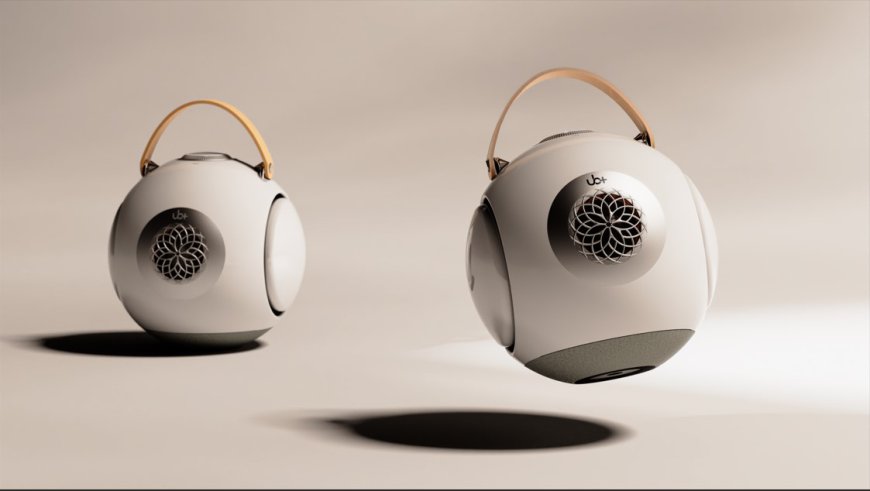
In the crowded market of wireless audio, consumers often find themselves overwhelmed with choices. Terms like “deep bass,” “extra low-end,” and “powerful sound” are used frequently in marketing, yet these phrases rarely capture the true mechanics of bass reproduction. If your goal is to understand and select a best bass bluetooth portable speaker, it requires moving beyond marketing claims into the world of acoustic physics, mechanical design, and system engineering.
Achieving bass that is both deep and clean is a challenge, particularly in compact, battery-powered Bluetooth speakers. Low-frequency sound demands more air displacement, precise control, and structural stability than most small speakers can provide. This article takes an educational and technical journey into the science of bass, examines the challenges in portable speakers, and highlights advanced solutions, such as those seen in the UB+ dB1 DOUBLEBASS, which rely on mechanical efficiency rather than digital trickery.
Understanding Bass: More Than Just a Low Note
Bass is often misunderstood as merely the “low end” in music, but in technical terms, it is a physical phenomenon. Low-frequency sounds correspond to long wavelengths that require significant air displacement to be reproduced accurately. Unlike treble or midrange frequencies, bass is felt as much as it is heard. It engages the listener’s body through air pressure changes, adding depth, rhythm, and musicality to any track.
Reproducing deep bass is about converting electrical energy into mechanical movement that moves air effectively. If the speaker fails to generate sufficient air movement or manage the resulting energy, bass will feel shallow, weak, or uncontrolled.
The Challenges of Portable Bluetooth Speakers
Portable Bluetooth speakers are prized for their convenience, but this portability comes with inherent limitations:
- Size Constraints: Smaller enclosures reduce the air volume required for effective low-frequency resonance.
- Driver Limitations: Compact drivers have less surface area and lower excursion potential, limiting air displacement.
- Power Efficiency: Battery-powered systems cannot deliver the high currents required for sustained deep bass.
- Mechanical Stability: Lightweight materials necessary for portability can flex or vibrate, introducing distortion.
Because of these constraints, engineers must focus on maximizing efficiency through smart design, rather than relying solely on driver power or electronic enhancements.
Air Displacement: The Foundation of Bass
The perception of deep bass is directly linked to how much air a speaker can move. A driver that cannot move sufficient air will produce bass that is weak or unconvincing, regardless of its advertised wattage.
Air displacement in low frequencies is not simply about loudness; it is about precision, control, and energy efficiency. In portable systems, displacement must be maximized through careful driver engineering, effective enclosure design, and optimized use of passive radiators.
Internal Pressure and Acoustic Efficiency
Inside a speaker enclosure, air is not static it acts as a dynamic medium. When a driver moves:
- Air is compressed as the cone moves inward
- Air expands as the cone moves outward
These oscillations create internal pressure changes. If these changes are uncontrolled, they lead to energy loss, distortion, and uneven bass response. Efficient bass reproduction requires that this internal energy be channeled effectively toward the radiating surfaces, creating consistent low-frequency output.
Common Design Limitations in Bluetooth Speakers
Many portable Bluetooth speakers fail to deliver real bass because of traditional design choices:
- Rectangular Enclosures: Parallel surfaces create standing waves, which interfere with low-frequency reproduction.
- Outward-Firing Drivers: These drivers project sound but do not utilize internal pressure efficiently.
- Limited Passive Radiators: Small or single passive radiators cannot move enough air to produce authentic bass.
- DSP Bass Boost: Digital processing can increase perceived bass temporarily, but it often compresses the sound, introduces distortion, and cannot replace physical air movement.
These limitations explain why many portable speakers sound bright or punchy but lack depth and realism in the low end.
Engineering Solutions for True Bass
Achieving the best bass in a portable Bluetooth speaker requires a shift from conventional design toward physics-based acoustic engineering. Instead of relying on digital processing, advanced designs focus on mechanical efficiency, pressure control, and enclosure dynamics.
The UB+ dB1 DOUBLEBASS exemplifies this approach. Its engineering philosophy revolves around maximizing air displacement, stabilizing vibrations, and controlling pressure to deliver bass that is physically convincing.
Spherical Enclosure: Minimizing Acoustic Interference
The use of a spherical enclosure eliminates one of the biggest challenges in traditional rectangular boxes: standing waves. A sphere distributes internal pressure uniformly, creating a stable environment for bass generation. This design ensures that the speaker’s energy is not wasted on destructive interference and distortion.
Helmholtz-Inspired Resonant System
The spherical enclosure is paired with a Helmholtz-inspired resonant chamber, allowing internal air to oscillate naturally. This resonance enhances low-frequency output without the need for oversized drivers or excessive digital amplification. Essentially, the system stores and releases acoustic energy efficiently, reinforcing bass in a natural, dynamic way.
Inward-Firing Mid-Bass Driver
Unlike outward-firing drivers, the inward-firing driver of the dB1 DOUBLEBASS generates internal pressure first. This energy interacts with the enclosure and passive radiators before being emitted as sound.
Technical highlights include:
- 90mm neodymium magnet for strong magnetic control and precise movement
- 35mm long-stroke voice coil allowing extended excursion
- 20mm piston displacement for significant air movement
- Aluminum shorting ring to reduce distortion
- Wide surround for mechanical stability
This setup ensures controlled, deep, and consistent bass reproduction even in small portable packages.
Dual Symmetrical Passive Radiators
Two passive radiators positioned symmetrically on either side of the speaker convert internal pressure into sound while simultaneously stabilizing the system. This arrangement produces several benefits:
- Increased air displacement without additional driver strain
- Self-canceling vibrations that reduce distortion
- Smooth, natural bass response across different volumes
The radiators provide a mechanical amplification effect, improving output efficiency while preserving clarity.
Mechanical vs Digital Bass
Many speakers rely heavily on DSP-based bass enhancement to compensate for size constraints. While effective in creating the impression of low-end, these methods cannot replicate the physical sensation and dynamic realism that comes from air displacement and controlled pressure systems.
The dB1 DOUBLEBASS achieves deep, accurate bass through mechanical design alone, providing an authentic listening experience without artificial coloration.
Comparative Performance Table
|
Feature |
UB+ dB1 DOUBLEBASS |
JBL |
Bose |
Marshall |
|
Enclosure Shape |
Spherical |
Rectangular |
Rectangular |
Rectangular |
|
Driver Orientation |
Inward |
Outward |
Outward |
Outward |
|
Radiator Configuration |
Dual symmetrical |
Single/dual |
Single/port |
Dual |
|
Air Displacement |
High |
Moderate |
Moderate |
Moderate |
|
Vibration Control |
Self-balancing |
Partial |
Partial |
Partial |
|
Bass Generation |
Mechanical |
DSP-assisted |
DSP-assisted |
DSP-assisted |
The comparison highlights the mechanical and acoustic advantages of a physics-first design over traditional rectangular DSP-reliant systems.
Real-World Acoustic Behavior
Indoor Listening
In enclosed spaces, the dB1 DOUBLEBASS distributes bass evenly, minimizing hotspots or null zones. Listeners experience tight, controlled lows that blend seamlessly with midrange and treble frequencies.
Outdoor Listening
Open environments pose challenges for portable speakers. Without reflective surfaces, low frequencies dissipate quickly. However, mechanical efficiency and enhanced air displacement allow the speaker to maintain its bass presence and clarity in open-air environments.
High-Volume Playback
Many compact Bluetooth speakers distort at high volumes due to driver limitations or cabinet vibrations. The combination of inward-firing driver, symmetrical radiators, and spherical enclosure stabilizes the system, delivering clean, controlled bass even at elevated playback levels.
The Psychoacoustic Misconception
It’s common to confuse perceived bass with real bass. DSP processing or equalization may trick the ear into sensing low frequencies, but this often lacks the physical engagement that real bass provides. True bass is measured not by marketing claims, but by physical energy transfer, linearity, and acoustic integrity.
Evaluating the Best Bass in Bluetooth Speakers
When judging a speaker for low-frequency performance, consider these criteria:
- Extension: Ability to reproduce the lowest frequencies accurately
- Control: Maintaining clarity and avoiding distortion
- Balance: Integration with mids and highs without overpowering
- Consistency: Reliable performance across different environments and volumes
Speakers that excel in all four areas qualify as true best bass Bluetooth portable speakers.
Acoustic Efficiency and Energy Management
Efficient bass systems are designed to maximize output with minimal energy waste. The dB1 DOUBLEBASS does this through:
- Optimized driver excursion
- Passive radiator surface area expansion
- Controlled internal pressure
- Symmetrical mechanical structure
This means that every joule of electrical energy is effectively converted into air movement and audible bass.
Future Trends in Portable Bass Design
The evolution of portable Bluetooth speakers is shifting toward engineering-driven solutions rather than marketing-driven enhancements. Key trends include:
- Advanced enclosure geometries (spherical, cylindrical, or hybrid)
- Inward or omni-directional driver placement
- Symmetrical, multi-radiator systems
- Minimization of DSP reliance for real acoustic performance
Consumers are beginning to recognize that authentic, mechanical bass cannot be simulated digitally.
Conclusion
The pursuit of a best bass Bluetooth portable speaker requires an understanding of both physics and engineering. True low-frequency performance emerges from:
- Efficient air displacement
- Controlled internal pressure
- Mechanical stability
- Integrated acoustic design
The UB+ dB1 DOUBLEBASS demonstrates how these principles come together in a portable format, delivering bass that is deep, controlled, and physically engaging. Unlike traditional DSP-boosted devices, this system focuses on real mechanical amplification, ensuring that every note resonates naturally and powerfully.
For those seeking authentic bass in a compact, portable speaker, this approach sets a new benchmark.
Explore the UB+ dB1 DOUBLEBASS: https://ub-plus.com/products/db1-doublebass