White Label Fitness Content for Corporate Libraries: A Complete Strategy Guide
Build a scalable corporate fitness library with white label wellness content. Cut production costs, speed up deployment, and boost employee engagement instantly.
 masonreed
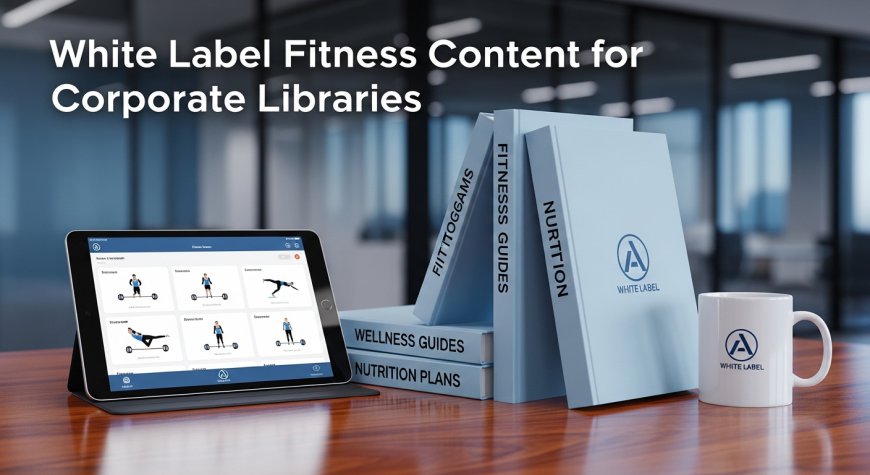
Your company's employee wellness program is only as strong as the content behind it. If your corporate fitness library feels stale or limited, your team stops logging in. They stop working out. They stop caring. The irony? You don't need to hire a production crew or rent a film studio to fix this problem. Thousands of forward-thinking enterprises are discovering that white label fitness content solves the biggest pain points in corporate wellness: cost overruns, slow deployment, and endless manual work.
Let me be direct: building a fitness content library from scratch is expensive and slow. It's also unnecessary. Your company's superpower isn't producing videos. It's keeping employees healthy, productive, and engaged. By sourcing ready-made fitness and wellness content built specifically for corporate deployment, you sidestep the entire production headache while delivering premium workouts to your team on day one.
Why Corporate Fitness Libraries Fail (And How to Fix It)
Most corporate wellness programs crash for the same reason: they start strong and fade fast. Leadership greenlights a wellness initiative. HR arranges a few live instructor classes. Employees show up for week one. But then reality hits. Classes don't fit everyone's schedule. The same three workouts repeat endlessly. Motivation plummets. The program becomes another checkbox on HR's annual report.
The root cause is usually a logistics problem. Creating fresh, diverse fitness content requires constant effort. You need certified instructors. You need filming space. You need post-production editing. Every new video takes weeks and costs thousands. Most companies can't sustain that pace, so the library stagnates. Employees leave.
A corporate fitness content library built on white-label materials flips this entirely. Instead of creating content monthly, you launch with hundreds of professionally produced workouts on day one. Yoga. Strength training. Cardio. Mobility work. Recovery sessions. Different difficulty levels. Different instructor styles. Your employees browse options, not wait for uploads.
What Makes White Label Fitness Content Different?
Not all pre-made fitness content is created equal. Some libraries are cobbled together from random YouTube instructors. Others are stiff, corporate, and devoid of personality. True white label fitness wellness content is engineered for your brand, not theirs.
Here's what sets premium white-label content apart from DIY alternatives:
It's Actually Branded for You
White-label means unbranded. The videos arrive without logos, watermarks, or instructor credits pointing to other companies. Your branding appears instead. Your company's colors. Your platform's interface. Your logo. Employees see your wellness program, not a third-party service. That matters psychologically. It builds trust and ownership.
It's Licensed for Corporate Deployment
Generic fitness videos come with restrictions. Public performance rights. Attribution requirements. Sharing limits. Corporate licensing is different. You get explicit permission to integrate content into employee apps, employee portals, and internal HR platforms. No legal gray areas. No compliance headaches.
It Includes Professional Metadata
Each video comes pre-tagged with duration, difficulty level, equipment needed, and fitness category. Your IT team doesn't spend weeks manually cataloging content. They just import the files and metadata into your platform. The search function works immediately. Filters work immediately. Everything's organized before day one.
It's Built for Scale
Premium libraries have hundreds of videos across multiple categories. That breadth matters. Some employees want high-intensity workouts before work. Others want post-work yoga. Parents at home want 15-minute mobility flows. Your library serves all of them without custom production.
The Financial Case: Cost Per Video Comparison
Let's talk money, because this is where white-label content really wins. In-house video production costs are staggering when you account for all hidden expenses.
Custom Production Route
- Instructor sourcing and contracts: $2,000 - $5,000
- Studio rental (per video): $1,000 - $3,000
- Camera crew and equipment: $2,000 - $4,000
- Post-production editing: $1,500 - $3,000
- Music licensing and graphics: $500 - $1,500
- Total per video: $7,000 - $16,000
At $7,000 per video minimum, creating just 100 videos costs $700,000. Add in planning time, approvals, revisions, and you're looking at 18-24 months to launch a proper library. That's capital you can't deploy elsewhere.
White-Label Content Route
- Annual licensing for 500+ professional videos: $15,000 - $50,000 depending on company size
- Integration and setup: $2,000 - $5,000 (one-time)
- Ongoing platform support: $0 - $2,000 per year
- Cost per video: $30 - $100
You get more content, faster, for a fraction of the cost. Your IT team launches it in weeks, not quarters. Your finance team sleeps better. Your wellness program actually survives past year two.
How Diverse Content Drives Real Employee Engagement
Employees aren't a monolith. Your 45-year-old accountant doesn't want the same content as your 28-year-old sales rep. Your night-shift worker needs different timing than your office staff. Your employees with injuries need modifications that high-intensity programs don't provide.
A robust white-label library handles this naturally. It includes:
Multiple Fitness Modalities
Yoga and pilates for mobility and stress relief. Strength training for muscle building. Cardio sessions for cardiovascular health. HIIT for time-crunched employees. Walking meditations for mental health. Dance workouts for pure fun. Rehab and recovery flows for injured workers. Your library speaks every fitness language your team speaks.
Variable Duration Options
Not every employee has 45 minutes. Your library includes 10-minute energizers for office breaks, 20-minute lunch-hour sessions, and full 60-minute programs for after-work commitment. Employees pick what fits their day, not what fits the schedule.
Scalable Difficulty Levels
A beginner shouldn't do a advanced CrossFit workout. A fit employee shouldn't waste time on remedial material. Professional libraries segment by difficulty: beginner, intermediate, advanced. Each employee finds their starting point and progresses.
Diverse Instructor Styles
Some instructors are motivational and high-energy. Others are calm and meditative. Some focus on form and technique. Others focus on pushing limits. Different employees connect with different styles. Variety keeps people engaged.
Integration That Actually Works
Deploying white-label fitness content isn't technical wizardry. It's straightforward because premium providers think like software companies, not film studios.
API and Data Feeds
Instead of uploading individual video files, you receive structured data feeds. Your platform reads the feed, automatically displays videos with correct metadata, handles search and filtering. It's the same approach Netflix uses to manage thousands of titles. Your IT team gets clean, documented integrations with no guesswork.
Video Hosting Options
You can host files on your own servers for complete control. Or use cloud-based streaming to reduce infrastructure costs. Most providers offer both. You pick based on your company's IT architecture, not the content vendor's limitations.
Analytics Built In
You'll want to know which workouts your employees actually do. Premium libraries include view tracking, completion rates, and engagement metrics. Your wellness team gets data on what's working and what's not. That informs future library expansion.
Three Real-World Implementation Scenarios
Scenario 1: The Quick Launch (Week 1 to Live)
Your CEO asks for an employee wellness program. You have a month. You can't build from scratch. Solution: License a pre-built library, load it into your employee portal, launch. Your IT team spends a week on integration. Your HR team spends one day creating welcome communications. Employees start working out on day 8. This isn't hypothetical. Companies do this monthly.
Scenario 2: The Existing Program Expansion
Your company has a wellness program with a small video library. It's not terrible, but it's repetitive. You're losing engagement. Solution: Supplement your current library with white-label content in areas where you're weak. Add yoga if you only have strength training. Add mobility if you only have cardio. Your program becomes more complete without replacing what's already working.
Scenario 3: The Multi-Office Standardization
Your company has offices in five cities. Each office has a different wellness approach. One built its own library. One uses YouTube playlists. One subscribed to a consumer fitness app. The programs are fragmented. Solution: Deploy a company-wide white-label library. All offices get the same professional content. Employees transferring between offices stay with the same program. Your corporate culture strengthens.
Avoiding White-Label Pitfalls
Not all white-label content is equal. Here's what separates premium providers from mediocre ones.
Look for Authentic Instructors
Cheap white-label libraries use low-budget production and unknown instructors. Premium providers hire certified, experienced fitness professionals. Your employees can tell the difference immediately. Cheap content screams "budget." Professional content builds credibility.
Verify Licensing Clarity
Before you sign, confirm what you're allowed to do. Can you use content in your employee app? Can you download for offline access? Can you show it in live classes? Can you customize with your branding? Get answers in writing. Vague licensing leads to problems later.
Confirm Video Quality Standards
4K, 1080p, and 720p are not the same. Check resolution, frame rate, and audio quality. Premium libraries deliver professional broadcast-quality files. Budget options deliver web-quality garbage. Video quality affects the entire employee experience.
Test the Metadata
Before licensing hundreds of videos, ask the provider to show you sample metadata. Is the tagging consistent? Is it detailed? Does it match your platform's schema? Bad metadata means poor search and useless filters. You want your employees to find content easily.
The Long-Term Content Strategy
Starting with white-label fitness content isn't a permanent decision. It's a foundation. Over time, your company might develop its own content too. Some brands do both successfully.
Year One: White-Label Everything
Launch fast with proven content. Let employee demand guide what you add. Measure engagement. Don't build anything yourself yet.
Year Two: Strategic Custom Additions
By year two, you know what your employees want. Maybe you film your company's CEO doing a wellness introduction. Maybe you create one custom program featuring your fitness-obsessed VP. Custom content humanizes your program without killing your budget.
Year Three and Beyond: Balanced Blend
Keep your white-label foundation. Add custom content strategically for brand building. Some companies run 80% licensed content and 20% custom. Others do 70/30. Find the balance that works for your culture and budget.
Why Corporate Wellness Programs Deserve Better Content
Your company invests thousands in employee health. You contribute to gym memberships. You subsidize wellness programs. You pay time for employees to exercise during work hours. But if your wellness platform serves them bad content, that entire investment underperforms.
Employees remember bad experiences more than good ones. If your fitness library feels cheap or outdated, they perceive your wellness program as cheap and outdated. That reflects on your company's culture.
Conversely, when your wellness program feels polished and professional, employees feel valued. They use it more. Engagement climbs. Health outcomes improve. Your ROI on wellness spending increases dramatically.
Frequently Asked Questions
How long does it take to launch a white-label fitness library?
Integration typically takes 2-4 weeks depending on your platform's complexity. Some companies go live in one week. Most in the 2-3 week range. It's genuinely fast compared to the months required for custom production.
Can we customize white-label content with our company branding?
Yes. That's the whole point of white-label. Your logo, colors, and branding replace the provider's. Employees see your brand throughout the experience. It feels like your program because it is.
What happens if employees don't like some of the content?
Most libraries have hundreds of videos. If some content doesn't resonate, employees simply ignore it and pick other options. You're not limited by your selections. You're enabled by them. Variety means something for everyone.
Is there a long-term contract requirement?
That depends on your provider. Some require annual commitments. Others offer month-to-month. Negotiate based on your comfort level. Most reputable providers are confident enough to offer flexible terms because their content speaks for itself.
Can we integrate white-label content with other wellness programs like meditation apps?
Depends on the providers' APIs and licensing. Many modern white-label fitness libraries integrate with meditation apps, nutrition tracking tools, and wellness platforms. Confirm integration capabilities before choosing a provider.
What kind of analytics should we expect?
Premium libraries provide view counts, completion rates, and engagement metrics. Some offer demographic breakdowns showing which departments use which content. This data helps your wellness team understand what's working and adjust accordingly.
Making the Decision: White-Label Content Versus Building In-House
Here's the honest framework. Build in-house if:
- You have a dedicated video production team with existing expertise
- Your company has unique positioning where custom content provides competitive advantage
- You have a multi-year budget to sustain ongoing production
- You genuinely enjoy managing production timelines and creative direction
Choose white-label content if:
- You want to launch in weeks, not months
- Your budget is constrained and you want maximum ROI
- Your priority is employee engagement over custom branding
- You want proven, professional content from day one
- Your IT team has limited bandwidth for custom projects
Most companies choose white-label first. Some add custom content later. Few regret the decision.
Your Next Steps
If your corporate wellness program needs a content boost, white-label fitness content is worth serious consideration. The math works. The execution is straightforward. The results are measurable.
Start by auditing your current employee wellness program. What content do you have? What's missing? What categories would employees actually use? Then reach out to established white-label content providers. Ask for sample content. Request client references. Review their library. Look for breadth, quality, and relevance to your employees.
The best time to improve your wellness program was a year ago. The second-best time is right now. Your employees deserve content that matches the quality of your company's benefits package. White-label fitness content makes that possible without breaking the budget.