Why Industries Choose an Advanced Briquette Press for Biomass Recycling
As industries across the world focus on sustainable production and renewable energy, biomass recycling has become an essential part of waste management.
 ecostan
As industries across the world focus on sustainable production and renewable energy, biomass recycling has become an essential part of waste management. Agricultural residues, forestry waste, and industrial biomass are no longer considered useless materials. Instead, they are valuable resources that can be converted into high-density fuel briquettes using an advanced Briquette Press.
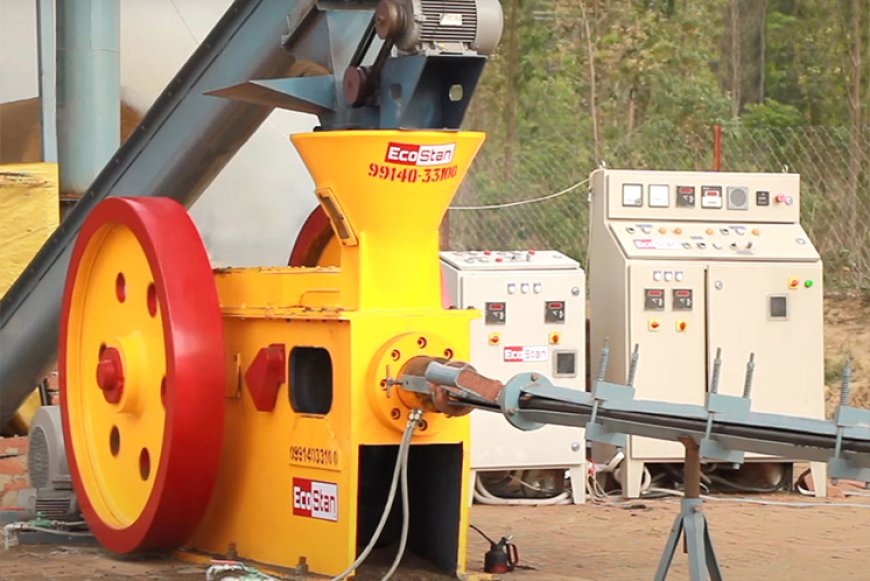
A Briquette Press is designed to compress loose biomass into compact, uniform briquettes that are easy to store, transport, and use as fuel. This technology helps industries reduce waste disposal costs, lower carbon emissions, and create an additional source of revenue from biomass residues.
In this article, we will explore why industries are increasingly choosing advanced Briquette Press systems for biomass recycling and how they contribute to a cleaner, more sustainable future.
What Is a Briquette Press?
A Briquette Press is a specialized machine that compresses biomass materials under high pressure to produce solid fuel briquettes. These briquettes are made from agricultural waste, sawdust, wood chips, rice husk, groundnut shells, cotton stalks, sugarcane bagasse, and many other biomass materials.
Unlike loose biomass, briquettes have higher density, better combustion efficiency, and lower moisture content. They serve as an excellent alternative to coal, firewood, and fossil fuels in various industrial applications.
Why Biomass Recycling Is Becoming Essential
Industries generate large amounts of biomass waste every year. Without proper recycling methods, this waste often ends up in landfills or is openly burned, causing environmental pollution and resource loss.
Biomass recycling with a Briquette Press offers several environmental and economic benefits:
- Reduces agricultural and industrial waste
- Prevents open-field burning
- Supports renewable energy production
- Lowers greenhouse gas emissions
- Generates valuable solid fuel
- Promotes circular economy practices
As governments introduce stricter environmental regulations, industries are adopting biomass recycling technologies faster than ever.
Benefits of Using an Advanced Briquette Press
1. Efficient Waste Utilization
One of the biggest advantages of a modern Briquette Press is its ability to convert waste into useful fuel. Instead of disposing of biomass residues, industries can recycle them into high-quality briquettes.
Materials such as:
- Rice husk
- Wheat straw
- Sawdust
- Cotton stalks
- Coffee husks
- Groundnut shells
- Coconut shells
- Sugarcane bagasse
can all be processed efficiently.
This reduces waste while creating a profitable energy source.
2. High-Density Fuel Production
Loose biomass occupies a large amount of storage space and is difficult to transport.
An advanced Briquette Press compresses biomass into dense briquettes that:
- Require less storage space
- Reduce transportation costs
- Burn longer
- Produce consistent heat
- Improve fuel handling
High-density briquettes are preferred by many industries because they provide reliable energy output.
3. Reduced Energy Costs
Fuel expenses are a major operational cost for manufacturing industries.
Using biomass briquettes produced by a Briquette Press helps reduce dependence on expensive fossil fuels.
Industries such as:
- Paper mills
- Textile plants
- Food processing units
- Chemical industries
- Ceramic manufacturing
- Brick kilns
can significantly lower their energy bills by replacing conventional fuels with biomass briquettes.
4. Supports Sustainable Manufacturing
Consumers and governments increasingly prefer companies that adopt environmentally responsible production methods.
Installing a Briquette Press demonstrates a company's commitment to sustainability by:
- Recycling waste materials
- Reducing landfill usage
- Lowering carbon footprint
- Supporting renewable energy
- Conserving natural resources
This also improves the company's environmental reputation.
5. Better Combustion Efficiency
Biomass briquettes produced using an advanced Briquette Press have uniform size, density, and moisture levels.
These characteristics result in:
- Cleaner combustion
- Higher calorific value
- Lower smoke generation
- Reduced ash production
- Stable heat output
Efficient combustion improves boiler and furnace performance while minimizing maintenance requirements.
6. Ideal for Agricultural Waste Recycling
Modern Agricultural Waste Briquette Press systems are specially designed to process various crop residues.
Farm waste that once had little commercial value can now become a profitable renewable fuel.
Common agricultural materials include:
- Paddy straw
- Wheat straw
- Corn stalks
- Mustard stalks
- Cotton waste
- Maize cobs
- Soybean residue
- Millet stalks
This helps farmers and agro-industries generate additional income while reducing environmental pollution.
7. Suitable for Large-Scale Industries
Advanced Industrial Biomass Briquetting Equipment is built for continuous operation and high production capacity.
These systems include:
- Heavy-duty feeding units
- Precision compression mechanisms
- Durable wear-resistant components
- Automatic lubrication
- Energy-efficient motors
- User-friendly control panels
Such features ensure consistent production with minimal downtime.
8. Lower Transportation Costs
Transporting loose biomass is expensive because of its low bulk density.
A Briquette Press converts lightweight biomass into compact briquettes, allowing industries to transport larger quantities in fewer trips.
This reduces:
- Fuel consumption
- Loading time
- Transportation expenses
- Storage requirements
The overall logistics become much more efficient.
9. Improved Workplace Cleanliness
Loose biomass often creates dust, occupies excessive space, and becomes difficult to manage.
Compressed briquettes are cleaner and easier to handle.
Benefits include:
- Less dust generation
- Better storage organization
- Improved worker safety
- Cleaner production environment
- Easier inventory management
This contributes to higher workplace efficiency.
10. Long-Term Return on Investment
Although installing a Briquette Press requires an initial investment, industries often recover the cost through long-term savings.
Major financial benefits include:
- Lower fuel expenses
- Reduced waste disposal costs
- Revenue from briquette sales
- Improved operational efficiency
- Reduced maintenance costs
- Better utilization of raw materials
Over time, the system becomes a valuable asset that contributes to business profitability.
Applications of Briquette Press Technology
Today, a Briquette Press is widely used across multiple industries.
Common applications include:
- Biomass power plants
- Rice mills
- Sugar mills
- Wood processing industries
- Furniture manufacturing
- Paper industries
- Textile factories
- Food processing plants
- Agro-processing units
- Biofuel production facilities
The versatility of briquetting technology makes it suitable for both small businesses and large industrial operations.
Choosing the Right Briquette Press
Before investing in a Briquette Press, industries should evaluate several important factors:
- Biomass type
- Moisture content
- Required production capacity
- Power consumption
- Machine durability
- Automation level
- Maintenance requirements
- Availability of spare parts
- Technical support
- Future expansion needs
Selecting the right machine ensures maximum productivity and long-term reliability.
Future of Biomass Briquetting
The future of biomass recycling looks highly promising. As industries move toward renewable energy solutions, demand for advanced Briquette Press technology continues to grow.
New developments include:
- Smart automation systems
- Energy-efficient motors
- AI-based production monitoring
- Higher compression efficiency
- Reduced operational costs
- Environmentally friendly manufacturing
With increasing awareness of climate change and waste management, biomass briquetting is expected to become an even more important part of industrial energy production.
Conclusion
A modern Briquette Press is a practical investment for industries looking to improve biomass recycling, reduce waste, and produce renewable fuel efficiently. By converting agricultural and industrial biomass into dense, high-quality briquettes, businesses can lower energy costs, minimize environmental impact, and achieve greater operational efficiency. Advanced solutions such as an Agricultural Waste Briquette Press and Industrial Biomass Briquetting Equipment further enhance productivity, making biomass recycling a sustainable and profitable choice for industries worldwide.
Ecostan Machines is a globally trusted manufacturer of advanced biomass processing and briquetting solutions. With years of expertise in renewable energy technology, the company delivers high-performance Briquette Press systems designed for durability, energy efficiency, and consistent output. Ecostan Machines provides innovative machinery that helps industries transform biomass waste into valuable fuel while supporting sustainable manufacturing and environmentally responsible waste management practices.