Why Outsourced Mental Health Billing Is Becoming the Smart Choice Across the USA
Mental health providers across the USA are helping more patients than ever before. At the same time, insurance rules, documentation requirements, coding updates, and claim regulations continue to become more complex
 alexnoah25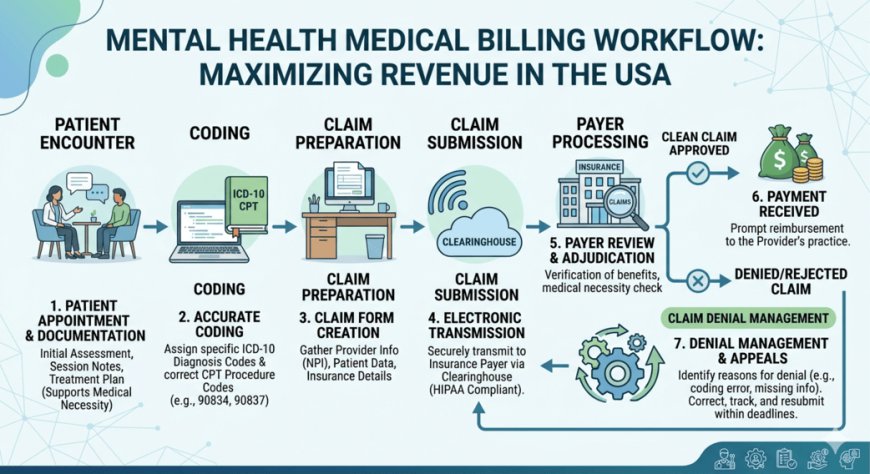
Mental health providers across the USA are helping more patients than ever before. At the same time, insurance rules, documentation requirements, coding updates, and claim regulations continue to become more complex. Many therapists, psychologists, psychiatrists, counseling centers, and behavioral health clinics find themselves spending valuable time on billing instead of patient care.
This is why outsourced mental health billing has become an increasingly practical solution. Rather than managing claims in-house, providers partner with experienced billing professionals who understand the unique requirements of behavioral healthcare. The goal is simple: reduce administrative stress, improve claim accuracy, and create a smoother revenue cycle without taking focus away from patients.
Understanding Outsourced Mental Health Billing
Outsourced mental health billing means hiring a specialized billing company to handle insurance claims, payment posting, denial management, eligibility verification, and other revenue-related tasks.
Instead of maintaining a large internal billing department, providers rely on trained experts who work exclusively on healthcare billing processes.
Typical responsibilities include:
- Insurance verification
- Claim creation and submission
- Payment posting
- Denial analysis and appeals
- Patient billing support
- Account receivable follow-up
- Compliance monitoring
- Financial reporting
The provider continues delivering quality mental healthcare while billing specialists manage the administrative side of the practice.
Why Mental Health Billing Is More Challenging Than Many Specialties
Behavioral health billing involves much more than submitting claims.
Several factors make it unique:
Frequent Documentation Requirements
Insurance companies often require detailed treatment notes that support medical necessity. Missing or incomplete documentation may lead to claim denials.
Complex Insurance Policies
Mental health benefits vary significantly between insurance plans. Copays, visit limits, authorization rules, and covered services often differ from one payer to another.
Accurate Coding Matters
Selecting the correct diagnosis and procedure codes is essential. Small coding mistakes can delay reimbursement or trigger claim rejections.
This is where experienced teams offering medical coding services play an important role by helping ensure coding accuracy and compliance with current guidelines.
Benefits of Outsourced Mental Health Billing
Choosing outsourced billing can provide both financial and operational advantages for practices of every size.
More Time for Patient Care
Administrative work can consume hours every week. By outsourcing billing responsibilities, clinicians spend more time treating patients and less time managing paperwork.
This often improves provider satisfaction while enhancing the patient experience.
Faster Claim Processing
Professional billing teams usually follow standardized workflows that reduce delays.
Benefits include:
- Faster claim submission
- Timely follow-up on unpaid claims
- Quicker payment posting
- Better cash flow
Lower Claim Denials
Experienced billing specialists review claims before submission to identify common issues such as:
- Incorrect patient information
- Coding errors
- Missing documentation
- Authorization problems
Submitting cleaner claims helps reduce denial rates and minimizes unnecessary rework.
Better Revenue Visibility
Outsourced billing companies generally provide regular financial reports showing:
- Collection trends
- Outstanding balances
- Denial rates
- Payment turnaround times
- Accounts receivable aging
These insights help practice owners make informed business decisions.
How Outsourcing Supports a Stronger Revenue Cycle
Every healthcare practice depends on a healthy financial process from patient registration to final payment.
This complete financial journey is known as revenue cycle management.
When billing experts oversee each stage carefully, providers often experience:
- Fewer billing errors
- Improved reimbursement rates
- Reduced aging claims
- More predictable monthly income
- Better financial planning
A well-managed revenue cycle supports long-term practice growth without compromising patient care.
Key Features to Look for in a Billing Partner
Not every billing company specializes in behavioral health.
Before selecting a partner, consider whether they offer:
Mental Health Industry Experience
Billing requirements differ between psychiatry, psychology, counseling, addiction treatment, and behavioral health services.
A company with specialty experience understands payer expectations and common billing challenges.
Certified Coding Knowledge
Proper coding directly affects reimbursement.
Reliable teams providing medical coding services stay updated with coding changes and payer requirements throughout the year.
Transparent Communication
Choose a billing partner that provides:
- Regular reports
- Easy access to billing information
- Responsive customer support
- Clear explanations of financial performance
Compliance and Security
Patient information must always remain protected.
Look for organizations that prioritize HIPAA compliance, secure data handling, and strong privacy practices.
The Importance of Credentialing Before Billing Begins
Many providers underestimate the value of credentialing.
Before insurance companies process claims, providers typically need to be properly enrolled and approved within payer networks.
Incomplete or outdated credentialing can result in:
- Delayed payments
- Rejected claims
- Interrupted reimbursement
- Administrative complications
Maintaining current provider credentials helps practices avoid unnecessary payment delays.
Common Mistakes That Hurt Mental Health Practices
Even experienced clinics sometimes face avoidable billing problems.
Some of the most common issues include:
- Missing prior authorizations
- Incorrect diagnosis codes
- Delayed claim submissions
- Poor documentation
- Lack of insurance verification
- Slow follow-up on denied claims
- Incomplete provider enrollment
Addressing these problems early can significantly improve financial performance.
Is Outsourcing Right for Small Practices?
Absolutely.
Many solo therapists and small counseling practices assume outsourcing is only for large healthcare organizations.
In reality, outsourcing can be especially valuable for smaller providers because it eliminates the need to hire, train, and manage a full internal billing staff.
Small practices often gain:
- Reduced administrative workload
- Access to billing specialists
- Improved reimbursement consistency
- Better operational efficiency
Instead of juggling billing responsibilities after patient appointments, providers can focus on delivering quality care.
Balancing Cost and Value
Some providers hesitate because outsourcing involves an additional service fee.
However, the overall value often extends beyond the direct cost.
When billing improves, practices may experience:
- Higher collections
- Fewer denied claims
- Faster reimbursements
- Lower staffing expenses
- Reduced billing errors
For many organizations, these improvements outweigh the investment required for professional billing support.
Choosing a Reliable Billing Partner
A successful outsourcing relationship depends on finding a company that understands behavioral healthcare.
When evaluating potential partners, ask questions such as:
- Do they specialize in mental health billing?
- How do they handle denied claims?
- What reporting do they provide?
- How experienced is their coding team?
- What compliance measures do they follow?
- How do they communicate with providers?
Companies such as 247 Medical Billing Services work with healthcare organizations by supporting medical billing services, medical coding services, credentialing, and broader revenue cycle management processes. The right partner should function as an extension of the practice rather than simply processing claims.
Final Thoughts
The administrative demands of behavioral healthcare continue to grow, making efficient billing more important than ever. Outsourced mental health billing offers providers an opportunity to improve operational efficiency, reduce claim errors, and maintain healthier cash flow while keeping their attention where it belongs—on patient care.
Whether managing a solo practice or a multi-provider behavioral health clinic, outsourcing billing responsibilities can help simplify complex insurance processes and support long-term financial stability. The key is selecting an experienced billing partner that understands the unique requirements of mental health services and delivers consistent, transparent support.
Frequently Asked Questions
1. What is outsourced mental health billing?
Outsourced mental health billing is the process of hiring an external billing company to manage insurance claims, payment posting, denial management, and other billing tasks for behavioral health providers.
2. Can outsourcing reduce claim denials?
Yes. Experienced billing specialists review claims for coding accuracy, documentation, and payer requirements before submission, helping reduce avoidable denials.
3. Is outsourced billing suitable for solo therapists?
Yes. Many independent therapists and small counseling practices use outsourced billing to save time, improve collections, and reduce administrative responsibilities.
4. Why is credentialing important for mental health providers?
Credentialing ensures providers are properly enrolled with insurance companies, allowing claims to be processed and reimbursed without unnecessary delays.
5. How do medical coding services support mental health billing?
Medical coding services help assign accurate diagnosis and procedure codes, reducing billing errors and improving claim acceptance rates.
6. What is revenue cycle management in mental healthcare?
Revenue cycle management covers the entire financial process, including patient registration, insurance verification, claim submission, payment collection, denial management, and financial reporting.
7. How can I choose the right mental health billing company?
Look for experience in behavioral health billing, coding expertise, transparent reporting, strong compliance practices, responsive communication, and a proven track record of improving billing efficiency.