Is Your Current Workout Causing Injury? Why It’s Time to Switch to Clinical Reformer Pilates
Is your fitness routine causing more pain than gains? Discover why high-impact workouts lead to joint stress and how switching to personalized Clinical Reformer Pilates can fix muscle imbalances, protect your spine, and keep you moving pain-free.
 maartinhackman
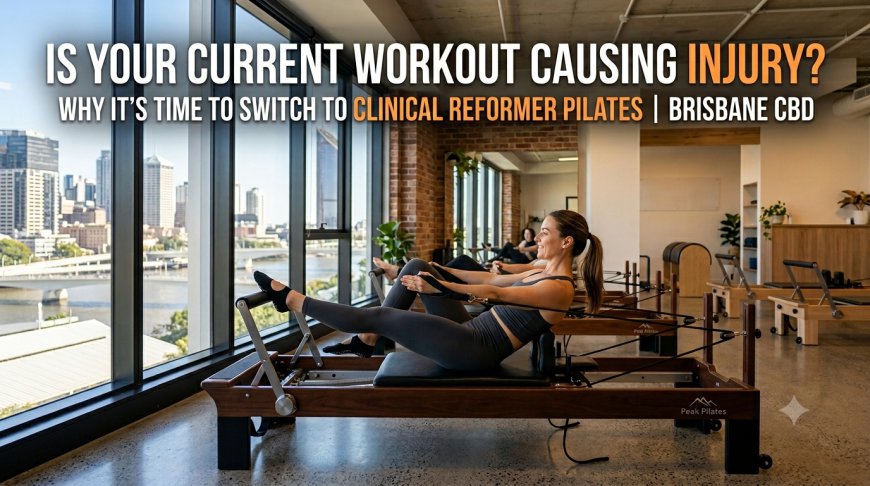
We all know that staying active is one of the best things you can do for your body and mind. Whether you love hitting the pavement for a morning run, lifting weights at the local gym, or jumping into a high-intensity interval training (HIIT) class, moving your body is a great habit. But what happens when your fitness routine starts doing more harm than good?
If you find yourself constantly nursing a sore lower back, dealing with stubborn knee pain, or waking up stiff every single morning, your workout might actually be the culprit. Pushing through the pain is an old-school mindset that often leads straight to the physiotherapist's clinic.
If your current routine leaves you feeling battered instead of balanced, it might be time to change your approach. That is where Clinical Reformer Pilates comes into play. For those living or working in the heart of the city, finding high-quality Reformer Pilates Brisbane CBD offers can be the turning point for your health, helping you build strength without breaking your body down.
The Hidden Cost of Popular Workouts
Many traditional fitness programs focus heavily on high impact, heavy weights, and intense speed. While these methods are great for burning calories or building large muscle groups, they often neglect the smaller, stabilizing muscles that keep our joints safe.
Consider a standard gym routine. If you are doing heavy squats or deadlifts without perfect form, your lower back often takes the brunt of the load. Similarly, popular high-impact group fitness classes require quick, repetitive movements. When fatigue sets in halfway through a session, your technique slips. This repetitive stress on tired joints is a fast track to chronic injuries like tendonitis, shin splints, or joint wear and tear.
Another common issue is muscle imbalance. Most daily activities and gym exercises move in just one direction—forward and backward. This leaves the muscles on the sides of our hips and around our core weak and undertrained. When these stabilizing muscles are asleep on the job, other parts of your body have to work twice as hard to compensate, leading to strain and injury.
What Makes Clinical Reformer Pilates Different?
You have probably seen a Pilates reformer machine before. With its bed-like carriage, springs, ropes, and pulleys, it can look a bit intimidating at first glance. However, it is actually one of the safest and most versatile tools for full-body conditioning.
The key word here is Clinical. Traditional fitness classes adopt a one-size-fits-all model. The instructor stands at the front of a crowded room, shouts out instructions, and everyone follows the same movements, regardless of their fitness levels or injury histories.
Clinical Reformer Pilates turns that model on its head. It is a targeted, custom approach directed by trained health professionals, such as physiotherapists or exercise physiologists. Before you even touch the machine, your body, posture, and movement patterns are assessed. The exercises are then tailored specifically to your physical needs, structural imbalances, and recovery goals.
Instead of relying on heavy weights or gravity, the reformer uses adjustable springs for resistance. This allows you to challenge your muscles while taking the pressure off your joints. It focuses heavily on eccentric muscle contractions—which means strengthening your muscles while they are lengthening. This type of training builds long, lean, and resilient muscles rather than bulky ones, significantly lowering the risk of future strains.
The Key Benefits of Switching to Clinical Pilates
Making the switch to a clinical, reformer-based routine offers profound benefits that go far beyond a standard workout.
1. True Core Stability
People often think the core is just the "six-pack" muscles. In reality, your deepest core consists of the transverse abdominis, pelvic floor, and the small muscles supporting your spine. Clinical Pilates targets these deep layers. A strong, stable core acts like a natural corset, protecting your lower back from injury during everyday movements.
2. Low-Impact, High-Efficiency
Because many exercises on the reformer are performed while lying down, sitting, or kneeling, you get an incredible workout without the constant jarring impact on your ankles, knees, and hips. This makes it perfect for anyone recovering from an injury or dealing with joint issues like arthritis.
3. Fixing Muscle Imbalances
Your instructor will spot the subtle ways your body cheats during movement. If your right hip is doing all the work while your left hip slacks off, the reformer setup will highlight it immediately. By isolating and strengthening weak areas, you restore balance to your body, which relieves chronic aches and pains.
4. Better Posture and Flexibility
Desk jobs and long commutes leave many of us slouched over screens, resulting in tight hip flexors and rounded shoulders. Reformer work emphasizes spinal alignment and opens up tight joints, helping you stand taller and move with much more freedom.
Real-World Examples: Desk Workers to Weekend Warriors
To see how this works in real life, look at the typical office worker in the Brisbane CBD. Sitting at a desk for eight to ten hours a day deactivates the glute muscles and tightens the hip flexors. When this worker hits a high-intensity gym class after work, their sleeping glutes fail to fire during runs or jumps. The lower back takes over to compensate, resulting in sharp back pain by bedtime.
By replacing a couple of those high-impact sessions with Clinical Reformer Pilates, the office worker learns how to switch those glutes back on, support their spine, and stretch out compressed joints.
The same applies to runners. Many runners suffer from knee pain because their hip stabilizers are weak. Reformer exercises specifically target hip abduction and rotation, stabilizing the pelvis and ensuring the knee tracks perfectly with every stride.
Practical Tips for Making the Switch
If you are ready to move away from painful workouts and try a clinical approach, keep these practical steps in mind:
· Look for Qualifications: Ensure your sessions are led by certified clinicians, such as physiotherapists, who understand pathology and injury management.
· Start with an Assessment: A quality provider will always insist on an initial one-on-one consultation to map out your specific body needs.
· Focus on Form Over Resistance: Don't worry about how many springs are on the machine. Focus entirely on precision, breathing, and control.
· Be Consistent: Like any practice, consistency is key. Attending two to three times a week will yield noticeable changes in how your body feels and moves within just a few weeks.
Conclusion
Exercise should make you feel strong, energized, and capable—not broken down and sore. If your current workout routine leads to regular injuries, it is a clear sign that your body is crying out for a different approach.
Switching to Clinical Reformer Pilates allows you to build deep core strength, fix structural imbalances, and protect your joints from unnecessary wear and tear. If you are ready to trade chronic pain for long-term physical resilience, exploring options for Reformer Pilates Brisbane CBD is the perfect place to start your journey toward pain-free movement.
Frequently Asked Questions (FAQs)
Q1: How is Clinical Reformer Pilates different from a regular fitness Pilates class? A: Clinical Pilates is tailored to your specific body, injuries, and goals by a trained health professional like a physiotherapist. Regular fitness classes use a standard, one-size-fits-all routine for a large group without individual physical modifications.
Q2: Can I do Reformer Pilates if I currently have a lower back injury? A: Yes, absolutely. Because the clinical approach is guided by health practitioners, the movements are modified to safely support your spine and build the specific core muscles needed to heal your back.
Q3: What should I wear to my first Reformer Pilates session? A: Wear comfortable, stretchy exercise clothing that allows you to move freely without loose fabric getting caught in the machine. Most studios also require a pair of clean grip socks for safety and hygiene.
Q4: How many times a week should I practice to see real results? A: Most clients notice significant improvements in their strength, posture, and pain levels by attending two to three sessions per week consistently.
Q5: Is Clinical Reformer Pilates suitable for older adults? A: Yes, it is ideal for older adults because it offers a highly controlled, low-impact environment that improves balance, bone density, and joint mobility without the risk of falls or heavy strain.