Why Your Car Still Looks Dirty After Washing
Find out why your car still looks dirty after washing and what you are doing wrong. From hard water spots to wrong techniques, here is how to finally get a truly clean car.
 harshitprajapati086
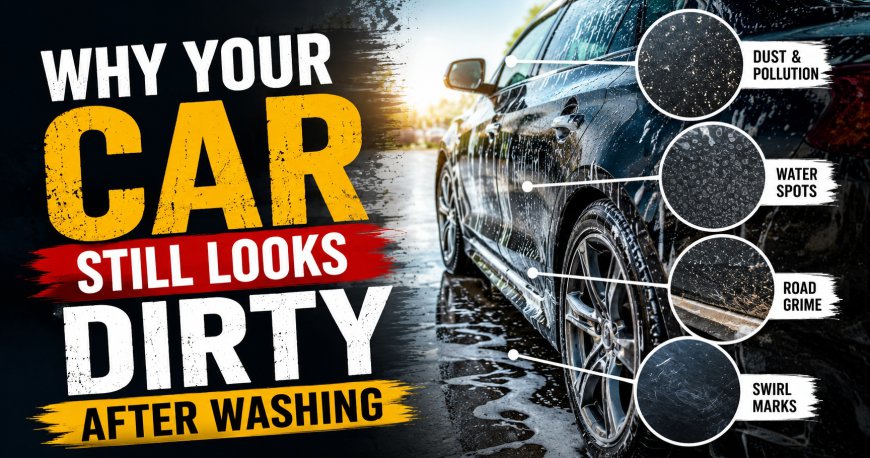
There is nothing more frustrating than spending an hour washing your car, stepping back to admire your work, and realising it still looks dull, streaky, or somehow just as grimy as before. You used soap, you used water, you put in the effort — so why does it still look like it has not been touched? The answer is almost never about how much effort you put in. It is about the method, the products, and the small details that most car owners have never been told. Once you understand what is actually happening on your car's surface, fixing it becomes surprisingly straightforward.
Hard Water Is Leaving Mineral Deposits Behind
One of the most common and most overlooked reasons a car still looks dirty after washing is hard water. Tap water in most regions contains dissolved minerals, primarily calcium and magnesium. When water dries on your car's paintwork — which happens very quickly in warm or sunny conditions — it leaves those minerals behind as white, hazy spots. The more coats of water you rinse with, the more minerals get deposited. People often mistake these water spots for leftover dirt, but no amount of rinsing will remove them because they are not dirt at all. They are mineral deposits bonded to the surface. The solution is to dry your car immediately and thoroughly after rinsing, using a clean microfibre drying towel rather than letting it air dry in the sun.
You Are Washing in Direct Sunlight
Speaking of sunlight — washing your car on a bright, hot day feels like the natural thing to do, but it is actually one of the worst conditions for getting a clean result. Direct sunlight heats the panels rapidly, causing water and soap to evaporate almost as fast as you apply them. This leaves behind soapy residue, streaks, and water spots before you even have a chance to rinse properly. Soap that dries on paint does not just look bad — it can actually damage the clear coat over time. The ideal conditions for washing a car are a shaded area or an overcast day, or at minimum, early morning or late evening when temperatures are lower and evaporation is slower.
Your Wash Mitt or Sponge Is Contaminated
The tool you use to wash your car matters enormously, and most people give it almost no thought. A traditional sponge is one of the worst things you can wash a car with because it traps dirt particles in its flat surface and drags them across the paint, creating fine scratches and swirl marks that scatter light and make the finish look dull and hazy. Even a wash mitt that has been used before without being properly cleaned carries leftover grit from the previous wash. Those particles act like sandpaper against your paintwork. Switching to a high-quality microfibre wash mitt and rinsing it frequently during the wash — or using the two-bucket method, where one bucket holds soapy water and another holds clean rinse water for your mitt — makes a dramatic difference in the final result.
The Wrong Soap Is Leaving a Film
Not all soaps are created equal when it comes to car washing, and using the wrong product is a very common reason cars look worse after a wash than before. Dish soap and household detergents are designed to cut through grease aggressively. They do exactly that on your car, stripping away any protective wax or sealant and leaving the bare paint exposed and vulnerable. Without that protective layer, the paint looks flat and lifeless rather than glossy and deep. Beyond stripping wax, some soaps leave a residue that becomes a light film once dry. Using a dedicated pH-neutral car shampoo that is designed to clean without stripping protection gives you a far better result and keeps your paintwork healthier for longer.
You Are Ignoring the Wheels and Lower Panels
A car can look clean from a distance but still appear dirty up close because of contrast. If you wash the body thoroughly but leave the wheels coated in brake dust and the lower sills caked in road grime, the eye is drawn to those dark, neglected areas and the whole car reads as unclean. Wheels in particular accumulate a heavy layer of iron-rich brake dust that bonds to the surface and does not come off with a regular rinse. Dedicated wheel cleaner, applied before you wash the rest of the car so it has time to work, dissolves that brake dust effectively. Cleaning your wheels and lower trim first — before washing the paintwork — also prevents dirty water from splashing back onto panels you have already cleaned.
Swirl Marks and Surface Scratches Are Catching the Light
Sometimes what looks like dirt is not dirt at all. Fine swirl marks in the clear coat — caused by incorrect washing technique, automatic car washes with abrasive brushes, or wiping dust off a dry surface — scatter light in a way that makes paintwork look permanently hazy, foggy, or dirty regardless of how clean it actually is. These are not something a wash can fix. A light machine polish or hand application of a finishing polish removes the top layer of clear coat where the scratches live, restoring that deep, reflective shine. Following up with a good quality wax or paint sealant protects the surface and makes future washes more effective.
Your Drying Technique Is Creating New Marks
Many people rinse their car beautifully and then undo all that work during the drying stage. Using an old bath towel, a chamois leather that has not been properly maintained, or any cloth with a rough texture creates new scratches and drags debris across the paint. Even a clean but low-quality towel can leave lint and streaks. A large, plush microfibre drying towel — used with a gentle patting or single-direction wiping motion rather than circular scrubbing — lifts water off the surface cleanly and safely. Some detailers use a quick detailer spray as a lubricant while drying to further reduce the risk of marring the paint.
The Interior Is Affecting Your Perception
This one sounds strange, but it matters more than people realise. If you clean the exterior of your car but the inside of the windows are hazy and the dashboard is dusty, your overall impression of the car's cleanliness is compromised. Interior window grime — caused by off-gassing from plastic trim, smoke, or general dust — creates a film on the inside of the glass that makes the car look foggy and neglected from both inside and outside. Cleaning the interior glass with a dedicated automotive glass cleaner and a clean microfibre cloth, working in an overlapping pattern to avoid streaks, transforms the feel of the car in a way that surprises most people the first time they do it properly.
A Truly Clean Car Requires the Right Approach
Getting your car genuinely clean is less about effort and more about understanding the process. The frustration of a car that still looks dirty after washing almost always traces back to one or more of these fixable issues — hard water, sun exposure, the wrong tools, the wrong products, or a drying method that undoes the work. Addressing each of these does not require expensive equipment or professional training. It requires a little knowledge applied consistently. Once you adjust your approach, the difference is immediately visible, and keeping your car looking clean between washes becomes far easier than it ever was before. You must checkout Jetterix Pressure Nozzle.