2-Ethylhexanol Prices: Global Market Trends, Supply Dynamics, and Forecast Outlook
The global chemical market continues to experience significant fluctuations driven by evolving supply chains, changing industrial demand, and feedstock cost volatility.
 cheminfo
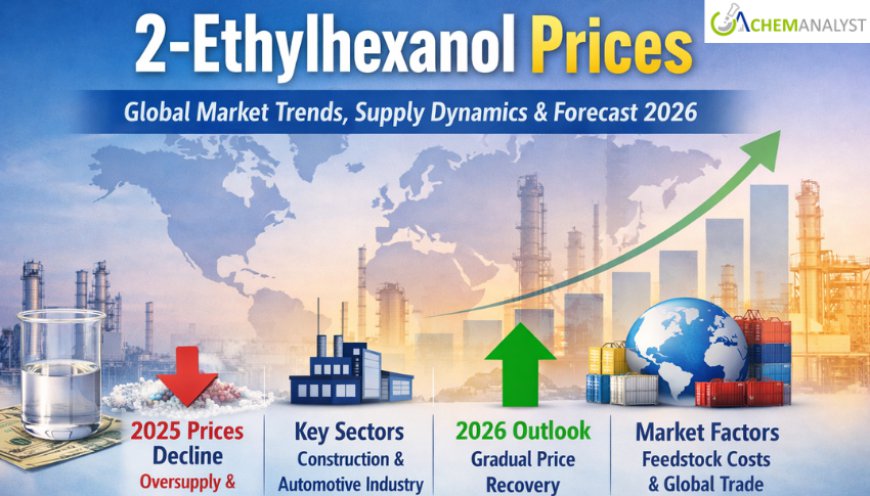
The global chemical market continues to experience significant fluctuations driven by evolving supply chains, changing industrial demand, and feedstock cost volatility. Among key oxo-alcohols, 2-Ethylhexanol Prices have drawn strong industry attention due to their direct link to construction materials, plasticizers, coatings, and automotive applications. As industries recover from cyclical slowdowns and macroeconomic uncertainty, the latest market analysis in 2026 highlights shifting dynamics shaping pricing patterns worldwide.
2-Ethylhexanol (2-EH), an eight-carbon oxo-alcohol derived from propylene through hydroformylation, serves as a critical intermediate in manufacturing plasticizers such as dioctyl phthalate (DOP), adhesives, and specialty chemicals. Because it is closely tied to industrial activity, changes in demand from infrastructure, automotive, and consumer goods sectors strongly influence global price movements.
Market Overview of 2-Ethylhexanol
2-Ethylhexanol remains a cornerstone raw material for plasticizer production, which accounts for the majority of global consumption. The chemical is widely used in PVC processing, coatings, lubricants, and dispersants, making it essential to construction, automotive, and electronics industries.
According to the latest market data, global price movements in late 2025 reflected oversupply conditions, muted downstream demand, and stable feedstock costs. These factors collectively kept pricing under downward pressure across major regions, including North America, Europe, and Asia-Pacific.
However, as 2026 begins, signs of gradual recovery are emerging due to restocking activity, improved industrial output, and moderate demand growth.
Latest Global Price Trends (2025–2026)
North America Market Dynamics
In North America, 2-Ethylhexanol Prices declined significantly during late 2025 due to surplus inventory and weak demand from plasticizer and coatings sectors. The average price in the United States during Q4 2025 was around USD 914 per metric ton, reflecting subdued buying interest and ample supply availability.
Key factors influencing the regional price decline included:
-
High operating rates at production facilities
-
Steady import flows maintaining abundant supply
-
Soft demand from construction and automotive industries
-
Stable propylene feedstock costs limiting cost-push inflation
Despite these bearish factors, the latest forecasts indicate a modest recovery driven by seasonal restocking and anticipated improvement in downstream demand.
Asia-Pacific Market Trends
The Asia-Pacific region experienced relatively stable but soft price movements. In Japan, the average price during late 2025 remained around USD 960 per metric ton.
The key drivers affecting 2-Ethylhexanol Prices Trends in Asia included:
-
Balanced supply due to consistent import flows
-
Stable feedstock costs keeping production expenses steady
-
Moderate consumption from plasticizer applications
-
Weak demand from construction and automotive sectors
However, the market outlook remains cautiously optimistic as industrial demand from electronics and manufacturing is expected to support gradual price recovery in 2026.
European Market Performance
Europe witnessed a notable price decline during the same period. In Germany, prices averaged around USD 973 per metric ton in late 2025 due to subdued demand and sufficient supply availability.
Major price influencers included:
-
Weak construction sector activity
-
Soft feedstock costs, especially propylene and naphtha
-
Stable production output
-
Balanced inventories across supply chains
Despite these challenges, seasonal demand and potential feedstock tightening could introduce moderate price increases in the near term.
Track Real Time Prices Of 2-Ethylhexanol
https://www.chemanalyst.com/ChemAnalyst/PricingForm?Product=2-Ethylhexanol
Key Factors Influencing 2-Ethylhexanol Prices
1. Feedstock Cost Fluctuations
The most significant determinant of 2-Ethylhexanol Prices is propylene, the primary raw material used in production. When propylene prices remain stable, production costs stay predictable, limiting volatility in final product pricing.
Conversely, rising feedstock costs can quickly push prices upward due to increased manufacturing expenses.
2. Supply-Demand Balance
Supply conditions play a crucial role in price direction. Oversupply situations, as observed in late 2025, often lead to price declines. High operating rates and steady import flows contributed significantly to global market softness.
Demand from plasticizers, coatings, and adhesives remains a key price driver, as these sectors account for most global consumption.
3. Industrial Activity Levels
2-Ethylhexanol demand closely follows industrial production trends. Weak construction activity and reduced automotive output typically lead to lower consumption levels.
However, infrastructure spending and manufacturing recovery in 2026 are expected to boost demand.
4. Logistics and Trade Conditions
Freight rates, shipping disruptions, and trade policies can influence regional price variations. For example, logistics congestion and fluctuating freight costs impacted price movements in several regions during 2025.
Global Supply Landscape
The global production of 2-Ethylhexanol is concentrated among major chemical manufacturers, with North America, Europe, and Asia accounting for most output.
Most production uses catalytic hydroformylation of propylene, a process requiring stable feedstock availability and consistent operating conditions. This dependence on upstream petrochemical markets means that supply disruptions can quickly influence global pricing trends.
Demand Outlook by Industry
Construction Sector
Construction remains the largest consumer of plasticizers derived from 2-EH. Weak housing activity during 2025 contributed to price declines, but infrastructure investments in 2026 are expected to support demand recovery.
Automotive Industry
Automotive manufacturing uses 2-EH in coatings, adhesives, and interior materials. Recovery in vehicle production is likely to strengthen consumption levels globally.
Electronics and Consumer Goods
Growing electronics production and consumer goods manufacturing are emerging as supportive demand factors, particularly in Asia-Pacific markets.
Regional Price Comparison
A global comparison highlights varying price levels influenced by regional supply-demand conditions:
-
North America: around USD 900–915 per metric ton
-
Asia-Pacific: approximately USD 950–960 per metric ton
-
Europe: roughly USD 970 per metric ton
These variations reflect differences in feedstock availability, production costs, and industrial demand patterns.
Forecast Outlook for 2026
The latest market outlook suggests that 2-Ethylhexanol Prices Trends will show moderate recovery during 2026.
Key expectations include:
-
Gradual demand improvement from construction and automotive sectors
-
Seasonal restocking supporting short-term price increases
-
Stable feedstock costs limiting extreme volatility
-
Balanced supply preventing sharp price spikes
Overall, the market is expected to shift from a bearish to a stable-to-bullish trajectory as global economic activity strengthens.
Challenges and Market Risks
Despite optimistic projections, several risks remain:
-
Continued oversupply due to high operating rates
-
Economic uncertainty affecting industrial demand
-
Trade disruptions impacting logistics
-
Environmental regulations influencing production costs
These factors could limit price recovery momentum in the near term.
Opportunities for Market Growth
The 2-EH market also presents strong growth opportunities:
-
Expanding PVC demand globally
-
Increased infrastructure investments in developing economies
-
Rising demand for specialty chemicals
-
Growth in automotive and electronics sectors
These trends support long-term market expansion and price stability.
Conclusion
The global market for 2-Ethylhexanol continues to evolve under the influence of supply-demand dynamics, feedstock cost fluctuations, and industrial activity trends. The latest market data indicates that 2-Ethylhexanol Prices experienced downward pressure during late 2025 due to oversupply and weak downstream demand.
However, the outlook for 2026 remains positive, supported by improving industrial demand, stable feedstock costs, and seasonal restocking activities. As global economic conditions strengthen, 2-Ethylhexanol Price Index are expected to move toward gradual recovery.
Market participants should closely monitor feedstock pricing, industrial demand indicators, and supply chain developments to make informed procurement and investment decisions in the coming years.
About Us:
Welcome to ChemAnalyst, a next–generation platform for chemical and petrochemical intelligence where innovation meets practical insight. Recognized as “Product Innovator of the Year 2023” and ranked among the “Top 100 Digital Procurement Solutions Companies,” we lead the digital transformation of the global chemical sector. Our online platform helps companies handle price volatility with structured analysis, real-time pricing, and reliable news and deal updates from across the world. Tracking over 500 chemical prices in more than 40 countries becomes simple and efficient with us.
Contact Us:
ChemAnalyst
Email: sales@chemanalyst.com
Website: https://www.chemanalyst.com/
LinkedIn: https://www.linkedin.com/company/chemanalyst/
Facebook: https://www.facebook.com/ChemAnalysts/
Twitter: https://x.com/chemanalysts
YouTube: https://www.youtube.com/@chemanalyst
Instagram: https://www.instagram.com/chemanalyst_