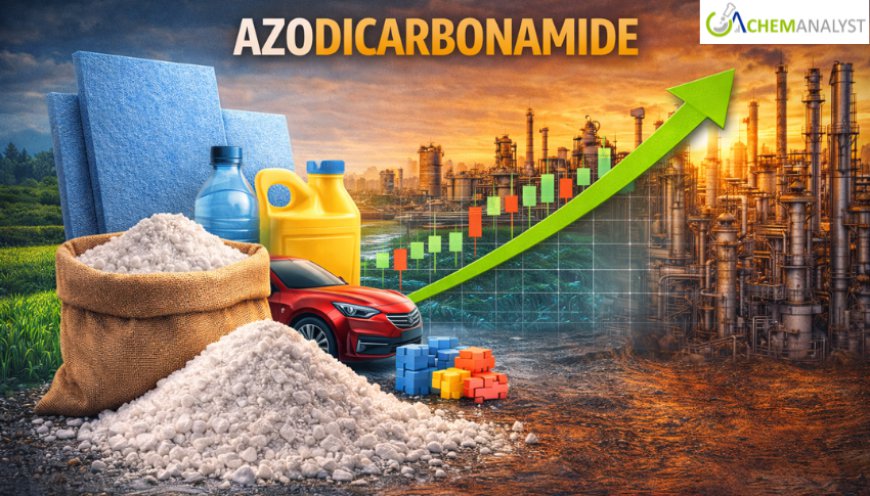
Azodicarbonamide Prices: Global Market Trends, Demand Outlook, and Forecast Analysis
The global chemical market continues to experience dynamic shifts driven by industrial growth, feedstock availability, and evolving regulatory frameworks
 cheminfo
The global chemical market continues to experience dynamic shifts driven by industrial growth, feedstock availability, and evolving regulatory frameworks. Among these specialty chemicals, Azodicarbonamide Prices have attracted significant attention due to the compound’s wide application across polymer manufacturing, automotive materials, and industrial foaming processes. As a key chemical blowing agent, azodicarbonamide plays an essential role in producing lightweight plastics, rubber products, and synthetic materials.
In recent years, the market for azodicarbonamide has witnessed notable fluctuations influenced by supply chain disruptions, raw material costs, and regional industrial activity. As we move into 2026, the latest market data indicates that pricing patterns are becoming more stable, supported by steady demand from end-use sectors. However, continued regulatory scrutiny and environmental considerations remain critical factors shaping future price trajectories.
Understanding Azodicarbonamide and Its Industrial Importance
Azodicarbonamide (ADA) is widely used as a chemical blowing agent that decomposes at elevated temperatures to release gas, creating foam structures in plastics and rubber materials. Its applications span industries such as:
-
Plastics manufacturing
-
Automotive components
-
Construction materials
-
Packaging products
-
Consumer goods
The growing emphasis on lightweight materials has further boosted the demand for ADA, particularly in industries aiming to improve energy efficiency and reduce emissions. Studies indicate that foaming agents like azodicarbonamide are crucial for producing lightweight materials that support energy savings and sustainability initiatives.
Latest Global Azodicarbonamide Prices Trends
2025 Market Overview
During 2025, Azodicarbonamide Prices displayed a mixed pattern across regions. Several factors influenced pricing movements:
-
Feedstock Cost Variations
Prices of raw materials used in ADA production experienced volatility due to global petrochemical market fluctuations. -
Industrial Demand Recovery
Rising manufacturing activity in the automotive and construction sectors supported steady demand. -
Supply Chain Normalization
Improved logistics and reduced shipping disruptions helped stabilize global supply. -
Regulatory Environment
Environmental compliance requirements and restrictions on certain chemical uses impacted production costs.
Overall, the market showed moderate price stability, with temporary fluctuations driven by raw material cost changes and regional demand shifts.
Latest 2026 Pricing Trends
As we enter 2026, the latest Azodicarbonamide Prices Trends indicate:
-
Stabilizing price patterns globally
-
Balanced supply-demand conditions
-
Moderate upward price pressure due to energy costs
-
Strong demand from polymer and automotive industries
The market outlook suggests steady growth rather than sharp price swings, reflecting a maturing global supply chain.
Key Market Drivers Influencing Azodicarbonamide Prices
1. Rising Demand for Lightweight Materials
One of the most significant drivers of azodicarbonamide demand is the increasing use of lightweight materials in automotive and construction industries. Foamed plastics reduce vehicle weight, improving fuel efficiency and lowering emissions.
This structural demand trend continues to support stable price growth.
2. Raw Material and Energy Costs
Production of azodicarbonamide is heavily dependent on petrochemical feedstocks. Fluctuations in crude oil prices directly influence manufacturing costs, which subsequently impact market prices.
Additionally, energy-intensive production processes mean that electricity and natural gas costs remain major price determinants.
3. Environmental Regulations
Environmental and safety regulations significantly affect the azodicarbonamide market. Governments worldwide have introduced stricter policies regarding chemical manufacturing and emissions.
Regulatory frameworks often increase compliance costs, thereby influencing pricing structures and supply availability.
4. Technological Advancements
Advancements in chemical processing technology have improved production efficiency, reducing manufacturing costs and helping stabilize prices.
Innovations in eco-friendly alternatives may also impact future market demand and pricing trends.
Track Real Time Price Of Azodicarbonamide
https://www.chemanalyst.com/ChemAnalyst/PricingForm?Product=Azodicarbonamide
Regional Market Analysis
North America
In North America, Azodicarbonamide Prices remained relatively stable during 2025. Key factors influencing the market include:
-
Strong demand from automotive and packaging industries
-
Stable industrial production
-
High regulatory compliance costs
The region is expected to maintain steady pricing trends through 2026.
Asia-Pacific
Asia-Pacific remains the largest market for azodicarbonamide due to extensive manufacturing activity.
Key drivers include:
-
Rapid industrialization
-
Strong polymer production capacity
-
Growing construction sector
The region experienced slight price increases due to strong demand and tight supply conditions.
Europe
In Europe, pricing remained cautious due to stringent environmental regulations and moderate industrial demand.
The region’s focus on sustainability and chemical safety continues to influence market dynamics.
Supply Chain and Production Dynamics
The global supply chain for azodicarbonamide involves several stages:
-
Raw material procurement
-
Chemical synthesis
-
Distribution to manufacturers
Supply disruptions in any stage can impact prices significantly.
Recent trends indicate improved logistics efficiency, which has contributed to price stabilization.
Demand Outlook by End-Use Industry
Plastics and Polymer Industry
The plastics sector remains the largest consumer of azodicarbonamide, accounting for the majority of global demand.
Foamed plastics are widely used in:
-
Insulation materials
-
Packaging products
-
Automotive interiors
Automotive Industry
Automakers increasingly use lightweight materials to meet emission reduction targets.
This trend continues to support stable demand for azodicarbonamide.
Construction Industry
Construction applications such as insulation boards and foam materials also contribute to growing demand.
Price Forecast Outlook for 2026
Looking ahead to 2026, Azodicarbonamide Prices Trends are expected to follow a stable trajectory with moderate growth.
Key forecast insights include:
-
Balanced supply-demand conditions
-
Gradual price increases due to energy costs
-
Continued demand from lightweight material applications
-
Regulatory compliance influencing production costs
Market expansion is expected to remain steady rather than rapid.
Challenges in the Azodicarbonamide Market
Despite positive growth prospects, the market faces several challenges:
Regulatory Restrictions
Some countries have imposed restrictions on azodicarbonamide use due to health and environmental concerns.
Raw Material Volatility
Fluctuations in feedstock prices remain a persistent risk.
Environmental Sustainability Pressure
Increasing focus on eco-friendly materials may affect long-term demand.
Opportunities for Market Growth
Green Production Technologies
Development of environmentally friendly production methods could create new market opportunities.
Expanding Emerging Markets
Rapid industrial growth in developing economies is expected to support long-term demand.
Innovation in Polymer Applications
New applications in advanced materials and packaging will drive market expansion.
Strategic Insights for Market Stakeholders
Manufacturers, investors, and procurement professionals should focus on:
-
Monitoring raw material price trends
-
Evaluating regulatory developments
-
Diversifying supply sources
-
Investing in sustainable production technologies
Such strategies can help manage risks and optimize pricing decisions.
Conclusion
The global azodicarbonamide market continues to evolve in response to industrial demand, regulatory developments, and supply chain dynamics. Azodicarbonamide Prices have shown increasing stability as supply-demand conditions become more balanced.
The latest market trends suggest moderate price growth heading into 2026, supported by strong demand from polymer, automotive, and construction industries. However, environmental regulations and feedstock cost fluctuations will remain key influencing factors.
Overall, the long-term outlook for Azodicarbonamide Prices Trends remains positive, with sustained growth expected as global industries increasingly adopt lightweight materials and advanced manufacturing technologies.