Custom Labels: The Small Detail That Creates a Big Brand Impact
Discover how custom labels improve packaging, strengthen brand recognition, build customer trust, and create a polished product experience that drives sales.
 andrewbarn16
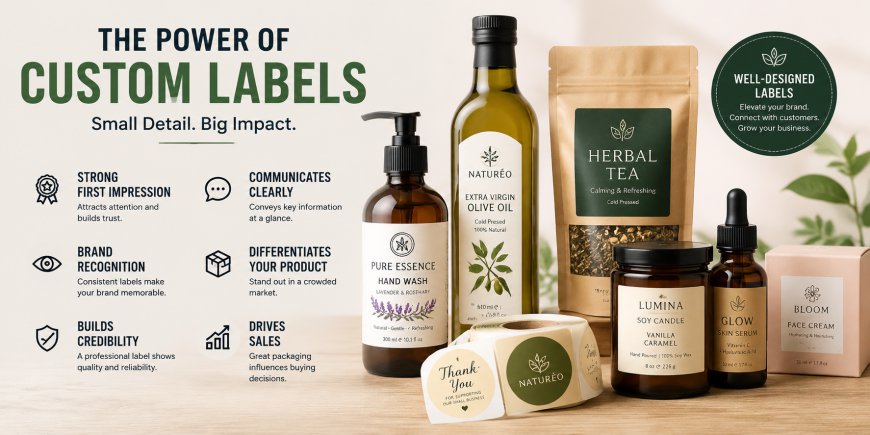
Customers often begin judging a product before they open, touch, or use it. The colors, packaging material, typography, product name, and overall presentation all shape the first impression. Within that presentation, custom labels may appear to be a small detail, but they can strongly influence how professional, valuable, and trustworthy a product feels.
A carefully designed label can transform an ordinary bottle, jar, box, pouch, or container into something that looks ready for a competitive market. It can introduce the brand, explain the product, communicate important benefits, and help customers understand why they should choose it. For small businesses, custom labels provide an affordable way to upgrade existing packaging without paying for fully printed boxes or containers. For established brands, they create consistency across large product collections.
The most effective labels balance appearance with function. They are attractive enough to gain attention, clear enough to communicate essential information, and durable enough to remain attached throughout shipping, storage, and everyday use. When these qualities work together, custom labels become much more than decorative stickers. They become practical brand assets that help products get noticed, remembered, and trusted.
Why Custom Labels Have a Powerful Branding Effect
They Shape the Customer’s First Impression
A customer may spend only a few seconds looking at a product before deciding whether to examine it further. During that short moment, the label must answer several questions. What is the product? Who made it? What makes it different? Does it look reliable? Is the price justified?
A clean, organized label can answer these questions quickly. It gives the product a finished appearance and helps the customer understand what the brand represents. A poorly printed, misaligned, faded, or overcrowded label can create the opposite impression, even when the product inside is excellent.
This is particularly important in crowded markets. On a supermarket shelf, at a craft market, inside a subscription box, or in an online product photograph, custom labels help create visual separation. Customers may not remember every line of text, but they often remember a distinctive color palette, shape, illustration, or overall style.
They Make Products Easier to Recognize
Brand recognition is created through repeated and consistent experiences. When customers repeatedly see the same logo, colors, typography, and visual structure, they begin associating those elements with the company.
A candle brand may use the same label layout across different fragrances while changing only the accent color and scent name. A food company may use consistent labels across several sauces, jams, or seasonings. This approach allows every product to look unique while still clearly belonging to the same brand.
Familiarity Encourages Trust
Customers usually feel more comfortable purchasing products they recognize. Consistent custom labels make new flavors, sizes, scents, or formulas feel familiar. A customer who already trusts one item may be more willing to try another when the packaging clearly connects it to the same company.
Common Types of Custom Labels
Product and Branding Labels
Product labels usually display the brand name, product name, description, quantity, and main benefits. They are commonly applied to bottles, jars, pouches, boxes, tubes, cans, and other containers.
The design should reflect the product category and target customer. A natural skincare company may use soft colors and simple typography, while a children’s snack brand may choose brighter shades and playful illustrations. A luxury product may benefit from understated design, premium material, and carefully selected finishes.
The goal is not simply to create an attractive label. The design should look appropriate for the product, price point, customer, and environment in which it will be sold.
Informational Labels
Some custom labels focus on practical information. They may include ingredients, allergens, directions, warnings, care instructions, barcodes, batch numbers, manufacturing dates, or expiration details.
This information must remain readable and well organized. Clear spacing, strong contrast, and logical hierarchy help customers find what they need without feeling overwhelmed. When informational content is incorporated into the original design, the label usually looks more professional than when important details are added later.
Promotional and Seasonal Labels
Custom labels are useful for seasonal campaigns, limited editions, collaborations, special events, and temporary promotions. They allow businesses to refresh their packaging without redesigning the entire container.
A bakery may introduce festive labels for holiday gift boxes. A beverage brand may create a summer label for a limited flavor. A cosmetics company may use special labels for a product launch or influencer partnership. These variations create excitement while preserving the main brand identity.
Functional Labels
Some labels must perform specific tasks. Tamper-evident labels show whether packaging has been opened. Waterproof labels are designed for products used in bathrooms, kitchens, or outdoor environments. Freezer-safe labels must remain attached at low temperatures, while removable labels should peel away without leaving heavy residue.
For these applications, performance matters as much as appearance. A beautiful label loses its value when it curls, tears, fades, or falls off.
Key Elements of Effective Custom Labels
A Clear Visual Hierarchy
A strong label guides the customer’s attention. The most important information should be visible first, followed by supporting details. The brand name, product name, variant, and key benefit should not all compete for equal attention.
For example, the product name may be the largest element, followed by the brand logo, flavor, scent, or short description. Ingredients, instructions, and legal details can be placed in a smaller but still readable area.
When everything is bold, large, colorful, or heavily decorated, nothing stands out. A clear hierarchy makes the label easier to understand and gives it a more polished appearance.
Typography That Fits the Brand
Typography influences how customers interpret a product. Traditional serif fonts may suggest heritage, quality, or luxury. Clean sans-serif fonts often feel modern, direct, and professional. Handwritten styles can appear friendly or handmade, but they should be used carefully because decorative lettering can become difficult to read.
Most custom labels do not need several different fonts. One primary typeface and one supporting typeface are usually enough. The design should also be tested at the actual printed size. Text that looks clear on a large monitor may become unreadable when reduced to fit a small container.
Purposeful Use of Color
Color can attract attention, communicate personality, and separate product variations. Green may suggest freshness, nature, or sustainability. Black and metallic accents may support a premium image. Bright colors can create energy, while soft neutral tones may feel calm and sophisticated.
Color should have a clear purpose. A product range can use different accent colors for flavors, scents, or formulas while keeping the main layout consistent. This helps customers identify options quickly without weakening brand recognition.
Focused Brand Messaging
The front of a label should communicate the main message quickly. Customers rarely want to read a long paragraph before understanding the product. A clear product name, short benefit, and one or two useful details are often more effective than excessive copy.
Specific claims are usually stronger than vague language. Statements such as “hand-poured in small batches,” “made with recycled paper,” or “suitable for sensitive skin” communicate more than broad phrases such as “high quality” or “best product.”
Every word on the label should help the customer understand, use, or trust the product.
Choosing the Right Material for Custom Labels
Paper Labels
Paper is one of the most common and affordable label materials. It works well for boxes, candles, stationery, dry food containers, handmade products, and items used indoors.
Paper can be smooth, textured, coated, or uncoated. Smooth paper supports a clean commercial look, while textured stock can create a handcrafted or premium appearance. However, ordinary paper may not perform well when exposed to moisture, oil, refrigeration, or repeated handling.
Film and Synthetic Labels
Film and synthetic materials are more resistant to water, tearing, oil, and changing temperatures. They are often used for beverages, cosmetics, cleaning products, refrigerated food, outdoor equipment, and bathroom products.
Clear film can create a no-label appearance, allowing the container or product color to remain visible. White film provides a stronger background for printed colors and is useful when labels are applied to dark, transparent, or unevenly colored packaging.
Selecting the Right Adhesive
The adhesive must suit the packaging surface and product environment. Glass, plastic, metal, cardboard, and textured containers require different solutions. Some labels must withstand cold storage, moisture, heat, sunlight, or frequent contact with hands.
Test Before Ordering in Bulk
A label that sticks well to one bottle may lift at the edges when applied to another. Businesses should test samples on the actual packaging and leave them in realistic conditions before approving a large order. Testing can reveal problems with adhesion, condensation, temperature, or surface texture before they become expensive.
The Custom Label Design Process
Begin With the Packaging
A custom label should be designed around the actual container. Its dimensions, shape, surface, and curves influence how the artwork will appear.
Accurate measurements prevent overlapping edges, uneven placement, and important text wrapping around corners. A digital mockup is helpful, but a physical prototype provides a more realistic view of how the label fits and feels.
Keep the Layout Focused
A common mistake is trying to include every benefit on the front label. This usually creates clutter and weakens the most important message.
A better approach is to choose one clear focal point and organize supporting details around it. White space should not be treated as wasted space. It gives the logo, product name, and main information room to stand out.
Simple design does not mean boring design. It means every element contributes something useful.
Review the Design in Real Conditions
The label should be tested at normal viewing distance, under realistic lighting, and in product photographs. It should also be handled, refrigerated, exposed to moisture, or placed outdoors when relevant.
This step can reveal issues that are not visible in the original design file. Colors may print darker than expected, fine lines may disappear, glossy materials may reflect too much light, or small text may become difficult to read.
Printing Methods and Finishing Options
Digital Printing
Digital printing is a practical choice for short production runs, seasonal products, test launches, and brands that frequently update their designs. It allows businesses to produce several versions without the setup requirements of some traditional methods.
It is also useful for variable printing, where each label may include a different name, code, number, or design. This can support personalized campaigns, limited editions, and product tracking.
Flexographic Printing
Flexographic printing is often more suitable for larger quantities. It works with many label materials and can become cost-effective when businesses order high volumes.
The initial setup may be higher, but the cost per label often decreases as the quantity increases. Brands with stable designs and regular production needs may benefit from this method.
Premium Finishes
Finishing options can influence how a label looks and feels. Matte lamination creates a soft and modern appearance, while gloss increases shine and color intensity. Foil stamping, embossing, spot coatings, and textured materials can create a premium effect.
These features should be used with purpose. A small metallic detail may create more impact than covering the entire label with foil. The best finish is one that supports the brand rather than distracting from the product.
Understanding Custom Label Costs
The cost of custom labels depends on material, size, shape, quantity, printing method, number of designs, adhesive type, finishing, and delivery requirements. Larger orders usually reduce the price per label, but ordering too many can create waste if the product, packaging, or design changes.
New brands may benefit from a smaller initial run. This allows them to test the fit, appearance, durability, and customer response before committing to a larger quantity.
Cost should also be compared with the value the label creates. A relatively small improvement in label quality can make the complete product look more expensive and professional. Better presentation may support stronger pricing, improved retail placement, and greater customer confidence.
Practical Uses Across Different Industries
Food and Beverage Products
Food and beverage labels need to combine visual appeal with accurate information. A hot sauce company may use color to identify heat levels, while a coffee brand may use textured paper to create an artisanal impression.
Materials must be selected according to refrigeration, oil exposure, condensation, and storage conditions. Barcodes, ingredients, allergens, and expiry details must also remain readable.
Beauty and Personal Care
Beauty labels often need to resist water, oil, and repeated handling. Clean layouts, high-quality materials, and carefully chosen finishes can make even simple containers feel premium.
Ingredient lists, directions, warnings, and product benefits should be organized clearly. The label must remain attractive without hiding information customers need.
Handmade and Small-Batch Products
Custom labels help handmade businesses preserve a personal identity while improving presentation. Soap makers, candle brands, bakers, artists, and home-based businesses can use labels to create a consistent look without ordering expensive printed packaging.
E-Commerce Brands
Online businesses rely heavily on product photography and unboxing. Custom labels can brand plain mailer boxes, tissue paper, pouches, bottles, and inserts without requiring completely custom packaging.
They also keep products recognizable when customers share photographs, reviews, and unboxing videos.
Common Custom Label Mistakes
One frequent mistake is selecting the design before considering the container and environment. A paper label may look excellent in a sample book but fail when placed on a refrigerated bottle.
Other problems include using text that is too small, choosing colors with poor contrast, adding too much information, using low-resolution artwork, or placing labels unevenly. Inconsistent typography and branding can also make products look disconnected.
Businesses should avoid approving large orders based only on an on-screen preview. A printed proof or physical sample provides a clearer understanding of color, size, material, finish, and adhesive performance.
Trends Influencing Modern Custom Labels
Custom labels are becoming more interactive, personalized, and environmentally considered. QR codes can connect customers to instructions, videos, loyalty programs, recipes, or product stories without overcrowding the printed design.
Variable printing allows brands to create regional labels, personalized packaging, limited editions, and multiple designs within one production run.
Sustainability is also affecting material and adhesive choices. Businesses are exploring recycled paper, thinner films, wash-off adhesives, and label constructions that work better with recyclable containers. Customers increasingly value clear and specific environmental information rather than vague claims.
Conclusion
Custom labels may occupy only a small part of a package, but they can influence the entire customer experience. They shape first impressions, communicate important information, improve product recognition, and help ordinary packaging feel more professional and intentional.
The strongest custom labels combine attractive design with practical performance. They fit the container correctly, remain readable, use suitable materials, stay attached under real conditions, and express the brand clearly. Every decision, from typography and color to adhesive and finish, affects how customers perceive the product.
When labels are treated as strategic brand assets instead of last-minute additions, they can create a significant competitive advantage. They help products look more valuable, make brands easier to remember, and give customers greater confidence in what they are buying.