Origination Software Guide: Streamlining Loans, Applications, and Business Workflows
Learn how origination software streamlines loans, applications, and workflows with automation, faster processing, and improved business efficiency.
 andrewbarn16
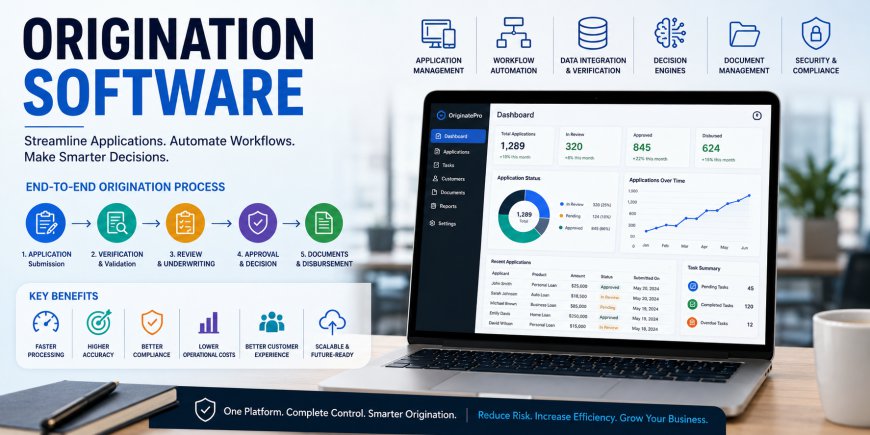
Origination software has become an essential part of modern financial and business operations where speed, accuracy, and structured workflows matter. In simple terms, origination software is a digital system that helps organizations manage the entire lifecycle of an application process, from the first submission to final approval and documentation. It is widely used in industries like banking, lending, insurance, and enterprise services where large volumes of applications need to be processed in a controlled and efficient way.
The demand for origination software has increased because manual processing often leads to delays, errors, and inconsistent decision-making. Businesses today cannot afford slow onboarding or fragmented workflows. Whether it is a loan application, credit request, or service enrollment, origination software helps bring everything into a centralized system where data, verification, approvals, and communication are connected in one place.
This guide explains how origination software works, why it is important, and how it transforms loan processing, applications, and business workflows in a practical and scalable way.
What is Origination Software?
Origination software is a digital platform designed to manage and automate the beginning stage of a business process, especially where applications or requests are involved. The term “origination” refers to the starting point of a process, and this software ensures that the process starts in a structured and controlled manner.
In financial services, origination software is most commonly used for loan origination, where a customer applies for a loan and the system manages everything from data collection to approval. However, its use is not limited to banking. Many modern businesses use origination software to handle customer onboarding, service requests, insurance applications, vendor registrations, and more.
The core idea behind origination software is simple: reduce manual work, improve decision speed, and ensure consistency in processing.
How Origination Software Works
Origination software follows a structured workflow that guides every application through multiple stages. Although the exact process can vary depending on the industry, the general flow remains similar.
The process usually begins when a user submits an application through a digital form or portal. The origination software collects this data and organizes it into a structured format. Once the data is captured, the system may automatically verify certain details using integrated databases or external services.
After initial validation, the application moves into a review stage where rules and scoring models may be applied. In financial environments, this could include credit scoring, risk analysis, or eligibility checks. Based on these results, the application is either approved, rejected, or sent for manual review.
Once approved, the system helps generate documents, finalize agreements, and complete onboarding. Throughout this journey, origination software keeps track of every step, ensuring transparency and traceability.
Key Features of Origination Software
Origination software is built with multiple features that support end-to-end process automation and control. These features help organizations reduce operational effort and improve decision quality.
Application Management
At its core, origination software manages incoming applications in a structured way. It collects data from users, organizes it, and ensures that all required fields are completed before moving forward. This reduces incomplete submissions and speeds up processing.
Workflow Automation
Workflow automation is one of the most important capabilities of origination software. It allows businesses to define rules for how applications should move through different stages. For example, an application can automatically move to approval if it meets certain criteria or be flagged for review if additional verification is needed.
Data Verification and Integration
Modern origination software connects with external systems such as credit bureaus, identity verification services, and financial databases. This allows real-time validation of user information, reducing fraud and errors.
Decision Engines
Some origination systems include built-in decision engines that apply predefined rules or AI-based models to evaluate applications. This helps standardize decision-making and reduce human bias.
Document Management
Origination software also handles document generation and storage. It can automatically create contracts, agreements, and forms based on application data, ensuring consistency and compliance.
Types of Origination Software
Origination software is not limited to one industry. It comes in different forms depending on its use case and business requirements.
Loan Origination Software
Loan origination software is the most widely used type. It is used by banks, credit unions, and financial institutions to process loan applications. It manages everything from application intake to credit checks, underwriting, approval, and disbursement.
Customer Onboarding Systems
Many companies use origination software to onboard new customers. This includes collecting customer details, verifying identity, and setting up accounts or services in a structured way.
Insurance Origination Systems
In the insurance industry, origination software helps manage policy applications. It collects applicant details, assesses risk, calculates premiums, and generates policy documents.
Enterprise Application Systems
Large organizations also use origination software for internal workflows such as vendor registration, employee onboarding, and service requests.
Benefits of Using Origination Software
Origination software brings several practical benefits that directly impact efficiency and customer experience.
One of the most important benefits is faster processing. Since much of the work is automated, applications move through the system more quickly compared to manual handling. This reduces waiting time for customers and improves satisfaction.
Another key benefit is accuracy. Manual data entry often leads to mistakes, but origination software reduces this risk by validating data automatically and standardizing workflows.
It also improves compliance. Many industries have strict regulations, and origination software ensures that all required steps are followed and properly documented.
Scalability is another advantage. As businesses grow, the number of applications increases. Origination software can handle large volumes without a proportional increase in manual effort.
Real-World Example of Origination Software in Action
To understand how origination software works in practice, consider a bank processing personal loan applications.
A customer applies online and fills out a digital form. The origination software collects this data and automatically verifies identity using integrated systems. It then checks credit history through external credit bureaus.
Based on predefined rules, the system evaluates whether the applicant qualifies for the loan. If approved, the software generates a loan agreement and sends it to the customer for digital signing. Once signed, the loan is processed for disbursement.
Without origination software, this process would require multiple departments, manual data entry, and significantly more time.
Common Challenges in Origination Systems
While origination software offers many benefits, it also comes with challenges that organizations must manage carefully.
One common challenge is integration complexity. Connecting origination software with existing legacy systems can be difficult and time-consuming. Poor integration can lead to data inconsistencies and workflow issues.
Another challenge is customization. Every business has unique requirements, and configuring origination software to match those needs requires careful planning.
Data security is also a major concern. Since origination systems handle sensitive personal and financial information, strong security measures are essential.
Finally, user adoption can be a challenge. Employees need proper training to fully utilize the system and avoid relying on old manual processes.
Future of Origination Software
The future of origination software is closely linked with automation, artificial intelligence, and digital transformation. More systems are moving toward AI-driven decision-making, where applications are evaluated automatically with minimal human involvement.
Cloud-based origination software is also becoming more popular because it allows remote access, scalability, and easier updates. Businesses are increasingly adopting mobile-friendly platforms to support real-time application processing.
Another trend is the use of predictive analytics. Origination systems are starting to analyze historical data to predict application outcomes, risk levels, and customer behavior more accurately.
As businesses continue to prioritize speed and efficiency, origination software will play an even more central role in digital operations.
Conclusion
Origination software has transformed the way organizations handle applications, loans, and structured business workflows. By automating key stages of the process, it reduces manual effort, improves accuracy, and enhances decision-making.
From financial institutions to enterprise service providers, origination software enables faster onboarding, better compliance, and scalable operations. It connects data, people, and processes into a unified system that supports modern business demands.
As technology continues to evolve, origination software will become even more intelligent and integrated, shaping the future of how applications and workflows are managed across industries.