AI Automation Services Dubai: Complete Guide to Intelligent Business Automation in the UAE
Discover how AI automation services in Dubai help UAE businesses cut costs, boost efficiency, and scale with agentic AI. Explore trends, use cases & benefits.
 sisgaintechsolutions
 Dubai isn't waiting for the future of work to arrive — it's building it. Over the past two years, the city has moved from experimenting with chatbots and basic scripts to deploying full agentic systems that plan, decide, and execute tasks with minimal human input. That shift — from static automation to Agentic AI — is quietly rewriting how UAE businesses staff their operations.
Instead of hiring five more people to handle invoice processing, customer queries, or compliance checks, companies across Dubai are asking a different question: can an AI system just do this? Increasingly, the answer is yes. This guide breaks down what AI Automation Services Dubai actually cover, why Dubai businesses are investing in them, which industries are leading the charge, and how to choose the right automation partner for your business.
What Are AI Automation Services?
AI automation services combine artificial intelligence with workflow automation to let systems handle tasks that once required constant human judgment — not just repetitive clicks.
Automation vs. RPA vs. AI Automation: Traditional automation follows fixed rules — if X happens, do Y. Robotic Process Automation (RPA) extends this by mimicking human actions across software interfaces, but it still can't handle exceptions or unstructured data. AI automation adds a layer of intelligence on top: it can read documents, interpret intent, make judgment calls, and adapt when the process changes.
What makes Agentic AI different is autonomy. An agentic system doesn't just execute a single task — it can plan multi-step workflows, call other tools, check its own output, and course-correct without a human re-triggering each step. It behaves less like software and more like a digital employee.
AI automation services use artificial intelligence to run business processes that require judgment, not just fixed rules. Unlike RPA, which mimics clicks, or traditional automation, which follows static logic, AI automation reads context, adapts to change, and — in its agentic form — plans and executes multi-step tasks on its own.
Why Dubai Businesses Are Investing in AI Automation
Several forces are converging at once:
-
UAE Vision for AI and the national push to become a global AI hub by 2031 is driving direct investment and regulatory support.
-
Government digital transformation initiatives are setting a precedent that private industry is following.
-
Rising operational costs — office space, salaries, and visa costs — make automation a straightforward way to protect margins.
-
24/7 customer support demand in a market that serves multiple time zones across the GCC.
-
Faster decision-making needs, especially in finance, logistics, and healthcare, where delays cost money.
-
A multilingual business environment (Arabic, English, and beyond) that AI can serve more consistently than rotating shift staff.
Top AI Automation Trends in Dubai (2026)
The technology stack maturing fastest in the region includes agentic AI systems, autonomous business workflows, and AI layered on top of existing RPA investments. Employees are increasingly working alongside AI copilots rather than being replaced outright, while AI decision intelligence tools surface recommendations from live data instead of static reports. On the infrastructure side, AI workflow orchestration platforms, low-code AI automation builders, and broader hyperautomation strategies are letting mid-sized businesses adopt capabilities that used to require enterprise budgets.
Industries Driving AI Automation Growth in Dubai
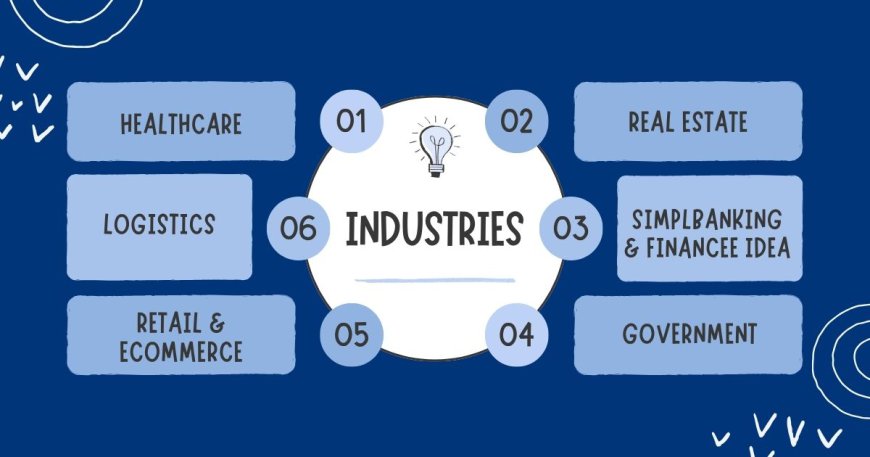
Healthcare: Hospitals and clinics are automating patient scheduling, medical billing, and insurance claims processing — cutting administrative overhead that used to eat into clinical time. Many providers are now working with a specialized healthcare software development company in Dubai to build automation that fits regional compliance requirements rather than adapting generic Western tools.
Real Estate: Lead qualification, property recommendations, and document processing are now largely automated for major Dubai developers and brokerages, letting sales teams focus on closing rather than data entry. This has fueled demand for dedicated Real Estate Software Development Services Dubai that connect AI directly into CRM and listing systems.
Logistics: Fleet automation, route optimization, and warehouse AI are reshaping how goods move through Dubai's ports and free zones. Businesses handling multi-country GCC distribution increasingly rely on a specialized Logistics Software Development Company in Dubai to build automation that accounts for customs, multilingual documentation, and regional routing constraints.
Banking & Finance: Invoice processing, fraud detection, and compliance monitoring are the three areas seeing the heaviest AI investment, since even small error rates carry real regulatory risk. This is why many institutions now work with dedicated Financial Software Development Services Dubai providers rather than retrofitting generic automation tools.
Retail & Ecommerce: AI is automating customer support, inventory management, and personalized marketing — particularly important for brands managing both physical stores and online storefronts across the UAE.
Government: Citizen services, internal process automation, and smart city initiatives are advancing quickly, supported by dedicated Government Technology Solutions Dubai built specifically for public-sector compliance and Arabic-first citizen interfaces.
Most Valuable AI Automation Use Cases
The highest-ROI use cases businesses are deploying right now include AI customer support and voice agents, AI-driven email and WhatsApp automation, sales and HR automation, finance and procurement automation, and document processing with OCR and contract analysis. On the systems side, CRM and ERP automation combined with workflow approval systems are what actually connect these individual AI tools into one coherent operation.
Agentic AI vs. Traditional Automation
|
Factor |
Traditional Automation |
AI Automation |
Agentic AI |
|
Intelligence |
Rule-based only |
Pattern recognition |
Reasoning + planning |
|
Learning Ability |
None |
Improves with data |
Learns and adapts in real time |
|
Human Dependency |
High |
Moderate |
Low |
|
Decision Making |
Predefined |
Assisted |
Autonomous |
|
Adaptability |
Low |
Medium |
High |
|
Cost |
Low upfront |
Medium |
Higher upfront, lower long-term |
|
Business Value |
Efficiency |
Efficiency + insight |
Efficiency + insight + autonomy |
The core difference is autonomy. Traditional automation only follows preset rules, AI automation adds pattern recognition and adapts to new data, and Agentic AI goes further by reasoning through multi-step decisions and acting on them without constant human input.
Current Market Gaps in Dubai's AI Automation Industry
Not every vendor in the market is built for this region. Common gaps include generic, one-size-fits-all AI solutions with no industry customization, a lack of real sector expertise, weak ERP integration, and limited Arabic-language support. Add to that ongoing compliance challenges around UAE data laws, workflow designs that don't match how teams actually operate, and — most commonly — no real ROI measurement once a system goes live.
Key Features to Look for in an AI Automation Partner
A serious automation partner should offer AI strategy consulting and a genuine workflow assessment before writing a line of code, backed by real integration expertise across your existing systems. Look for demonstrated PDPL compliance, strong cybersecurity practices, and a clear approach to AI governance — plus Arabic-language support if you serve UAE or wider GCC customers. Ongoing maintenance, an analytics dashboard, and continuous AI performance monitoring separate long-term partners from one-off implementation shops.
Benefits of AI Automation Services
Done right, AI automation lowers operating costs while increasing productivity and speeding up customer response times. It reduces human error, strengthens compliance, and enables true 24/7 operations. Just as importantly, it tends to raise employee satisfaction — teams spend less time on repetitive admin work — while improving the overall customer experience and giving the business a scalable growth path that doesn't require proportional headcount increases.
Challenges Businesses Face During AI Automation
The path isn't friction-free. Legacy systems and poor data quality are the two most common technical blockers, while employee resistance and change management are the most common human ones. Security concerns, integration complexity, and budget planning also need to be addressed early — waiting until deployment to think about them is the most common reason projects stall.
How AI Automation Works
A well-run automation project typically follows ten stages: a business process audit, workflow mapping, and an AI opportunity assessment to identify where automation will actually move the needle. From there comes data preparation, AI model selection, and integration into existing systems, followed by testing and deployment. The work doesn't stop at go-live — ongoing monitoring and continuous optimization are what keep the system accurate as your business changes.
changes.
AI automation works in ten stages — process audit, workflow mapping, opportunity assessment, data preparation, model selection, integration, testing, deployment, monitoring, and continuous optimization — with the last two stages ongoing rather than one-time steps.
AI Automation vs. Hiring More Employees
On cost, speed, availability, and accuracy, AI automation consistently outperforms adding headcount for repetitive, high-volume tasks — a system doesn't need training time, doesn't take leave, and doesn't get slower under high load. Scalability is the clearest differentiator: scaling a human team means recruiting, onboarding, and managing; scaling an AI system means adjusting capacity. Over a multi-year horizon, the long-term ROI typically favors automation for any process that's repeatable and high-volume, while human hires remain essential for judgment-heavy, relationship-driven roles.
Future of AI Automation in Dubai
The next phase looks less like isolated tools and more like an agentic workforce — AI systems handling entire functions, with humans supervising rather than executing. Expect tighter AI governance and regulation as adoption scales, along with genuinely autonomous enterprise functions in finance and operations. Smart government initiatives, AI-powered SMEs, and industry-specific AI platforms (rather than generic tools retrofitted to a sector) will define who wins the next five years of this market.
Why Choose SISGAIN Technologies for AI Automation Services in Dubai
SISGAIN Technologies builds custom AI automation and AI agents rather than deploying templated tools — the work is designed around your actual workflows, not a generic playbook. That includes full workflow automation, enterprise system integrations, and cloud deployment, backed by AI consulting that starts with your business problem rather than a product pitch. With real industry expertise across healthcare, real estate, logistics, finance, and government sectors, and local UAE support that understands regional compliance requirements, SISGAIN delivers scalable, end-to-end implementation — from the first workflow assessment through ongoing optimization.
Frequently Asked Questions
What are AI automation services? AI automation services use artificial intelligence to handle business tasks that require judgment, not just fixed rules — from customer queries to document processing.
How much do AI automation services cost in Dubai? Costs vary widely based on scope, from smaller single-workflow projects to enterprise-wide agentic deployments; most partners scope pricing after an initial workflow assessment.
What industries benefit most from AI automation? Healthcare, real estate, logistics, banking, retail, and government currently show the strongest ROI in the UAE market.
What is Agentic AI? Agentic AI refers to systems that can plan, decide, and execute multi-step tasks autonomously, rather than simply following fixed rules.
Is AI automation suitable for SMEs? Yes — low-code AI automation tools have made this accessible to smaller businesses that previously couldn't afford enterprise-grade systems.
Can AI integrate with ERP and CRM systems? Yes, integration with existing ERP and CRM systems is one of the most common — and most valuable — automation use cases.
Is AI automation compliant with UAE regulations? It can be, but compliance depends on the vendor's approach to PDPL and data governance — this should be confirmed before implementation, not after.
How long does AI automation implementation take? Timelines range from a few weeks for a single workflow to several months for enterprise-wide, multi-department rollouts.
What is the ROI of AI automation? ROI typically comes from reduced labor costs, faster processing times, and fewer errors — though it should be measured against a clear baseline set before implementation.
How do I choose an AI automation company in Dubai? Look for industry-specific expertise, strong integration capabilities, UAE compliance knowledge, and a partner willing to start with a workflow assessment rather than a generic pitch.
Conclusion
AI automation is no longer an experiment for Dubai businesses — it's becoming the default way operations scale. The shift toward agentic AI, multilingual workflows, and compliance-first automation is reshaping healthcare, real estate, logistics, finance, and government services across the UAE. The businesses seeing the strongest results aren't the ones automating everything at once — they're the ones starting with a focused workflow assessment, targeting high-impact processes first, and scaling based on measurable ROI rather than hype.