Beyond Loudness: A Technical Deep Dive into Portable Bluetooth Speakers with Good Bass
 johnmarker
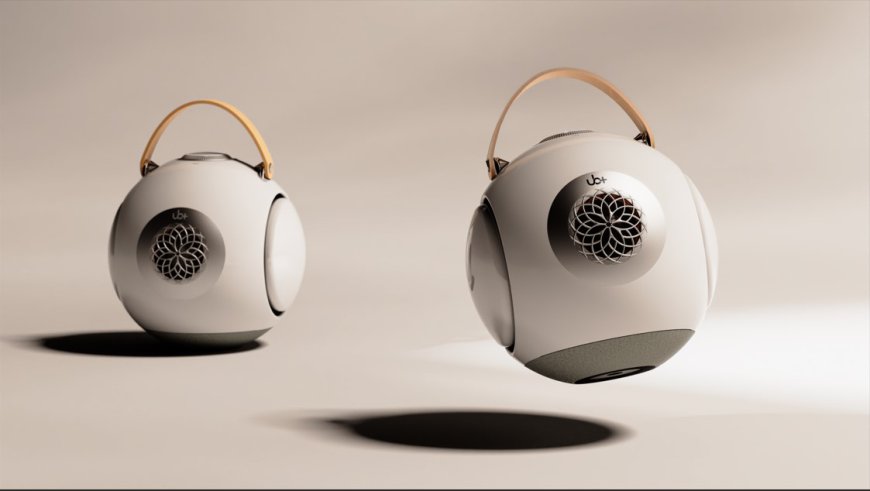
The demand for portable bluetooth speakers with good bass reflects a shift in how people evaluate sound. It’s no longer enough for a speaker to be compact and loud. Listeners now expect depth, control, realism, and consistency, even from devices that fit in a backpack.
But bass is not a feature that can be added easily. It is the result of complex interactions between physics, mechanical design, and acoustic engineering. Many speakers promise powerful bass, yet only a few deliver bass that feels tight, deep, and natural across different environments.
This article takes a technical and educational approach to understanding bass in portable Bluetooth speakers. It explores the physical principles behind low-frequency sound, the engineering challenges of compact systems, and the advanced design strategies that define truly capable speakers such as the UB+ dB1 DOUBLEBASS.
Bass Is a System, Not a Specification
When evaluating portable bluetooth speakers with good bass, many people look at wattage, driver size, or brand reputation. While these factors matter, they do not fully explain bass performance.
Bass is not created by a single component. It emerges from a system of interactions, including:
- The driver’s ability to move air
- The enclosure’s ability to control pressure
- The radiating elements’ efficiency in converting motion into sound
- The structural stability of the entire system
If any one of these elements is poorly designed, the result is compromised bass.
The Physics of Low Frequencies
Low-frequency sound waves are long and require substantial air displacement. This creates a fundamental requirement for any speaker system:
The deeper the bass, the more air must be moved and controlled.
This introduces several engineering challenges:
- Large air movement requires high excursion drivers
- Controlled pressure requires optimized enclosure geometry
- Efficient output requires adequate radiating surface area
Portable speakers must achieve all of this within a compact form factor, making efficiency the defining factor.
Why Traditional Portable Speakers Fall Short
Most portable Bluetooth speakers rely on familiar design approaches that introduce limitations in bass performance.
Rectangular Enclosures and Internal Resonance
Box-shaped enclosures create parallel internal surfaces, which lead to standing waves. These waves cause uneven pressure distribution and interfere with low-frequency output.
The result is bass that can feel:
- Boomy at certain frequencies
- Weak at others
- Lacking in overall clarity
Direct-Radiating Drivers
In conventional designs, drivers face outward, projecting sound directly into the environment. While effective for midrange and treble, this approach limits the system’s ability to build and control internal pressure, which is essential for deep bass.
Overuse of Digital Enhancement
To compensate for physical limitations, many manufacturers rely on digital signal processing to boost bass. While this can create a temporary impression of depth, it often introduces:
- Distortion at higher volumes
- Reduced dynamic range
- Artificial tonal characteristics
Limited Radiating Surface
Small drivers and minimal passive radiators restrict air movement, reducing the system’s ability to produce bass with real physical impact.
A Shift Toward Acoustic Engineering
To create truly effective portable bluetooth speakers with good bass, designers are moving toward physics-driven solutions.
The UB+ dB1 DOUBLEBASS represents this shift by focusing on mechanical efficiency, acoustic geometry, and system integration.
Spherical Enclosure: A Foundation for Stability
One of the most important design choices in the dB1 DOUBLEBASS is its spherical enclosure.
Unlike rectangular designs, a sphere has no parallel surfaces. This eliminates standing waves and allows air pressure to distribute evenly.
This results in:
- More stable bass response
- Reduced internal interference
- Improved clarity
Helmholtz-Inspired Acoustic Behavior
The spherical enclosure acts as a Helmholtz-inspired resonant chamber, where internal air oscillates in response to the driver.
This allows the system to:
- Reinforce low frequencies naturally
- Store and release energy efficiently
- Reduce reliance on digital processing
Inward-Firing Driver: A Pressure-Based Approach
The dB1 DOUBLEBASS uses an inward-firing mid-bass driver, positioned at the center of the enclosure.
Instead of projecting sound outward, the driver:
- Generates controlled internal pressure
- Energizes the acoustic system
- Allows sound to be shaped before emission
Technical Characteristics
- High-strength neodymium magnetic system
- Long-stroke voice coil for extended excursion
- Wide surround for stability
- Aluminum shorting ring to reduce distortion
This design ensures efficient energy transfer and precise control.
Dual Symmetrical Passive Radiators
The system uses two passive radiators placed opposite each other.
These radiators respond to internal pressure changes, converting energy into sound. Their symmetrical placement creates a self-balancing system, eliminating unwanted vibration.
This leads to:
- Improved efficiency
- Reduced energy loss
- Cleaner sound at higher volumes
Surface Area and Mechanical Amplification
A key factor in bass performance is radiating surface area.
In the dB1 DOUBLEBASS, the passive radiators provide a significantly larger combined surface area than the driver. This allows the system to:
- Move more air
- Reduce strain on the driver
- Maintain linear performance
This concept of mechanical amplification enhances bass without increasing distortion.
System Integration: Where Everything Works Together
The effectiveness of the dB1 DOUBLEBASS lies in its integration:
- The driver generates pressure
- The enclosure distributes it evenly
- The radiators convert it into sound
- The symmetrical design stabilizes the system
This cohesive approach ensures efficient and controlled bass reproduction.
Comparison with Conventional Portable Speakers
|
Feature |
UB+ dB1 DOUBLEBASS |
JBL |
Bose |
Marshall |
|
Enclosure Geometry |
Spherical |
Rectangular |
Rectangular |
Rectangular |
|
Pressure Distribution |
Uniform |
Uneven |
Uneven |
Uneven |
|
Driver Orientation |
Inward |
Outward |
Outward |
Outward |
|
Radiator Configuration |
Dual symmetrical |
Dual |
Single/Port |
Dual |
|
Surface Area Efficiency |
High |
Moderate |
Moderate |
Moderate |
|
Vibration Control |
Self-balancing |
Partial |
Partial |
Partial |
|
Bass Method |
Mechanical |
DSP-assisted |
DSP-assisted |
DSP-assisted |
What Defines Good Bass in Portable Speakers
The phrase portable bluetooth speakers with good bass should be understood through measurable characteristics.
Depth
The ability to reproduce low frequencies without strain or distortion.
Control
Bass should remain tight and precise, avoiding boominess.
Balance
Low frequencies should integrate smoothly with mids and highs.
Consistency
Performance should remain stable across environments and volume levels.
Real-World Listening Experience
Engineering decisions directly affect how a speaker performs in everyday use.
Indoor Environments
- Even bass distribution
- Reduced resonance issues
- Clear, balanced sound
Outdoor Use
- Maintained bass presence
- Efficient sound projection
- Consistent performance
High Volume Playback
- Stable output
- Minimal distortion
- Preserved clarity
Psychoacoustic vs Physical Bass
Many speakers rely on psychoacoustic techniques to simulate bass. While effective in short-term listening, these methods lack the physical foundation required for sustained performance.
True bass is defined by:
- Air movement
- Pressure control
- Mechanical efficiency
The Future of Portable Bass Engineering
The industry is moving toward engineering-first design, focusing on:
- Advanced enclosure geometries
- High-performance driver systems
- Symmetrical radiator configurations
- Reduced reliance on DSP
These innovations are shaping the next generation of portable speakers.
Choosing the Right Speaker
When searching for portable bluetooth speakers with good bass, consider:
- Enclosure design
- Driver specifications
- Radiator configuration
- Mechanical efficiency
Avoid focusing solely on wattage or marketing claims.
Engineering Defines Bass Quality
The search for portable bluetooth speakers with good bass ultimately comes down to understanding how bass is created.
True bass is not the result of digital enhancement it is the outcome of:
- Efficient air movement
- Controlled pressure behavior
- Stable mechanical design
- Integrated acoustic systems
The UB+ dB1 DOUBLEBASS demonstrates how these principles can be applied in a portable format, delivering bass that is deep, controlled, and immersive.
In a crowded market, this approach stands out by focusing on what truly matters: physics, engineering, and authentic sound performance.
Explore the UB+ dB1 DOUBLEBASS