Top Benefits of Bhutan Industrial Tour Packages for Students
Discover top benefits of Bhutan industrial tours for students, including practical learning, hydropower exposure, and educational travel insights.
 edutourindia
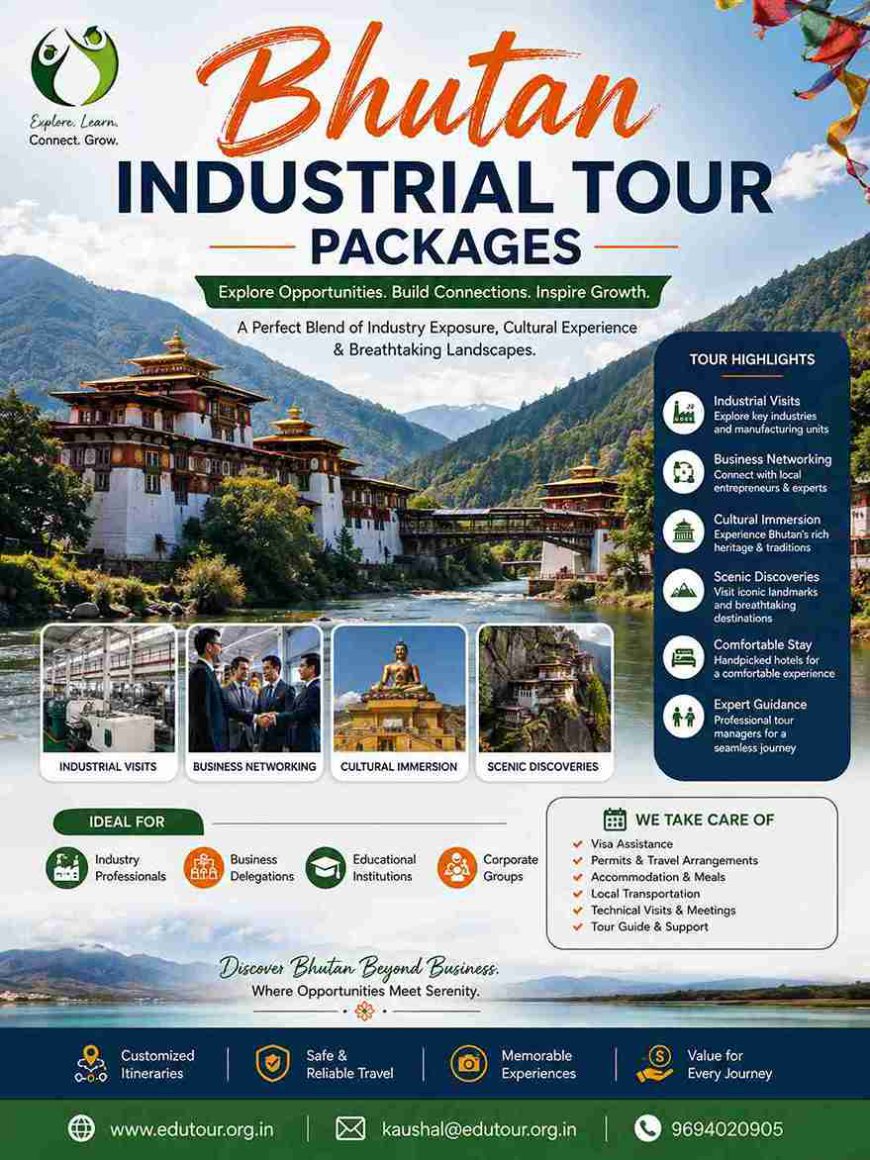
Bhutan has steadily emerged as a meaningful destination for experiential learning among Indian academic institutions. Beyond its scenic landscapes and peaceful environment, the country offers structured exposure to sustainable development models, hydropower systems, traditional industries, and governance practices. This makes Bhutan Industrial Tour Packages highly relevant for engineering students, technical institutes, and universities looking to connect classroom learning with real-world applications.
For students, such tours are not just travel experiences but structured educational journeys. They combine observation, interaction, and analysis, helping learners understand how industries function in a real socio-economic environment.
Why Bhutan Is Becoming a Preferred Educational Destination
Bhutan is globally recognized for its unique development philosophy of Gross National Happiness. Unlike many industrialized nations, Bhutan balances modernization with environmental preservation and cultural heritage.
This balance makes it a powerful case study for students. Engineering and management learners can observe how infrastructure development, hydropower generation, and tourism coexist with strict environmental regulations.
The country is also politically stable and safe, which makes it suitable for organized student travel groups. For Indian institutions, its proximity and cultural familiarity add further convenience.
Understanding Bhutan Industrial Learning Experiences
Industrial tours in Bhutan are structured visits designed to expose students to real operational systems. These tours often include visits to hydropower plants, manufacturing units, food processing facilities, and infrastructure development projects.
Students are encouraged to observe processes, interact with professionals, and understand how theoretical concepts apply in real-life industries.
Key learning areas typically include:
- Renewable energy systems, especially hydropower
- Sustainable construction and infrastructure planning
- Small-scale manufacturing and production units
- Environmental conservation practices in industries
- Government-led development projects
Such exposure strengthens technical understanding while also building analytical thinking.
Academic Value of Industrial Tours for Students
One of the most important benefits of industrial tours is academic enhancement. Students often study complex subjects in classrooms without seeing how they are implemented in real life.
Bhutan provides a practical environment where concepts become easier to understand. For example, civil engineering students can observe dam structures, while electrical engineering students can study energy distribution systems.
Management students benefit from understanding how Bhutan’s tourism and small business ecosystems operate within a controlled economic framework.
This direct exposure helps bridge the gap between theoretical learning and practical implementation.
Role of Hydropower Projects in Student Learning
Bhutan is one of the leading producers of hydropower energy in South Asia. Most of its electricity is generated through river-based hydroelectric projects, many of which are developed in collaboration with India.
These projects provide excellent learning opportunities for engineering students. They can observe turbine systems, control mechanisms, water flow engineering, and energy transmission networks.
Such visits help students understand:
- Renewable energy generation processes
- Environmental impact management
- Large-scale project planning and execution
- Cross-border energy collaboration
This makes hydropower projects one of the most valuable components of industrial tours in Bhutan.
Cultural and Environmental Learning Beyond Industry
Industrial exposure in Bhutan is often combined with cultural and environmental learning. Students not only visit industrial sites but also experience the country’s sustainable lifestyle.
Bhutan emphasizes environmental protection, with policies that ensure forest conservation and carbon neutrality. This offers students a unique perspective on how development can coexist with nature.
Visits to monasteries, local communities, and traditional markets also help students understand the cultural context behind Bhutan’s development model.
How Industrial Tours Improve Student Skills
Beyond academic knowledge, industrial tours help students develop essential soft skills. These skills are increasingly important in professional environments.
Some of the key skill improvements include:
- Observation and analytical thinking
- Communication and interaction with professionals
- Team coordination during group travel
- Real-time problem-solving
- Cultural adaptability
Students often return with improved confidence and a broader worldview.
Importance of Structured Travel Planning
A successful educational tour depends heavily on planning and execution. Institutions must ensure that travel schedules, accommodation, safety protocols, and learning objectives are well organized.
This is where professionally designed tour frameworks become important. Structured programs ensure that students get maximum educational value without logistical challenges.
Institutions looking for organized international academic travel often rely on curated solutions like Bhutan Industrial Tour Packages, which are designed specifically to balance education, safety, and travel experience.
Common Industries Covered in Bhutan Tours
Bhutan may not be heavily industrialized like other countries, but it offers valuable exposure to carefully selected sectors that reflect sustainable development practices.
Some commonly visited industries include:
- Hydropower and energy generation plants
- Agro-based and food processing units
- Small manufacturing and cottage industries
- Construction and infrastructure projects
- Tourism and hospitality training centers
These sectors provide a clear understanding of how Bhutan maintains economic stability while prioritizing sustainability.
Why Bhutan Is Ideal for Engineering and Technical Students
Engineering students benefit the most from industrial exposure in Bhutan due to the practical nature of its infrastructure development.
Civil and mechanical engineering students gain insights into dam construction, water resource management, and machinery operations. Electrical engineering students learn about energy distribution and grid systems.
The controlled scale of industries allows students to understand core concepts without overwhelming complexity.
Role of Educational Institutions in Industrial Exposure
Colleges and universities play a crucial role in shaping student learning experiences. By integrating industrial tours into their curriculum, institutions ensure that students gain exposure beyond textbooks.
Faculty members often accompany groups to guide discussions and connect observations with academic concepts. This enhances the learning value of the entire journey.
Such programs also encourage students to think about career opportunities in renewable energy, infrastructure development, and sustainable industries.
Importance of Safety and Guidance During Tours
Safety is a top priority in international student travel. Bhutan is considered one of the safest countries in Asia, but proper planning is still essential.
Institutions should ensure that students travel with verified guides, structured itineraries, and emergency support systems.
Clear communication, disciplined group movement, and adherence to schedules help maintain safety and efficiency throughout the trip.
Educational Travel Support and Planning Expertise
Well-organized travel programs require experience in both education and logistics. Platforms like Edutour support institutions by designing structured international academic travel experiences that focus on learning outcomes.
You can explore more structured educational travel planning through Edutour, which provides curated international programs for academic institutions and student groups.
Such structured support ensures that students gain maximum benefit from industrial exposure without facing operational difficulties during travel.
Real-World Impact of Industrial Tours
The long-term impact of industrial tours is often reflected in student careers and academic performance. Exposure to real industries helps students make informed decisions about their future specialization.
Many students develop interest in renewable energy, infrastructure development, or environmental engineering after such tours.
It also helps institutions improve their academic delivery by integrating practical insights into classroom teaching.
Practical Tips for Institutions Planning Bhutan Tours
Before organizing an industrial tour, institutions should focus on a few important aspects:
- Define clear learning objectives for students
- Select relevant industrial sites based on curriculum
- Ensure proper documentation and permissions
- Arrange experienced faculty supervision
- Plan travel during suitable weather conditions
These steps help ensure that the tour remains educational and well-structured.
Final Thoughts
Bhutan offers a rare combination of sustainability, cultural richness, and controlled industrial development, making it an ideal destination for academic exposure. For engineering and technical students, the learning experience goes far beyond traditional classroom education.
Well-designed Bhutan Industrial Tour Packages help bridge the gap between theory and practice while offering valuable insights into real-world systems. These experiences not only enhance academic understanding but also shape students’ professional outlook.