The Digital Remedy: Social Media Management 101: How to Build Your Brand from Scratch
 johnmeth
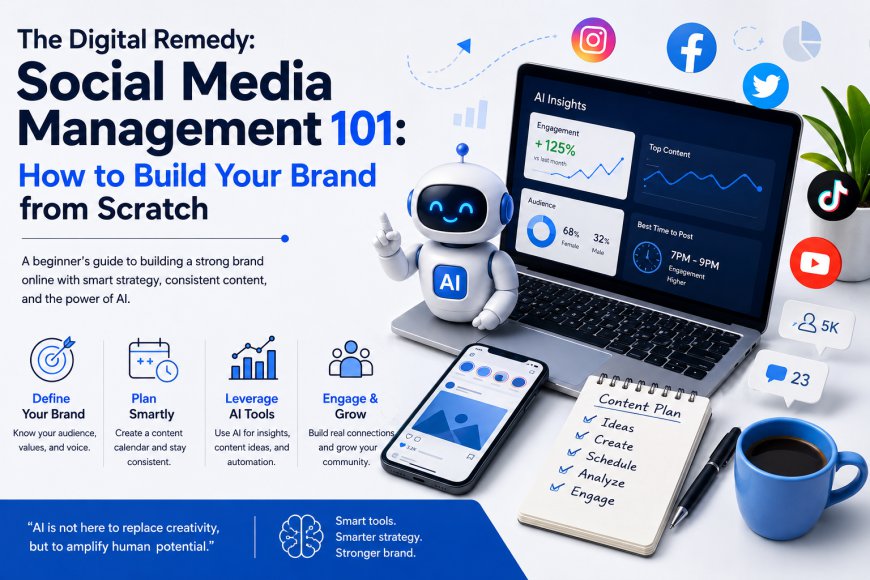
Building a brand used to depend on large marketing budgets, traditional advertising, and years of reputation-building. Today, the rules have changed. A single creative post, a thoughtful conversation, or a well-timed video can introduce your brand to thousands of people within hours. That shift has also created a new challenge: standing out in an endless stream of content.
Artificial intelligence is now reshaping how brands approach social platforms. It helps organize data, understand audience behavior, and simplify repetitive tasks, but it doesn't replace creativity. Instead, it gives marketers more time to focus on strategy, storytelling, and authentic engagement. If you're starting from scratch, understanding this balance is one of the smartest investments you can make.
Why Social Media Still Matters in the AI Era
People don't just visit social platforms for entertainment anymore. They research products, compare opinions, read reviews, and interact with brands before making decisions. Every post, reply, and story contributes to how an audience perceives a business.
Unlike traditional advertising, social media creates two-way communication. Brands listen as much as they speak. AI strengthens this process by analyzing conversations, identifying trends, and highlighting what audiences actually care about rather than relying on assumptions.
The result? Better decisions backed by data instead of guesswork.
Start With a Brand Identity Before Creating Content
Many beginners rush into posting without defining what their brand represents. That's usually where consistency starts to disappear.
Before publishing anything, answer a few simple questions:
- What problem does your brand solve?
- Who is your ideal audience?
- Which values should people associate with your business?
- What tone of voice will you use consistently?
Think of your brand as a person. Would it sound formal or friendly? Serious or humorous? Helpful or educational?
AI writing assistants can generate ideas quickly, but they still require human direction. The clearer your identity, the better the AI-generated suggestions become.
Building a Strategy That Doesn't Depend on Luck
Random posting rarely creates sustainable growth. Instead, successful brands follow structured planning supported by analytics and audience research. A well-organized social media management service often emphasizes scheduling, performance tracking, audience segmentation, and content planning rather than simply publishing posts.
A simple weekly content framework might include:
- Educational tips
- Behind-the-scenes updates
- Customer questions
- Industry news
- Interactive polls
- Short videos
- Success stories
This balance keeps your content diverse while maintaining consistency.
How AI Makes Social Media Smarter
Artificial intelligence has quietly become part of everyday marketing. Most users interact with AI-powered systems without even realizing it.
Today's AI tools can help with:
Content Planning
Instead of brainstorming from scratch every day, AI analyzes trending discussions and suggests relevant topics based on audience interests.
For example:
Rather than randomly posting about marketing every Monday, AI may identify that short educational videos receive 35% more engagement within your niche.
That insight changes your content strategy immediately.
Caption Suggestions
Writer's block happens.
AI can generate multiple caption ideas within seconds, allowing marketers to edit and personalize rather than creating everything manually.
The final version should always sound human because audiences recognize authenticity surprisingly well.
Audience Analysis
One of AI's biggest strengths is pattern recognition.
It can answer questions like:
- Which posts generate the highest engagement?
- What posting times work best?
- Which audience segments interact most often?
- Which topics lose attention quickly?
Those insights help improve future decisions instead of relying on assumptions.
The Human Side AI Cannot Replace
Despite rapid advances, AI still struggles with emotional storytelling, cultural awareness, humor, and genuine personal experiences.
Imagine two captions.
One says:
"Our product launched today."
Another says:
"Three years ago this idea lived inside a notebook. Today it's finally real, and seeing people use it makes every late night worthwhile."
The second version creates emotion.
AI can assist with wording, but authentic experiences still come from people.
That combination—human creativity supported by AI efficiency—is becoming the new standard.
Content Types That Build Brand Authority
Posting the same format repeatedly often limits audience growth.
Mix different formats throughout the month:
Educational Posts
Teach something useful.
Quick tutorials, industry facts, and practical tips usually remain valuable over time.
Short Videos
Video consumption continues to increase because people process visual information faster than text.
Even a 30-second explanation can outperform a long written post.
Carousel Posts
Breaking complex information into swipeable slides improves readability and keeps users engaged longer.
Polls and Questions
People enjoy sharing opinions.
Simple questions encourage interaction while providing valuable audience insights.
Understanding Analytics Without Feeling Overwhelmed
Numbers only matter when they influence decisions.
Instead of tracking dozens of metrics, focus on a few meaningful ones:
| Metric | Why It Matters |
|---|---|
| Engagement Rate | Shows audience interest |
| Reach | Measures visibility |
| Saves | Indicates valuable content |
| Shares | Reflects usefulness |
| Click-Through Rate | Reveals curiosity |
| Audience Retention | Measures video quality |
AI dashboards simplify these reports by highlighting unusual changes automatically.
If engagement suddenly drops by 25%, the system often detects the pattern before you do.
Common Mistakes Beginners Make
Starting from zero is exciting.
It's also easy to make avoidable mistakes.
Some of the biggest include:
- Posting inconsistently
- Copying competitors too closely
- Ignoring audience comments
- Chasing every viral trend
- Publishing without measurable goals
- Depending entirely on automation
AI works best when it supports decision-making—not when it replaces it.
AI and Ethical Social Media Practices
As AI-generated content becomes more common, transparency matters.
Readers increasingly appreciate content that feels honest rather than artificially polished.
Responsible AI usage includes:
- Fact-checking generated information
- Reviewing captions before publishing
- Avoiding misleading visuals
- Respecting user privacy
- Maintaining originality
Search engines and social platforms also reward authentic, experience-driven content over mass-produced material.
Long-Term Brand Growth Requires Consistency
Many brands expect overnight success.
Reality usually looks different.
Strong online communities develop gradually through repeated value, meaningful conversations, and consistent publishing.
AI helps maintain that consistency by simplifying repetitive work such as scheduling, hashtag research, reporting, and performance monitoring. That extra time allows creators to invest more energy into ideas that actually connect with people.
Instead of asking, "How can I post more?"
Ask a better question.
"How can I create something worth remembering?"
That small mindset shift often produces better results than any algorithm update.
Final Thoughts
Social media continues to evolve alongside artificial intelligence, but one principle hasn't changed: people connect with people. AI can organize information, predict trends, and automate repetitive tasks, yet trust still comes from authentic conversations and valuable content.
If you're building a brand from scratch, focus first on understanding your audience, defining your identity, and creating content that genuinely helps. Use AI as a practical assistant rather than a replacement for creativity. Over time, consistent effort, informed decisions, and meaningful engagement will contribute far more to sustainable growth than chasing every new trend.
In the modern digital landscape, success belongs to brands that combine technology with genuine human communication. That's where the real advantage lies.