

CNC Machinist Training: Build Manufacturing Skills in Texas
Explore CNC machining, blueprint reading, CNC programming, and hands-on training at MT Training Center in DeSoto, Texas.

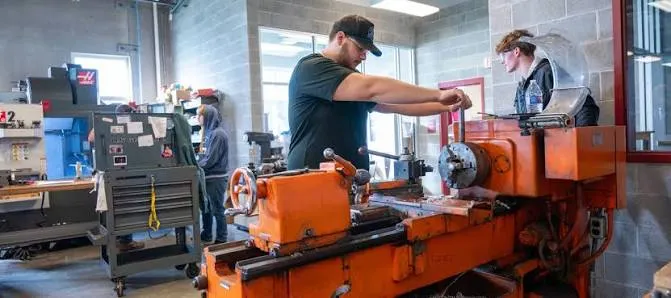
Building a Career in Modern Manufacturing Through CNC Machinist Training
Modern manufacturing depends on skilled professionals who can operate advanced machinery, interpret technical drawings, and produce precision components. CNC machining brings together mechanical knowledge, computer-controlled technology, and practical problem-solving. For individuals interested in entering this industry, structured training provides an opportunity to develop the technical foundation needed to work with modern manufacturing equipment.
As manufacturing processes become increasingly automated, employers need workers who understand both machine operation and production requirements. Enrolling in a practical CNC Machinist Training Program can help students develop these skills and prepare for entry-level opportunities in the machining industry.
Why CNC Machining Skills Matter in Modern Manufacturing
Manufacturing companies rely on precision to produce components that meet exact specifications. Even a small measurement error can affect how a component fits, functions, or performs within a larger assembly.
CNC machinists help maintain this precision by working with computer-controlled milling machines and lathes. Their responsibilities involve understanding machine settings, interpreting technical drawings, selecting appropriate tools, and monitoring production processes.
For example, a manufacturing company producing metal components for industrial equipment needs every part to meet specific dimensional tolerances. A trained CNC operator must understand the drawing, configure the machine, and ensure the finished component matches the required measurements.
The Technical Skills Needed to Work With CNC Machines
Working in CNC machining requires more than understanding how to operate equipment. Students need a combination of mathematical knowledge, technical interpretation, programming fundamentals, and practical machine experience.
Some of the most important skills include:
-
CNC Mill Operation: Understanding machine setup, milling processes, tool changers, and cutting operations.
-
CNC Lathe Operation: Learning turning processes, spindle speeds, cutting tools, and internal and external diameter operations.
-
Blueprint Reading: Interpreting technical drawings, dimensions, symbols, and geometric tolerances.
-
Machining Mathematics: Applying coordinate calculations, tool-path calculations, and measurements during machining operations.
-
Basic CNC Programming: Understanding machine codes and how programming instructions control equipment.
-
CAD/CAM Concepts: Learning how digital designs connect with manufacturing processes.
These skills work together during actual production. A machinist who understands both technical drawings and machine operations can better identify measurement errors and maintain production accuracy.
Understanding CNC Milling and Lathe Operations
CNC milling and turning are two important processes used in precision manufacturing. Although both rely on computer-controlled equipment, they perform different machining operations.
|
CNC Milling |
CNC Lathe |
|
Uses rotating cutting tools to remove material. |
Rotates the workpiece against a cutting tool. |
|
Commonly produces slots, holes, pockets, and flat surfaces. |
Commonly produces cylindrical and round components. |
|
Requires knowledge of tool paths and machine setup. |
Requires knowledge of spindle speeds and turning operations. |
|
Uses milling calculations and positioning coordinates. |
Uses turning parameters and diameter measurements. |
Consider a hypothetical manufacturing order involving metal brackets and cylindrical shafts. Milling equipment would be suitable for producing the brackets, while a CNC lathe would handle the cylindrical components.
Understanding both processes gives aspiring machinists a broader foundation in manufacturing operations.
Why Blueprint Reading and Machining Mathematics Are Essential
Accurate production begins before a machine starts cutting material. Machinists must understand the technical drawings that describe the dimensions, specifications, and tolerances of each component.
Blueprint reading helps operators identify measurements, drawing symbols, sectional views, and geometric requirements. Without this knowledge, even a properly configured machine can produce an incorrect component.
Machining mathematics supports the calculations required during production. Tool-path measurements, coordinate positioning, and milling calculations help operators understand how equipment should move and remove material.
These subjects are particularly important when working on components that require tight tolerances and consistent dimensions.
The Role of CNC Programming and CAD/CAM Technology
Modern machining connects digital design with physical production. CNC programming provides instructions that guide machine movements, while CAD/CAM technology supports the design and manufacturing process.
Students need to understand how programming codes communicate with CNC equipment. Basic knowledge of G, M, S, and F codes helps them recognize the instructions associated with machine movements, functions, spindle speeds, and feed rates.
For instance, a digital component design must be translated into manufacturing instructions before a CNC machine can produce the part. Understanding this relationship helps machinists see how design decisions influence actual production.
What to Look for in a CNC Machinist Training Program
Choosing a training program requires evaluating more than its title or duration. Students should consider whether the curriculum covers the technical subjects and practical skills required in modern machining environments.
Important elements include:
-
Training in both CNC milling and lathe operations.
-
Practical instruction in machine setup and safe operation.
-
Blueprint reading and machining mathematics.
-
Introduction to CNC programming and CAD/CAM concepts.
-
Understanding of manufacturing processes and equipment.
-
Employment preparation and workplace readiness.
A structured curriculum helps students connect classroom instruction with the practical requirements of manufacturing work.
Preparing for Manufacturing Opportunities Through MT Training Center
For individuals in the DeSoto, Texas area, MT Training Center offers a Computer Numerical Control (CNC) Machinist program focused on developing foundational machining and manufacturing skills.
The program combines classroom instruction with hands-on training in CNC milling, CNC lathe operations, blueprint reading, machining mathematics, and basic CNC programming.
According to the school's current program information, the training includes:
|
Program Detail |
Information |
|
Training Location |
DeSoto, Texas |
|
Total Clock Hours |
1,070 |
|
Day Program |
31 weeks |
|
Evening Program |
43 weeks |
|
Day Schedule |
Monday–Friday, 7:30 AM–2:30 PM |
|
Evening Schedule |
Monday–Friday, 3:00 PM–8:00 PM |
|
Student/Instructor Ratio |
15:1 |
|
Completion Outcome |
Certificate of Completion |
The curriculum also includes pre-employment preparation, helping students understand resume development, employment applications, and interview expectations.
Students interested in developing these technical skills can explore the MT Training Center CNC Machinist program to review the curriculum, admission requirements, and available class schedules.
Career Opportunities After CNC Machinist Training
CNC machining training provides a foundation for exploring different entry-level opportunities within manufacturing. The specific position available to an individual depends on their skills, qualifications, practical experience, and employer requirements.
Potential career paths include:
-
CNC Operator: Operates computer-controlled machinery and monitors production activities.
-
CNC Machinist: Works with machining equipment to produce components according to technical specifications.
-
Lathe Operator: Performs turning operations using lathe machinery.
-
Mill Operator: Uses milling equipment to shape and machine materials.
-
Machine Operator: Supports manufacturing operations by operating and monitoring production equipment.
With additional workplace experience and technical development, machinists can continue building their capabilities in machine setup, programming, and advanced manufacturing processes.
Start Building Practical Manufacturing Skills
Entering the manufacturing industry requires technical knowledge, attention to detail, and the ability to work confidently with machinery. Developing these abilities through structured training can provide a starting point for individuals interested in precision manufacturing.
MT Training Center offers a CNC Machinist program in DeSoto, Texas, covering essential areas such as machine operation, blueprint reading, machining mathematics, and basic programming.
For prospective students ready to explore this career direction, review the CNC Machinist training options at MT Training Center and take the next step toward developing practical skills for the manufacturing industry.
MT Training Center is an accredited vocational school in Texas that has been providing career-focused education since 2001. The institution offers practical training programs in commercial driving (CDL), HVAC-R, welding, CNC machining, electrical linework, diesel technology, barbering, cosmetology, gunsmithing, and business education. With campuses in DeSoto and Humble, MT Training Center supports adult learners through technical instruction, hands-on learning, and career placement assistance. Its goal is to help students develop practical knowledge and skills for their chosen career paths.




Comments (0)