Discovering Musical Discipline Through a Violin Lesson
 JoseCarter901
Learning a musical instrument often becomes a life-changing journey filled with creativity, patience, and personal growth. Among many classical instruments, the violin is widely respected for its expressive sound and versatility across musical genres. Beginners usually discover that structured instruction plays a crucial role in mastering the instrument. A well-organized Violin Lesson introduces students to essential skills such as posture, bow movement, and finger placement. In many music programs, instructors also draw comparisons with other instruments, and phrasing techniques commonly practiced in a Saxophone lesson can help learners understand how melodies should move naturally and expressively.
Understanding the Early Stages of Violin Learning
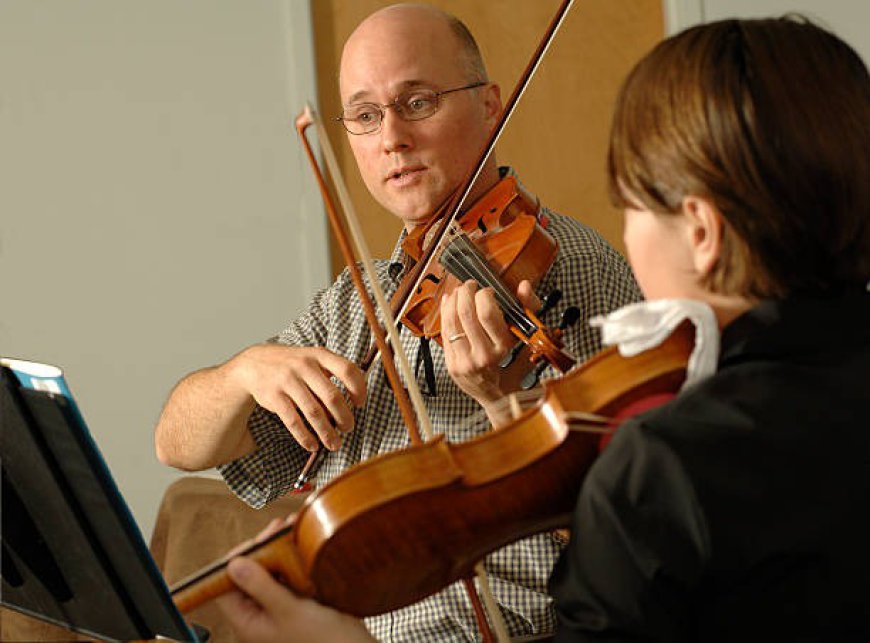
For beginners, the first stage of learning the violin involves developing comfort with the instrument. Holding the violin correctly and positioning the bow requires careful attention. During a typical Violin Lesson, teachers guide students step by step so they can build a strong technical foundation from the beginning.
Students often start with simple scales and short exercises that train the hands to move accurately along the fingerboard. These early activities help improve coordination while allowing learners to focus on tone production. Teachers emphasize that every note should be played clearly and with attention to pitch.
Sometimes instructors explain musical phrasing by comparing it with breathing techniques introduced in a Saxophone lesson. This comparison helps violin students imagine musical phrases as flowing lines rather than isolated notes. By thinking of music in this way, learners develop a deeper understanding of expression.
Strengthening Coordination Between Hands
Playing the violin requires both hands to work together smoothly. The left hand determines pitch by pressing the strings, while the right hand controls the bow to produce sound. During a Violin Lesson, teachers often introduce exercises that improve synchronization between these two movements.
Finger drills help students develop strength and flexibility in the left hand. At the same time, bowing exercises allow them to control tone quality. Teachers encourage slow and careful practice because accuracy is more important than speed during the early stages of learning.
Some rhythm concepts discussed in a Saxophone lesson can also benefit violin students. Understanding how phrasing and timing work in wind instruments can inspire string players to shape their musical lines more naturally. This cross-instrument awareness often deepens musical understanding.
Building Musical Sensitivity
Transforming Notes Into Meaningful Music
Technical skills are important, but true musicianship comes from emotional expression. During a Violin Lesson, teachers encourage students to explore dynamics, tone color, and phrasing. These elements allow performers to communicate feelings through their playing.
Students gradually learn how variations in bow pressure or speed can change the mood of a piece. Soft bowing may create gentle melodies, while stronger strokes add energy and intensity. Teachers sometimes reference phrasing ideas discussed in a Saxophone lesson to help learners imagine music as a flowing conversation.
As students gain confidence, they begin to interpret music with their own style. This process turns simple practice sessions into meaningful artistic experiences.
Developing Consistency and Practice Habits
Regular practice is essential for progress in music. Even short daily sessions can significantly improve technique and listening ability. Each Violin Lesson usually includes advice on how to structure practice time effectively.
Teachers often recommend starting practice with scales to warm up the fingers and ears. After that, students work on technical exercises before focusing on musical pieces. This balanced routine helps develop both technical control and artistic interpretation.
Rhythm exercises similar to those sometimes introduced in a Saxophone lesson can also strengthen timing skills for violin players. Practicing with a steady tempo helps musicians maintain accuracy and confidence when performing.
Conclusion
Learning the violin offers a powerful combination of discipline and creativity. Through careful instruction and regular practice, students gradually develop the technical skills needed to play with clarity and expression. A structured Violin Lesson helps learners understand posture, tone production, and musical phrasing.
Connections with other instruments can further enrich the learning experience. Concepts occasionally explored in a Saxophone lesson often provide valuable insights into phrasing and musical flow. By embracing these ideas and maintaining dedication to practice, students can transform every Violin Lesson into an opportunity for artistic growth and lifelong musical appreciation.