Embedded Vision AI: Bringing Computer Vision to Low-Power Devices
Discover how Embedded Vision AI enables low-power devices to run advanced AI Vision Systems. Learn how a Computer Vision AI Platform and Vision System in Artificial Intelligence power real-time edge intelligence.
 hellbender
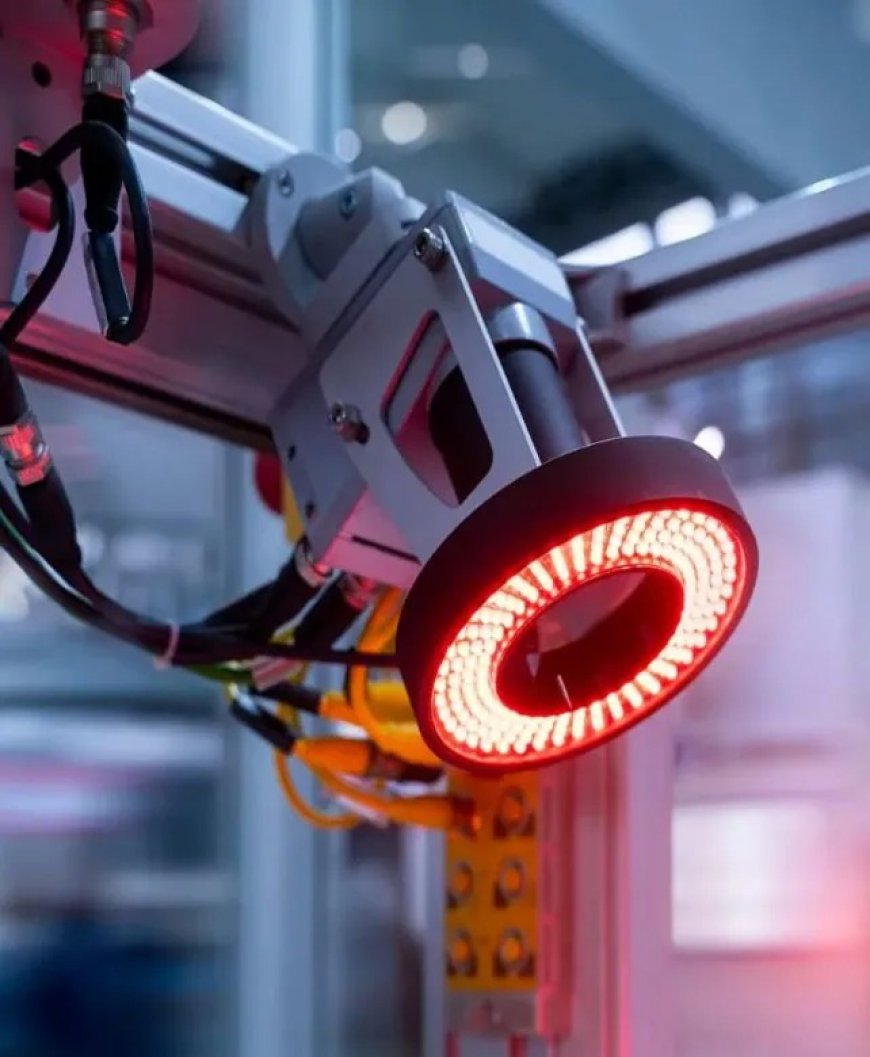
The rapid evolution of artificial intelligence has transformed how machines interpret and interact with the world. Among the most impactful advancements is embedded vision AI the integration of intelligent visual processing directly into low-power devices. From smart cameras and industrial sensors to wearable gadgets and autonomous drones, embedded vision AI is redefining how data is processed at the edge.
Traditionally, computer vision applications relied heavily on cloud computing. Devices captured images or video streams and sent them to powerful remote servers for processing. While effective, this approach introduced latency, increased bandwidth consumption, and raised concerns about privacy and data security. Embedded vision AI addresses these challenges by enabling devices to process visual information locally, delivering faster, more efficient, and more secure performance.
What Is Embedded Vision AI?
Embedded vision AI refers to the deployment of machine learning models, particularly computer vision algorithms, directly onto hardware devices with limited computational resources. These devices may include microcontrollers, edge AI chips, or compact system-on-chip (SoC) platforms. Despite their size and power constraints, they are capable of running sophisticated AI Vision System functionalities such as object detection, facial recognition, gesture tracking, and anomaly detection.
At its core, a Vision System in Artificial Intelligence enables machines to analyze and interpret visual data in a way that mimics human sight. This involves image acquisition, preprocessing, feature extraction, pattern recognition, and decision-making. When this system is embedded into hardware, it becomes a powerful tool for real-time applications where immediate responses are critical.
Why Low-Power Devices Matter
The demand for intelligent edge devices is growing across industries. In smart homes, embedded vision allows security cameras to detect intrusions without continuously uploading footage to the cloud. In manufacturing, smart inspection systems can identify defects on assembly lines in real time. In agriculture, drones equipped with embedded vision analyze crop health while conserving battery life.
Low-power devices are essential for these applications because they offer:
-
Energy Efficiency: Reduced power consumption extends battery life in portable devices.
-
Lower Latency: On-device processing eliminates delays caused by cloud communication.
-
Enhanced Privacy: Sensitive visual data stays local, reducing the risk of breaches.
-
Cost Savings: Minimizing cloud usage lowers operational expenses.
By integrating a Computer Vision AI Platform optimized for embedded environments, developers can deploy intelligent solutions that are both scalable and efficient.
Core Components of an Embedded AI Vision System
Building an effective AI Vision System for low-power devices requires careful optimization at both the hardware and software levels. Several components work together to make this possible:
1. Optimized Hardware
Edge AI chips, neural processing units (NPUs), and GPUs designed for low power consumption play a vital role. These processors are engineered to accelerate machine learning inference while maintaining minimal energy usage.
2. Model Compression Techniques
Deep learning models can be resource-intensive. Techniques such as quantization, pruning, and knowledge distillation reduce model size and computational demands without significantly sacrificing accuracy. This allows the Vision System in Artificial Intelligence to function efficiently within limited memory and processing constraints.
3. Edge-Focused Software Frameworks
A robust Computer Vision AI Platform designed for embedded deployment provides tools for model training, optimization, and deployment. These platforms often include pre-trained models, SDKs, and APIs that streamline development while ensuring compatibility with embedded hardware.
4. Real-Time Processing Capabilities
Unlike cloud-based systems, embedded solutions must process data instantly. Whether detecting pedestrians in autonomous vehicles or monitoring machinery in factories, real-time responsiveness is essential.
Key Applications of Embedded Vision AI
Embedded vision AI is driving innovation across multiple sectors:
Industrial Automation
Factories use embedded AI Vision System technologies for quality inspection, predictive maintenance, and safety monitoring. Cameras mounted on production lines can identify defects within milliseconds, reducing waste and improving efficiency.
Healthcare Devices
Portable medical devices equipped with embedded vision can analyze diagnostic images locally. For example, handheld imaging tools can detect abnormalities without requiring cloud connectivity, making healthcare more accessible in remote areas.
Smart Retail
Retail environments leverage Vision System in Artificial Intelligence applications for inventory tracking, customer behavior analysis, and automated checkout systems. Embedded vision ensures faster processing and protects customer data privacy.
Autonomous Systems
Drones, robots, and autonomous vehicles rely heavily on embedded Computer Vision AI Platform solutions to navigate environments safely. On-device processing ensures real-time decision-making, which is critical for avoiding obstacles and ensuring safety.
Consumer Electronics
From smartphones with advanced camera features to AR/VR headsets, embedded AI Vision System capabilities enhance user experiences while conserving battery life.
Challenges and Solutions
While embedded vision AI offers tremendous benefits, it also presents challenges:
-
Limited Processing Power: Embedded devices cannot match the capabilities of cloud servers.
-
Thermal Constraints: Excessive processing can lead to overheating.
-
Memory Limitations: Models must fit within small memory footprints.
To overcome these obstacles, developers rely on efficient neural architectures such as MobileNet and EfficientNet, along with hardware acceleration technologies. Advances in semiconductor design and AI optimization tools continue to expand what low-power devices can achieve.
Moreover, edge computing frameworks are evolving to support seamless updates and remote management, ensuring embedded systems remain secure and up-to-date without sacrificing performance.
The Future of Embedded Vision AI
As AI technology continues to mature, the line between cloud and edge computing will blur. Hybrid models that combine local processing with selective cloud support will become increasingly common. Improvements in chip design, including neuromorphic computing and advanced NPUs, will further enhance the capabilities of embedded systems.
The Vision System in Artificial Intelligence will become more autonomous, capable of learning and adapting in real time. Meanwhile, a sophisticated Computer Vision AI Platform will empower developers to build, deploy, and manage AI Vision System solutions at scale with greater efficiency than ever before.
Embedded vision AI is not merely a technological trend; it represents a fundamental shift in how intelligent systems are designed and deployed. By bringing computer vision directly to low-power devices, organizations can unlock faster decision-making, stronger privacy protections, and reduced operational costs.
In a world increasingly driven by smart devices and connected ecosystems, Hellbender stands at the forefront of innovation enabling machines to see, understand, and respond instantly, wherever they are deployed.