KSA Security Upgrade: Smarts Access Control Systems
 expsalam
Infrastructure development of Saudi Arabia is fast-paced in the corporate, government, healthcare, education, and the industry spheres. With the growth of organizations and the use of smart technologies, the need to have more developed security frameworks has never been greater. The use of traditional locks and the use of manual entry logs is no longer adequate to protect important assets, confidential information and employees. The intelligent access control systems offer a modern and highly scalable, as well as highly secure means to control the access of certain individuals to certain areas at certain times and under certain circumstances.
Access Control Device: The Core of Secure Entry
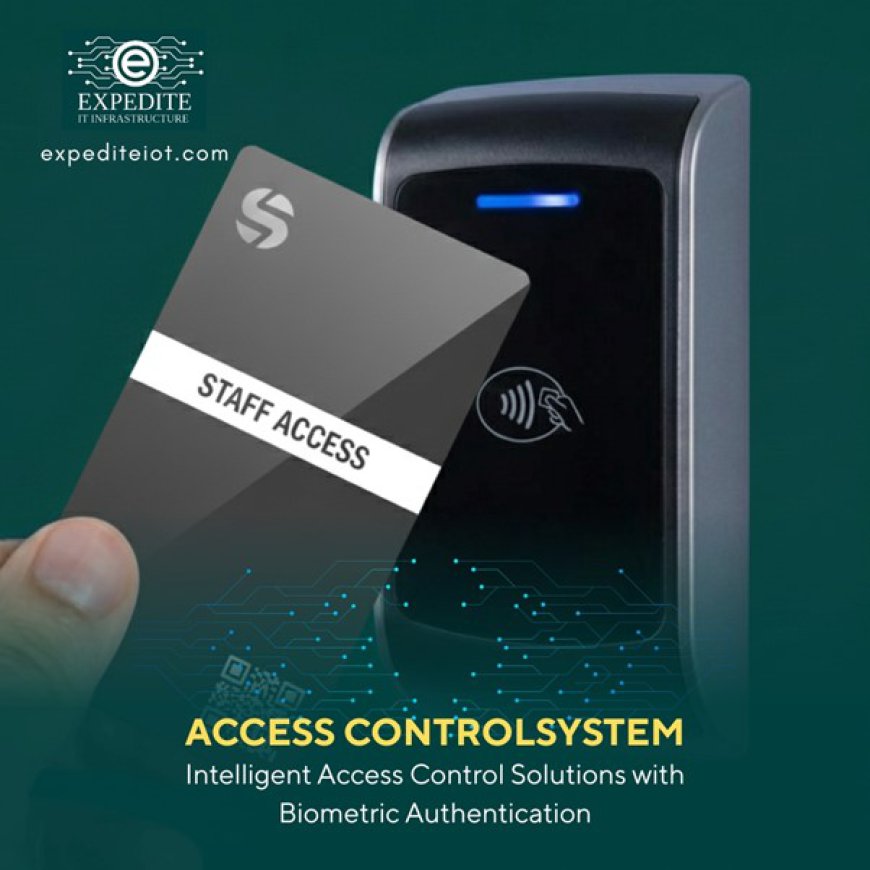
Access Control device refers to the hardware that is laid down at the access points, i.e., doors, gates, turnstiles, or barriers. These devices will contain entry controls that verify user credentials to allow or deny access. They may consist of biometrical scanners, card readers, PIN pads, or multi-technology terminal. The secured high-security sectors of KSA such as oil and gas, banking and government buildings need reliable access control devices, which are the initial deterrents against unauthorized access.
Access Control Software: Centralized Management and Intelligence
Whereas hardware provides a physical control, Access Control Software provides control of the entire security ecosystem. It enables administrators to manage user permissions, track access activities, create audit reports, and real-time responses to security notifications. The software is an access point of a command center, which shows the complete picture of the person who entered which area and when. Such surveillance helps to provide compliance, increased accountability and operational efficiency in various locations.
Access Control Solutions: Comprehensive Security Framework
Modern Access Control Solutions include hardware, software, integration functionality in one whole unit. These solutions can be scaled that is, it can serve an office or a network of an organization with a national wide presence. They are implemented with CCTV, alarm systems, visitor management systems, and time attendance systems. In the case of Saudi organizations that have adopted digital transformation, full access control solutions will guarantee a smooth security coordination of all the departments and facilities.
Biometric Access Control: Secure Identity Verification
Biometric Access Control involves the use of biological characteristics like fingerprints, facial identification or iris scans to identify people. Biometric credentials cannot be shared and easily copied unlike the conventional keys or cards. This renders biometric systems very safe and they are suited in sensitive settings such as research laboratories, data centers and banking institutions. Organizations minimize the risk likeliness of lost or stolen credentials by ensuring that physical characteristics are verified.
Mobile Access Control: Smart and Convenient Access
As smartphone usage grows in KSA, Mobile Access Control will allow people to open the doors with the help of secure mobile credentials. Employees are not required to carry access cards; they can use encrypted digital key which can be stored in their mobile devices. This enhances convenience and also security with a remote credential management and instant revocation on demand. Contactless entry is also enabled by mobile access, which is in line with the current workplace requirements.
Door Access Control: Managing Entry Points Effectively
Door Access Control systems control access to the door at the individual door level where only the authorized personnel are checked in and allowed to access the restricted rooms. At the server level, all the way up to executive offices, door-level access control eliminates unauthorized movement inside the facilities. Time permissions can be given by administrators so that the user is only allowed to access the website during the authorized working hours.
Keyless Entry Systems: Eliminating Traditional Locks
Keyless Entry Systems are replacing the use of mechanical locks with a digital authentication system, whether it is a PIN code, a biometric scan, or a mobile credential. Organizations minimize the dangers of duplications, loss, or unauthorized copying of physical keys by removing them. Keyless systems are particularly useful when using in large facilities where controlling physical keys would have been ineffective and expensive.
Proximity Card Access: Contactless Card Technology
Proximity Card Access involves the use of RFID enabled cards whereby a user is able to obtain entry by merely tapping or swiping the card near reader. This process is very popular because of its ease and expediency. Although not as safe as biometrics alone, the proximity cards are usually used together with other forms of authentication to increase safety.
Wireless Access Control: Flexible and Scalable Security
Wireless Access Control does not require intricate wiring between the doors and control panels. This is more cost effective and also faster to install, especially when retrofitting of old buildings. Wireless systems are flexible in the expansion of facilities as additional access points can be added without a major change of infrastructure.
Access Control Readers: Verifying Credentials Efficiently
The interface between the user and the security system is Access Control Readers. These readers read cards, biometric or mobile credentials and send data to the control panel to verify these credentials. The modern reader advocates various authentication technologies, which guarantees flexibility to the constantly changing security demands.
Conclusion
The emerging infrastructure in Saudi Arabia requires smart and scalable security options. Advanced Access Control Solutions are built by combining trusted Access Control Devices and the robust Access Control Software to form a centralized security system. Biometric Access Control, Mobile Access Control and Keyless Entry Systems are some technologies that add protection to the system without compromising the user convenience. There is efficient Door Access Control, Proximity Card Access and Wireless Access Control that are flexible and scaled across the facilities. These systems offer a secure, efficient, and future-oriented protection of KSA organizations that want to enhance their security posture with high-performance Access Control Readers.
FAQs
1. What is the distinction between software and access control devices?
Physical entry points are controlled by access control devices and centralized access control software is in place to allow them to provide centralized management, monitoring as well as reporting.
2. What makes biometric access control better?
Due to the fact that it involves distinctive physical characteristics that are difficult to replicate, decreasing the risks of sharing or stealing credentials.
3. Is it possible to replace traditional access cards with the mobile access control?
Yes, mobile access control is a secure digital credential on smartphones, which eliminates the use of physical cards.
4. Does wireless access control work with big facilities?
Yes, the modern wireless systems are secure and can be expanded or retrofitted building wise.
5. What is the benefit of access control solutions in enhancing compliance?
To satisfy regulatory and organizational security requirements, they have detailed audit trails, real time monitoring and permission management.
For more information contact us on:
Expedite IT
+966 502104086
Office No 01, Conference Building (Kirnaf Finance), Abi Tahir Al Dhahabi Street,
Al Mutamarat, Riyadh 12711, Saudi Arabia
Or click on the below link for more information:
https://www.expediteiot.com/access-control-system-in-saudi-qatar-and-oman/