
How a Seller acquisition And Merchant Onboarding Agency Can Help Marketplaces Scale 10X Faster
Discover how a Seller acquisition And Merchant Onboarding Agency helps marketplaces scale faster through seller recruitment, onboarding, activation, and retention strategies.
 newpost21
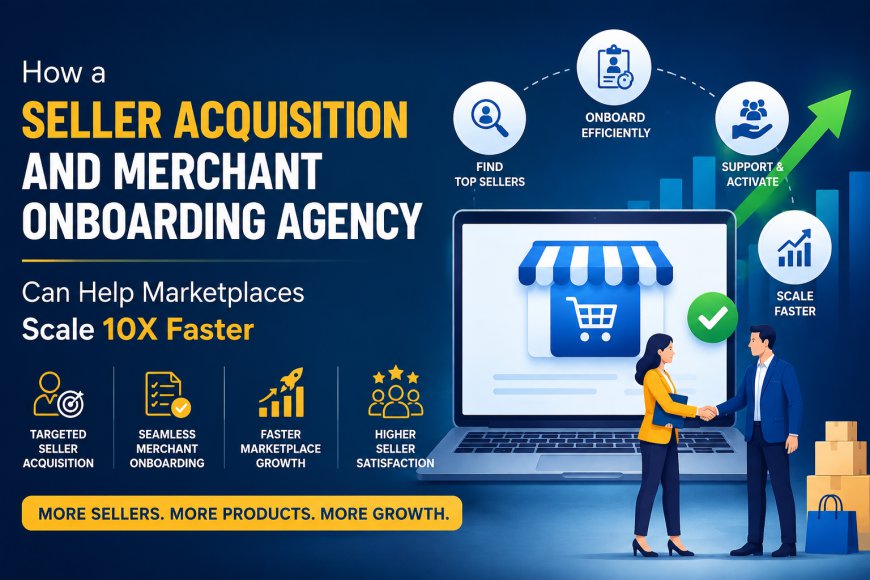
Building a successful online marketplace is not just about attracting customers. The real challenge lies in attracting quality sellers and ensuring they are onboarded efficiently. Without a strong network of merchants, marketplaces struggle to offer product variety, competitive pricing, and a seamless customer experience.
This is where a Seller acquisition And Merchant Onboarding Agency becomes a valuable growth partner. These specialized agencies help marketplaces recruit, verify, onboard, and activate sellers at scale. By streamlining the seller journey, businesses can focus on growth while ensuring merchants receive the support they need to succeed.
In today's competitive eCommerce landscape, marketplaces that can rapidly expand their seller base gain a significant advantage. This article explores how a Seller acquisition And Merchant Onboarding Agency helps marketplaces grow faster, improve operational efficiency, and achieve sustainable success.
Understanding Seller Acquisition
Seller acquisition refers to the process of identifying, attracting, recruiting, and converting merchants to join a marketplace platform.
The process typically involves:
- Market research
- Identifying target seller segments
- Lead generation
- Outreach campaigns
- Seller education
- Registration assistance
- Documentation verification
- Activation support
Successful seller acquisition ensures a marketplace has a healthy mix of vendors capable of meeting customer demand.
Why Seller Acquisition Matters
Without enough sellers, marketplaces often face:
- Limited product offerings
- Poor customer retention
- Reduced competitiveness
- Lower transaction volumes
- Slower revenue growth
A strategic seller acquisition plan helps create a vibrant ecosystem that benefits both buyers and sellers.
What Is Merchant Onboarding?
Merchant onboarding is the process of integrating new sellers into a marketplace ecosystem.
This includes:
- Registration
- Identity verification
- Compliance checks
- Product catalog setup
- Payment configuration
- Training and support
Effective onboarding ensures sellers can start selling quickly and efficiently.
A professional Seller acquisition And Merchant Onboarding Agency helps eliminate bottlenecks that often delay merchant activation.
The Connection Between Seller Acquisition and Marketplace Growth
Marketplace growth depends heavily on supply.
More quality sellers lead to:
- Larger product catalogs
- Better pricing competition
- Increased customer satisfaction
- Higher transaction volume
- Improved marketplace credibility
A well-executed acquisition strategy creates a positive cycle:
More sellers → More products → More customers → More sales → More sellers.
This growth loop is essential for marketplace scalability.
Key Services Offered by a Seller Acquisition And Merchant Onboarding Agency
1. Seller Research and Targeting
Not every merchant is suitable for every marketplace.
Agencies analyze:
- Industry trends
- Seller demographics
- Product categories
- Competitive positioning
This research helps identify high-potential merchants likely to succeed on the platform.
2. Lead Generation
Finding qualified sellers requires expertise.
Agencies utilize:
- Digital outreach
- Database research
- Social platforms
- Industry directories
- Referral programs
This ensures a continuous flow of merchant prospects.
3. Seller Outreach Campaigns
Many sellers are hesitant to join new marketplaces.
A Seller acquisition And Merchant Onboarding Agency develops persuasive communication strategies that highlight:
- Revenue opportunities
- Platform benefits
- Market access
- Support services
Effective outreach significantly improves conversion rates.
4. Merchant Verification
Verification protects the marketplace ecosystem.
Agencies assist with:
- Identity checks
- Business verification
- Tax documentation
- Compliance validation
This reduces fraud and enhances platform trust.
5. Product Catalog Support
Many merchants struggle with product uploads.
Professional onboarding teams help sellers:
- Create listings
- Upload images
- Optimize descriptions
- Categorize products
This accelerates seller activation.
6. Training and Education
Seller success depends on understanding platform operations.
Training programs often cover:
- Order management
- Inventory control
- Pricing strategies
- Customer service
- Performance metrics
Educated sellers perform better and remain active longer.
Benefits of Hiring a Seller Acquisition And Merchant Onboarding Agency
Faster Marketplace Expansion
Agencies already possess proven recruitment frameworks.
Instead of building internal processes from scratch, businesses gain access to:
- Established workflows
- Recruitment expertise
- Dedicated onboarding teams
This accelerates marketplace growth.
Reduced Operational Burden
Managing hundreds or thousands of sellers can overwhelm internal teams.
Outsourcing seller acquisition allows businesses to focus on:
- Marketing
- Product development
- Customer acquisition
- Strategic planning
Higher Seller Activation Rates
Many marketplaces lose potential sellers during onboarding.
Agencies minimize drop-offs by providing:
- Personalized support
- Timely follow-ups
- Technical assistance
- Process simplification
This results in more active merchants.
Improved Seller Retention
Acquiring sellers is only half the battle.
Retention requires:
- Ongoing support
- Training
- Performance monitoring
A Seller acquisition And Merchant Onboarding Agency helps create a positive seller experience that encourages long-term participation.
Common Marketplace Challenges Solved by Agencies
Challenge 1: Low Seller Sign-Ups
Agencies use targeted recruitment strategies to attract qualified merchants.
Challenge 2: Slow Onboarding
Dedicated onboarding specialists streamline registration and activation.
Challenge 3: Poor Product Catalog Quality
Catalog experts help merchants create accurate and optimized listings.
Challenge 4: High Seller Churn
Continuous engagement improves seller satisfaction and retention.
Challenge 5: Compliance Issues
Verification processes ensure merchants meet marketplace standards.
The Role of Technology in Merchant Onboarding
Modern onboarding relies heavily on technology.
Key tools include:
Automated Registration Systems
These systems reduce manual data entry and improve efficiency.
Document Verification Software
Automation accelerates identity and compliance checks.
CRM Platforms
Customer relationship management tools help track seller interactions and progress.
Analytics Dashboards
Performance tracking enables data-driven decision-making.
A Seller acquisition And Merchant Onboarding Agency often leverages advanced technology to optimize every stage of the seller journey.
Best Practices for Marketplace Scaling
Define Your Ideal Seller Profile
Focus recruitment efforts on merchants most likely to succeed.
Simplify Onboarding Processes
Reduce unnecessary steps and paperwork.
Provide Educational Resources
Training materials empower sellers to succeed independently.
Monitor Performance Metrics
Track:
- Activation rates
- Seller retention
- Average revenue per seller
- Time-to-launch
Offer Ongoing Support
Continuous assistance improves seller satisfaction and marketplace health.
Measuring Success
Important metrics include:
Seller Acquisition Cost (SAC)
Measures the cost of recruiting each merchant.
Activation Rate
Tracks how many registered sellers become active.
Seller Retention Rate
Evaluates long-term merchant engagement.
Product Catalog Growth
Measures inventory expansion.
Gross Merchandise Value (GMV)
Indicates overall marketplace performance.
A professional Seller acquisition And Merchant Onboarding Agency helps optimize these metrics to maximize marketplace growth.
Future Trends in Seller Acquisition and Merchant Onboarding
AI-Powered Recruitment
Artificial intelligence is improving lead targeting and seller matching.
Automated Onboarding
Automation continues reducing onboarding time and costs.
Personalized Seller Experiences
Customized onboarding journeys improve engagement.
Data-Driven Decision Making
Analytics are becoming essential for recruitment and retention strategies.
Global Seller Expansion
Marketplaces increasingly recruit merchants from multiple regions to diversify inventory.
Conclusion
Marketplace success depends heavily on the ability to recruit and activate quality sellers efficiently. Without a structured approach to seller acquisition and onboarding, growth can stall, operational costs can rise, and customer satisfaction can suffer.
A Seller acquisition And Merchant Onboarding Agency provides the expertise, resources, and technology needed to attract merchants, streamline onboarding, and improve retention. From lead generation and verification to training and ongoing support, these agencies help marketplaces build thriving seller ecosystems.
As competition in eCommerce continues to intensify, businesses that invest in effective seller acquisition and onboarding strategies will be better positioned to scale rapidly and achieve long-term success.
FAQs
What does a Seller acquisition And Merchant Onboarding Agency do?
A Seller acquisition And Merchant Onboarding Agency helps marketplaces recruit, verify, onboard, train, and activate merchants to grow their seller network efficiently.
Why is seller acquisition important for marketplaces?
Seller acquisition increases product variety, improves customer choice, boosts transaction volume, and supports marketplace growth.
How does merchant onboarding impact seller success?
Effective onboarding helps sellers understand platform requirements, set up their stores properly, and start generating sales quickly.
What are the benefits of outsourcing seller acquisition?
Outsourcing provides access to specialized expertise, scalable processes, reduced operational workload, and improved seller activation rates.
How can marketplaces improve seller retention?
Providing training, ongoing support, performance insights, and streamlined communication can significantly improve seller retention.
What metrics should marketplaces track?
Key metrics include seller acquisition cost, activation rate, retention rate, catalog growth, and gross merchandise value.






