UAE: Facial Recognition at Every Gate – The Future of Seamless and Secure Access
The UAE is undergoing rapid change than ever, and is embracing AI-driven technology to create intelligent cities, futuristic airports as well as secure workplaces and effective public service. In the middle of this change is facial recognition which is a new technology for how individuals move around, use services and confirm their identities. From borders control to schools, corporate offices malls, as well as residential towers to residential towers, malls, and schools the facial recognition system have become a central part for the digital infrastructure of uae.
 tekjameela
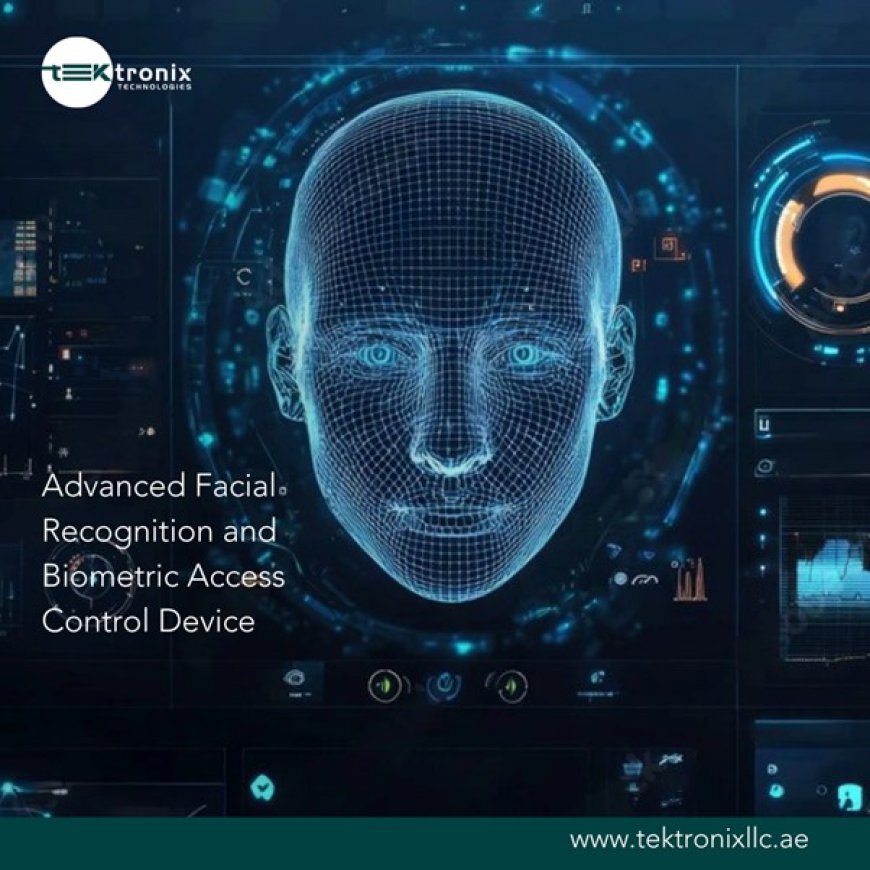
This guide will explain the ways in which the UAE has been deploying face scanners and face Identification and Face Authentication and other sophisticated Biometric Security systems to guarantee efficiency, accuracy and speedy authentication at each gate.
1. The Rise of Facial Recognition in the UAE
As part of its plan to create smart cities that are powered by AI as part of its strategy to build AI-powered smart cities, the UAE is rapidly implementing the use of facial recognition in both the private and public sectors. Residents and residents are able to use services, go through security checks, and undergo identification verification with no physical contact.
The government has invested in modern facial recognition system in airports, police departments immigration counters, as well as digital service portals. The private sector is also excited, and has been deploying face Scanners, facial analysis, as well as face verification tools in buildings as well as offices and schools.
2. How Facial Recognition Technology Works
Modern Face Recognition software utilizes AI and machine learning in order to identify facial characteristics and then analyse them against stored data. The steps comprise:
- Face Detection
- Facial Analysis
- Face Identification
- Facial Verification by biometric match
- Authorization and access approval
It is highly accurate and has a fast reaction time and flexibility This system ensures smooth access to controls.
3. Facial Authentication for Airports & Border Security
UAE airports, such as Dubai as well as Abu Dhabi are global leaders in the implementation of facial authentication as well as the facial tracking systems. This technology allows:
- Check-in for passengers using contactless technology
- Automated immigration
- More efficient Boarding
- Congestion reduced
- Security screenings have been enhanced
Travelers can now access terminals with just their faces due to the advancement of biometric identification as well as 3D facial recognition technologies.
4. Facial Recognition for Corporate & Commercial Spaces
Companies all over the UAE utilize the face scanner devices for access control, attendance as well as surveillance.
Popular applications are:
- Face Recognition Attendance Systems
- Face Scanning Attendance Systems
- Employees clock in and out
- Secure door access
- Visitor authentication
The systems can be used to eliminate identification cards, fingerprints or ID cards which create a clean, contemporary workplace.
5. Biometric Security in UAE's Smart Cities
The UAE is leading the way towards biometric security by using facial biometrics for:
- Networks of Smart CCTV
- Service kiosks of the government
- Tools for law enforcement
- Intelligent building entry systems
- Artificial Intelligence-driven City Surveillance
They enhance security for the public as well as situational awareness and also proactive detection of threats.
6. Advanced Facial AI and Machine Learning
The most recent version of facial AI includes deep learning for improved the accuracy of facial images in different light conditions, facial angles as well as the demographics of individuals.
Capabilities comprise:
- Liveness Detection
- Facial Expression Analysis
- Anti-spoofing detection
- Monitoring in real time
- Continuous Facial Tracking
They prevent fraudulent transactions and provide security-grade authenticating.
7. Face Database & Data Management Systems
The most important component of the entire ecosystem includes that of the face database in which secure facial templates encrypted with encryption are kept.
Modern UAE system make use of:
- Secure biometric repositories with encryption
- Cloud-based facial storage
- Role-based access control
- Automatic indexing and retrieval
A strong data governance system ensures efficiency and safe use.
8. Iris Recognition and Multi-Biometric Technologies
Although faces are the most popular biometric device but iris recognition is widely utilized to secure high-security purposes. The combination of multiple biometrics such as 3D facial Recognition and scanning iris, provides:
- Stronger authentication
- More precise
- Multiple-factor authentication of identity
This is a combination that increases the overall biometric security in sensitive locations.
9. Facial Recognition for Retail & Hospitality
Malls, hotels, and entertainment venues across the UAE utilize face recognition technology in order to offer individualized services.
- Check-in is automated
- Recognition of guests
- VIP customer identification
- Smart payment processing
10. Ethical Use of Facial Recognition & Privacy Concerns
As adoption increases, privacy concerns regarding facial recognition need to be dealt with. Principal issues include:
- Protection of data
- Consent given by users
- Policies on ethical use
- Misidentification risks
- Over-surveillance concerns
UAE authorities emphasize:
- Transparent use
- Privacy laws that are strong
- Secure data storage
- Responsible AI frameworks
- Ethics guidelines for both private and public entities
A well-balanced approach guarantees safety without jeopardizing the rights of individuals.
11. Facial Recognition for Government Services
The UAE government utilizes facial recognition system to provide electronic services like:
- Emirates ID confirmation
- Apps for Smart Police
- Digital passport services
- E-gate Immigration
- Public identity and licensing services
The citizens can complete their work easily and with confidence.
12. Educational Institutions Embrace Facial Biometrics
Universities and schools use face recognition attendance systems to:
- Student attendance
- Verification of the visitor
- Security on campus
- Examination authentication
This guarantees transparency and security both for the staff and students.
13. Liveness Detection - Eliminating Fraud
Liveness detection technology guarantees the authenticity of human faces recognized, thus preventing:
- Spoofing photos
- Mask attacks
- A Deepfake imitation
- Video replays are used to attack
It's a crucial feature of the UAE's highly-secure environment.
14. The Future of Facial Recognition in the UAE
The roadmap of the United Arab Emirates contains:
- Completely automated border control
- AI-powered crowd monitor
- Systems that are aware of emotions
- Smart streets that include facial tracking
- Biometric identity with integrated biometrics
- Hyper-secure authentication for digital services
As facial analysis technology develops as technology improves, the UAE will be a leader in developing innovative, secure and super-fast identification solutions.
Conclusion
Face recognition is changing the UAE to become one of the nations that are the most secure, smart and productive countries. From airports, to smart cities places of work, as well as platforms for government, AI-driven facial recognition systems offer efficiency, speed, and accuracy as well as top security. By implementing ethical and privacy policies, safeguards and cutting-edge biometrics the UAE has set a world standard of responsible and effective application of facial recognition at every entry point.
FAQs
1. Does facial recognition pose any risk for use on a daily basis?
Yes. Modern facial recognition systems employ security measures such as liveness detection, encryption, and biometric algorithms with strong security that provide high security.
2. What's the main difference of Facial Identification or Facial Verification?
Face Identification determines the identity of an individual and face verification verifies if the individual has the identity they claim to be.
3. Can facial recognition violate the privacy of users?
Once properly managed, privacy concerns with regard to facial recognition can be minimized by ethical guidelines secure storage, as well as an informed consent.
4. Face recognition can replace the need for fingerprints or cards?
Absolutely. Numerous UAE installations are using facial authentication to provide a completely secure access control system that is not requiring contact.
5. Does 3D Facial Recognition more accurate than 2D?
Yes. 3D facial recognition detects the depth, contours and infrared patterns. This makes it safer and more difficult to fool.
For more information contact us on:
Tektronix Technology Systems Dubai-Head Office
+971 50 814 4086
+971 55 232 2390
Office No.1E1 | Hamarain Center 132 Abu Baker Al Siddique Rd – Deira – Dubai P.O. Box 85955
Or click on the below link for more information: