Using BIM for Accurate Quantity Takeoffs and Budget Control
Using BIM for quantity takeoffs helps contractors extract accurate material data, improve cost estimation, track design changes, and maintain better budget control throughout construction projects.
 oliviagray
A project that starts with an inaccurate estimate rarely ends well. When the quantities used for pricing do not match the quantities actually installed, the difference shows up somewhere, usually in the form of cost overruns, disputes with subcontractors, or compressed margins that were never planned for. Building Information Modeling gives general contractors a fundamentally better way to develop and control quantities, from early budget estimates through final completion.
Traditional quantity takeoffs are painstaking manual work. An estimator scales dimensions from 2D drawings, counts items by hand, and builds spreadsheets that are disconnected from the design documents. When drawings are revised, the takeoff does not automatically update. When a value engineering change is made, someone has to re-measure. The process is slow, and it introduces error at every step.
How BIM Stores Quantity Data in the Model
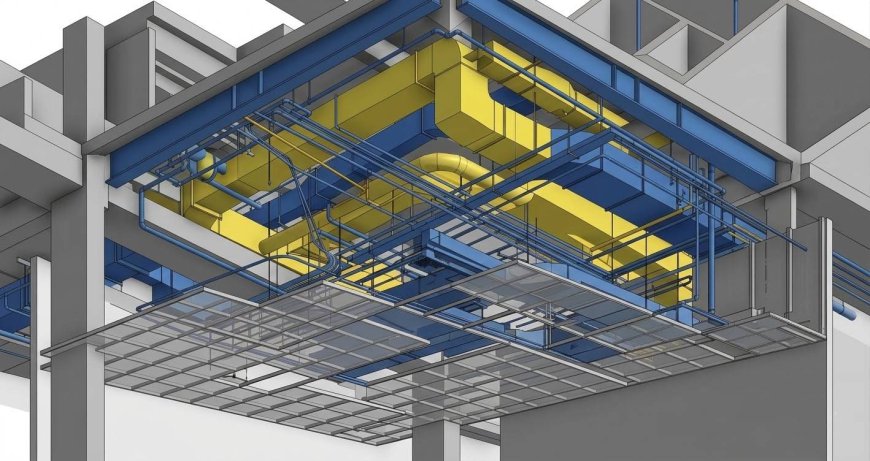
In a BIM model, every element carries information beyond its shape. A concrete wall knows its length, height, thickness, volume, and surface area. A steel beam knows its weight, profile, and length. A duct section knows its diameter, material, and linear footage. This data is embedded in the model by the design team and is available for extraction at any time.
Quantity takeoff tools, built into BIM software like Autodesk Revit or available as add-ins, read this embedded data and compile it into formatted schedules. What used to take an estimator several days can be produced in hours, and the numbers come directly from the model geometry rather than from manual measurement.
The Accuracy Advantage
Model-based quantities are more accurate than manual takeoffs for a simple reason. When you measure from a 3D model, you are measuring the actual design intent, not a 2D representation of it. Complex conditions, curved walls, sloped roofs, multi-level structures, are automatically accounted for in the model data. Manual takeoffs from 2D drawings often apply simplified assumptions to these conditions, introducing systematic errors that compound across a project.
Accuracy matters most for the high-cost items: structural steel, concrete, mechanical equipment, and electrical gear. A small percentage error on a million-dollar material category is a significant real dollar problem.

Staying in Budget as the Design Evolves
One of the most powerful aspects of BIM-based quantity management is that it stays current as the design changes. When the architect revises a floor plan, when the structural engineer changes a beam size, when MEP routing is modified during coordination, the model updates. And when the model updates, the quantities update with it.
This means that at any point in the project, the GC can pull a current set of quantities that reflects the latest design intent. Budget comparisons between design phases become straightforward. Value engineering alternatives can be quantified quickly. The cost impact of design changes can be assessed before the change is approved, rather than after the work is done.
Using BIM Quantities to Verify Subcontractor Invoices
Quantity control does not stop at the estimate. General contractors can use BIM-derived quantities to check subcontractor pay applications and change order requests. If a sub claims additional material quantities that do not align with the model data, that discrepancy is immediately visible and can be investigated before payment is made.
This is not about distrust. It is about having an objective, model-based reference that both the GC and the sub can refer to. Disputes are resolved faster and with less friction when both parties are working from the same data source.
Getting BIM Quantity Takeoffs on Your Next Project
General contractors do not need to be BIM experts to benefit from model-based quantity takeoffs. MaRS BIM Solutions provides quantity extraction services as part of our BIM deliverables, giving your estimating and project management teams formatted, model-accurate quantity schedules that integrate with your existing cost management tools.
Whether you are building a hospital, a school, a commercial office building, or a complex industrial facility, the principle is the same. Better quantity data leads to better estimates, better budget control, and better project outcomes.
Stop guessing on quantities. Start building from numbers you can trust.