What Mistakes Should You Avoid When Applying e Khata Online? | Khata Broker
Learn how to apply e khata online while avoiding common mistakes. Understand key documents, verification steps, and practical tips for smoother applications.
 khatabroker
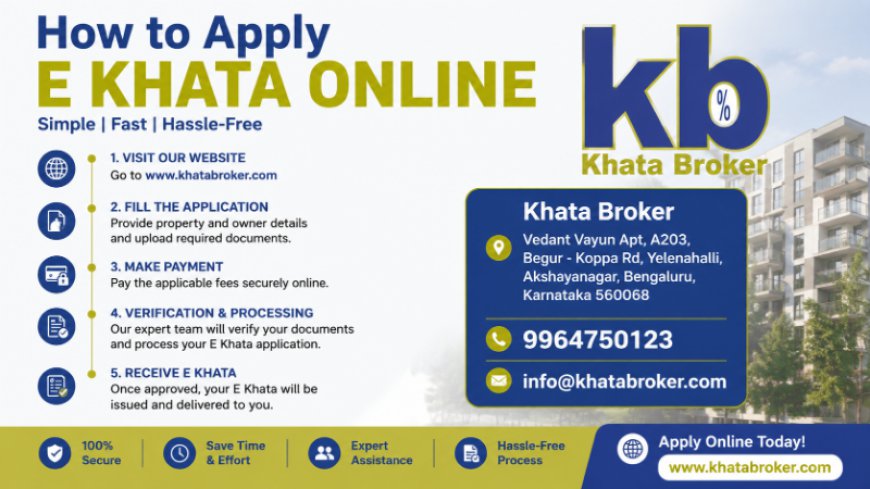
Applying for an e Khata requires accuracy and proper document verification. Many property owners begin the process without understanding the common issues that lead to delays, objections, or repeated submissions. Learning how to apply e khata online correctly helps avoid unnecessary complications and saves valuable time.
A successful application depends on more than uploading documents. Property details, ownership records, tax information, and supporting paperwork must be consistent and complete. At Khata Broker, applicants are often advised to review all requirements carefully before submission to reduce the risk of rejection and ensure a smoother experience.
Submitting Incomplete or Incorrect Documents
One of the most common reasons applications face delays is missing paperwork or inaccurate information. Property owners sometimes upload unclear scans, outdated records, or documents that do not match the ownership details.
Before submitting an application, verify:
-
Identity proof and ownership records are valid.
-
Property tax information is updated.
-
Documents are clearly scanned and readable.
-
Names and property details remain consistent across records.
-
Supporting documents are complete.
Understanding how to apply e khata online begins with organizing documents properly. Even minor mismatches can result in additional scrutiny and prolonged processing times.
Ignoring Property Information Verification
Incorrect property measurements, survey details, or ownership information can create avoidable problems. Many applicants assume that information available in older records is automatically accurate.
Khata Broker recommends reviewing every property detail before starting the application process. A careful verification helps ensure that:
-
Ownership information matches official records.
-
Property dimensions are accurate.
-
Existing tax records are consistent.
-
Supporting documents correspond to the property being registered.
Mistakes in property information often require corrections later, which can significantly increase processing time and create unnecessary complications.
Applying Without Understanding Eligibility Requirements
Many applicants focus only on uploading documents without checking whether the property meets the requirements. This frequently leads to rejected applications.
Knowing how to apply e-khata online also means understanding eligibility conditions and maintaining updated records. Property owners should review:
-
Ownership status.
-
Previous documentation history.
-
Tax payment records.
-
Supporting certificates and approvals.
-
Accuracy of property-related information.
Preparing these details beforehand reduces the possibility of objections and simplifies the overall process.
Overlooking Tax and Payment Records
Property tax records play an important role during document verification. Missing receipts or outdated payments may delay approval.
Khata Broker often advises applicants to maintain organized records before submitting their applications. Important documents include:
-
Recent tax receipts.
-
Ownership records.
-
Identification documents.
-
Supporting certificates.
-
Updated property information.
Financial records should always be reviewed carefully because inconsistencies may require additional clarification during processing.
Rushing Through the Online Submission Process
Applicants sometimes complete forms quickly without reviewing the information entered. Typographical errors, incorrect contact details, and incomplete entries are common issues that create unnecessary delays.
Anyone learning how to apply e khata online should prioritize accuracy over speed. Taking time to review the application helps avoid repeated submissions and document corrections.
A few useful practices include:
-
Double-checking names and addresses.
-
Reviewing uploaded documents.
-
Confirming contact information.
-
Saving copies of submitted records.
-
Keeping acknowledgment details for future reference.
Careful preparation contributes significantly to a smoother application experience.
Frequently Asked Questions
1. What documents are usually required for an e Khata application?
Applicants generally need ownership records, proof of identity, property tax receipts, and other supporting documents related to the property.
2. Why do e Khata applications get delayed?
Delays often occur because of incomplete documents, incorrect property details, or inconsistencies in records.
3. How can I avoid mistakes while learning how to apply e khata online?
Review all documents carefully, verify property information, and ensure that records match before submitting the application.
4. Can incorrect tax records affect the application?
Yes. Missing or outdated tax records may lead to additional verification requirements and processing delays.
Conclusion
Knowing how to apply e khata online involves much more than filling out a form. Accurate records, proper document preparation, and careful verification help prevent avoidable delays and rejections. Property owners who review every detail before submission are better positioned for a smooth process. Khata Broker emphasizes informed decision-making and systematic preparation, allowing applicants to approach the process with greater confidence and clarity.